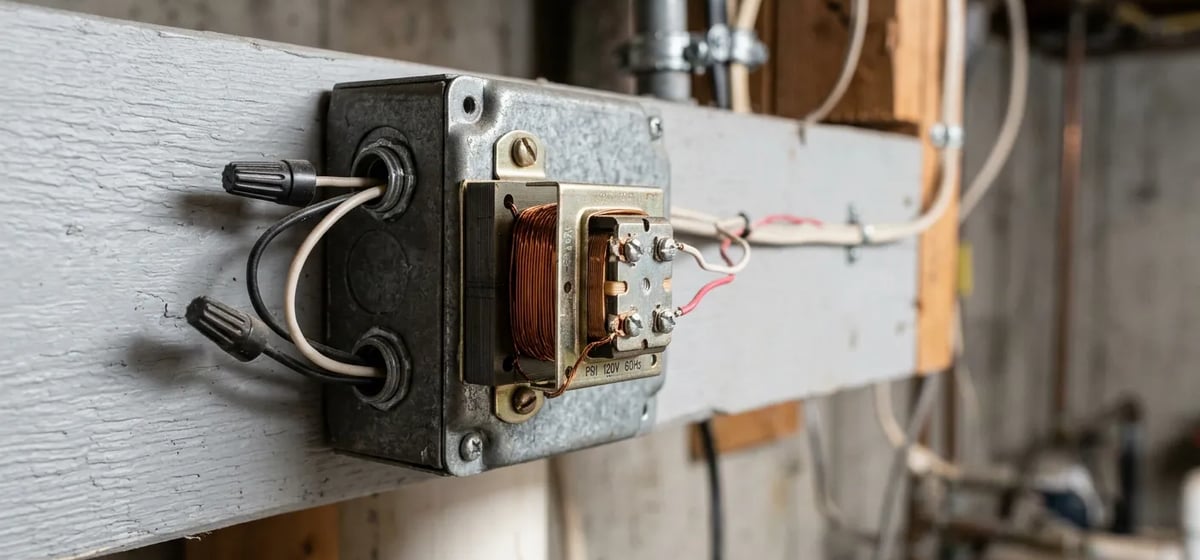
What is a Transformer?
A transformer is a small electrical device that changes the voltage of electricity running through a circuit. Your home runs on 120 volt power, but many small devices don't need that much juice. If you sent a full 120 volts to your doorbell, it would fry instantly. A transformer steps down that high voltage to a lower, safer level. Most home transformers drop the power down to somewhere between 16 and 24 volts.
The word comes from the Latin word transformare, meaning to change in shape. Scientists started using it in the 1880s to describe devices that alter electrical currents. Today, these little metal boxes are the unsung heroes of your home. They work silently in the background so you don't have to worry about your small electronics. Without them, we couldn't use the low voltage gadgets that make modern homes so convenient.
Where You Will Find Them
Transformers are usually tucked out of sight. You won't see them in your main living areas. Instead, you'll have to do a little hunting to locate them. They look like small metal blocks, often gold or silver, with a few wires sticking out.
- Near the electrical panel: Many doorbell transformers attach directly to the side of your main breaker box. You can learn more about navigating this area in our Electrical guide.
- On or inside your furnace: Your heating and cooling system uses a transformer to power the thermostat. This one usually lives inside the furnace cabinet or right on the outside frame. Read our HVAC & Climate Control section for more on furnace parts.
- In a utility closet or basement: Sometimes builders mount them on a ceiling joist in an unfinished basement. They might also be in a utility closet near your water heater.
If you live in an older home, you might even find one screwed into a random wall in your garage. They were often placed wherever the electrician found it easiest to tap into a power line.
Why They Matter for Smart Upgrades
You might never think about a transformer until you want to upgrade your home. The most common time you'll deal with one is when you install a video doorbell or a smart thermostat. Older homes usually have 10 volt or 16 volt transformers. These worked perfectly for a simple chime doorbell or a basic dial thermostat.
Smart devices need more power. A video doorbell has to run a camera, connect to Wi-Fi, and ring a chime. If you try to hook a new smart doorbell to an old, weak transformer, the camera won't turn on. It is a very common frustrating moment for new homeowners. You buy a fancy new gadget, wire it up, and nothing happens. Checking your transformer voltage is the best first step. You'll likely have to replace the old transformer with a new 24 volt model to give the device the power it needs. If you're upgrading your cameras, check out our Home Security guide for tips.
Signs of Trouble and Costs
Transformers are simple and usually last a long time. But they can fail over the years. When they do, you'll notice a few clear signs.
- Your doorbell stops ringing entirely.
- Your smart thermostat screen goes completely blank.
- The transformer feels very hot to the touch.
- The metal box makes a loud, constant buzzing or humming noise.
You can test a transformer yourself using a basic multimeter. You just touch the probes to the two screws on the front to see if the voltage matches what is printed on the metal casing.
Safety Warning: Transformers deal with live electricity. If you aren't comfortable working with wiring and turning off breakers, always hire a licensed electrician to swap it out.
Replacing a transformer is a cheap fix. The part itself usually costs between $20 and $50 at a hardware store. If you hire a professional electrician to install it, expect to pay between $150 and $300 for the labor and the part combined. Keep in mind that prices vary based on where you live and how hard the transformer is to reach.