Air Conditioning Components: A Simple Homeowner Guide
Staring at a broken AC unit can be intimidating. Learn how basic air conditioning components work so you can confidently diagnose issues and talk to HVAC professionals.
Full guide HVAC & Climate Control How your home heats, cools, and moves air, and the decisions that matter.When your air conditioner stops blowing cold air on a 95-degree afternoon, staring at that noisy metal box outside can be incredibly stressful. You know it needs fixing, but calling an HVAC company often means swimming in a sea of technical jargon. Technicians will rattle off terms like "evaporator coil," "refrigerant charge," and "bad contactor," leaving you to wonder what you are actually paying for.
Understanding basic air conditioning components takes the mystery out of the system. You do not need to be a certified mechanic to grasp the fundamentals of how your house stays cool. Once you learn what the main parts do, you can confidently read a repair quote, spot early warning signs of failure, and make smart decisions about your home's comfort.
How an Air Conditioning System Works
Before looking at specific parts, it helps to understand the basic concept of air conditioning. An AC system does not actually "make" cold air. Instead, it operates like a sponge for heat. It absorbs heat from the air inside your living room and carries it outside to release it into the yard, often moving thousands of BTUs of heat per hour.
The vehicle for moving this heat is a chemical called refrigerant. Refrigerant constantly cycles through a closed loop of copper pipes, changing from a liquid to a gas and back again. As it changes states, it absorbs heat inside and dumps it outside. Every component in your air conditioning system exists simply to help this refrigerant do its job.
Where is the AC Compressor Located in a House?
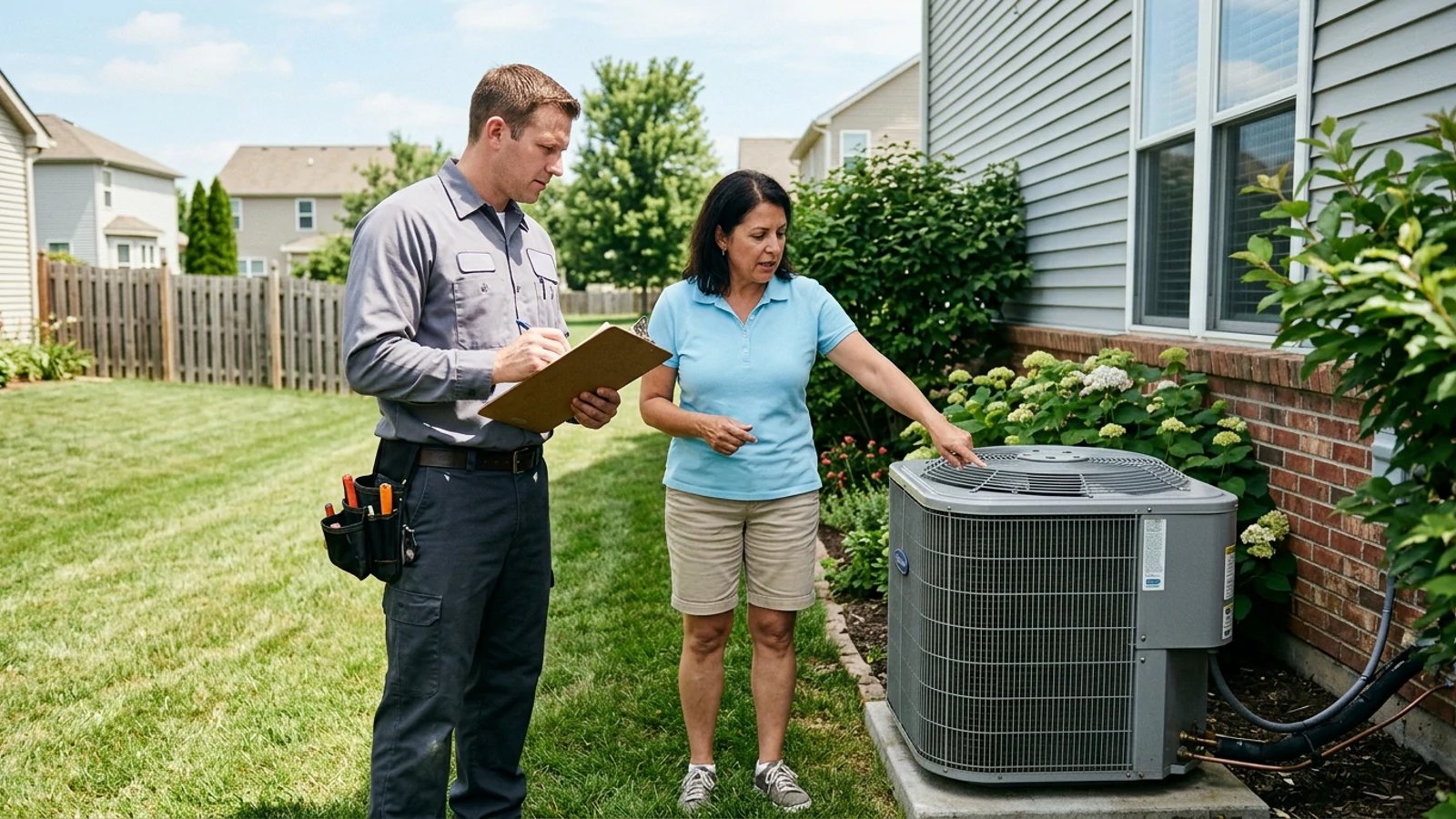
If you are trying to track down a strange noise or a performance issue, you might wonder: where is the AC compressor located in a house? The answer is outside. It sits inside the large, square metal box sitting on a concrete pad in your yard.
If you shine a flashlight down through the fan grate on the top of that outdoor unit, you will see a large, black, cylinder-shaped object sitting right in the center of the base. That is the compressor. It looks a bit like a heavy-duty scuba tank painted black, with thick copper pipes welded to its sides.
Condenser vs Compressor AC: Clearing the Confusion
Homeowners often get tripped up on the "condenser vs compressor ac" terminology. Even some contractors use the words interchangeably, which only adds to the confusion when you are trying to read an estimate.
Here is the simple breakdown:
- The Compressor: This is the specific internal motor (that black cylinder) that pressurizes the refrigerant gas, squeezing it tightly so it becomes hot and moves through the system.
- The Condenser Coils: This is the network of copper tubing and thin aluminum fins that wrap around the outer walls of the outdoor unit. These coils take the hot, pressurized gas from the compressor and allow the heat to dissipate into the outdoor air.
- The Condenser Unit: This is the industry term for the entire outdoor metal box. It houses both the compressor and the condenser coils, along with a large fan to blow air across those coils.
So, the compressor lives inside the condenser unit. If a technician says "your condenser is dirty," they mean the outside aluminum fins need washing. If they say "your compressor is dead," they mean the internal motor has failed.
The Indoor Half: Evaporator Coil and Blower
While the heavy lifting happens outside, the indoor components handle the actual air you feel. Inside your house—usually in the attic, basement, or a utility closet—sits your air handler or furnace. Attached to this is the evaporator coil.
Cold liquid refrigerant flows from the outdoor unit into the indoor evaporator coil. Your indoor blower motor pulls warm air from your house through the return vents and pushes it across this freezing cold coil. The refrigerant absorbs the heat from the air, and the newly chilled air gets pushed through your ductwork into your bedrooms and living spaces.
Your air conditioner doesn't create cold air; it acts as a sponge, soaking up heat from inside your house and wringing it out in the backyard.
The evaporator coil also pulls humidity out of the air as condensation forms on the cold metal, much like a glass of ice water sweating on a summer day. This water drips into a drain pan and flows out through a white PVC pipe.
Air Conditioning Compressor Replacement: Repair or Replace?
The most dreaded phrase a homeowner can hear during a service call is that they need an air conditioning compressor replacement. Because it is a sealed, high-pressure motor, a compressor cannot be repaired or rebuilt in the field; it must be entirely replaced.
A few years ago, I helped a neighbor figure out why their system kept tripping the electrical breaker. We measured the electrical draw on the compressor with a multimeter and realized it was pulling nearly 100 amps on startup—a clear sign the internal bearings were seizing up and the motor was failing. Replacing it was going to be a major job.
Replacing a compressor typically costs between $1,500 and $2,500 in parts and labor. The technician has to safely remove the old chemical refrigerant, cut out the old compressor with a blowtorch, weld a new one in place, install a new filter drier, vacuum the lines, and recharge the system.
Because of this high cost, you have a decision to make. If your system is under a manufacturer warranty (usually 5 to 10 years), you only pay for labor, making the repair worth it. If the system is out of warranty and older than 10 years, it is usually wiser to put that $2,000 toward a brand-new, energy-efficient outdoor unit. The Energy Star program generally recommends considering a full replacement for air conditioners over 10 to 12 years old that require major repairs.
Basic Maintenance to Protect Your Components
The best way to avoid a costly compressor failure is to keep the condenser coils clean. When the outdoor coils get clogged with dirt, cottonwood seeds, and grass clippings, the system cannot release heat. The compressor has to work twice as hard, running hotter and longer until it eventually burns out.
You can easily clean the outdoor unit yourself at the start of every cooling season.
- Shut off the power. Pull the electrical disconnect block located in the small gray box mounted on the exterior wall near the unit.
- Clear the perimeter. Trim back bushes, tall grass, and branches so there is at least 2 feet of clear space around the entire unit for proper airflow.
- Remove large debris. Use your hands to pull away any large leaves, twigs, or heavy debris stuck to the outside grates.
- Wash the fins. Attach a spray nozzle to your garden hose and gently spray the aluminum fins from the top down. Aim straight on so you do not bend the fragile metal fins.
- Restore power. Push the electrical disconnect block back into place and close the box.
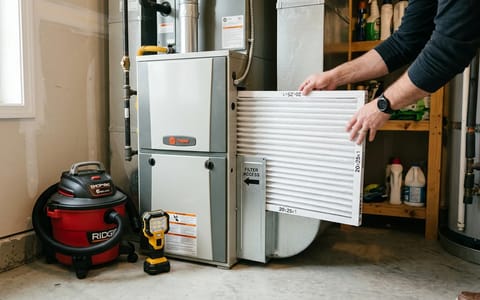
Indoors, your main job is simply changing the air filter. A dirty filter suffocates the blower motor and can cause the indoor evaporator coil to freeze solid into a block of ice. Check your filter every 30 days and replace it when it looks gray and dusty. A standard MERV 8 pleated filter hits the sweet spot between catching dust and allowing good airflow.
Taking a few minutes to learn the names and functions of your air conditioning components puts you in the driver's seat. The next time a technician hands you an estimate, you will know exactly what a compressor does, why a clean condenser matters, and how to make the best choice for your home and budget.
- Understand the difference between a condenser and a compressor to avoid confusion when reading repair quotes.
- Keep the outdoor unit clear of leaves and debris to prevent your compressor from overheating and failing prematurely.
- If your compressor fails out of warranty, weigh the $1,500+ repair cost against replacing the aging system.