Why Your Furnace Is Blowing Cold Air (And How to Fix It)
Is your furnace running but only blowing cold air? Before you panic and call a repair technician, walk through these simple, safe DIY troubleshooting steps to restore your heat.
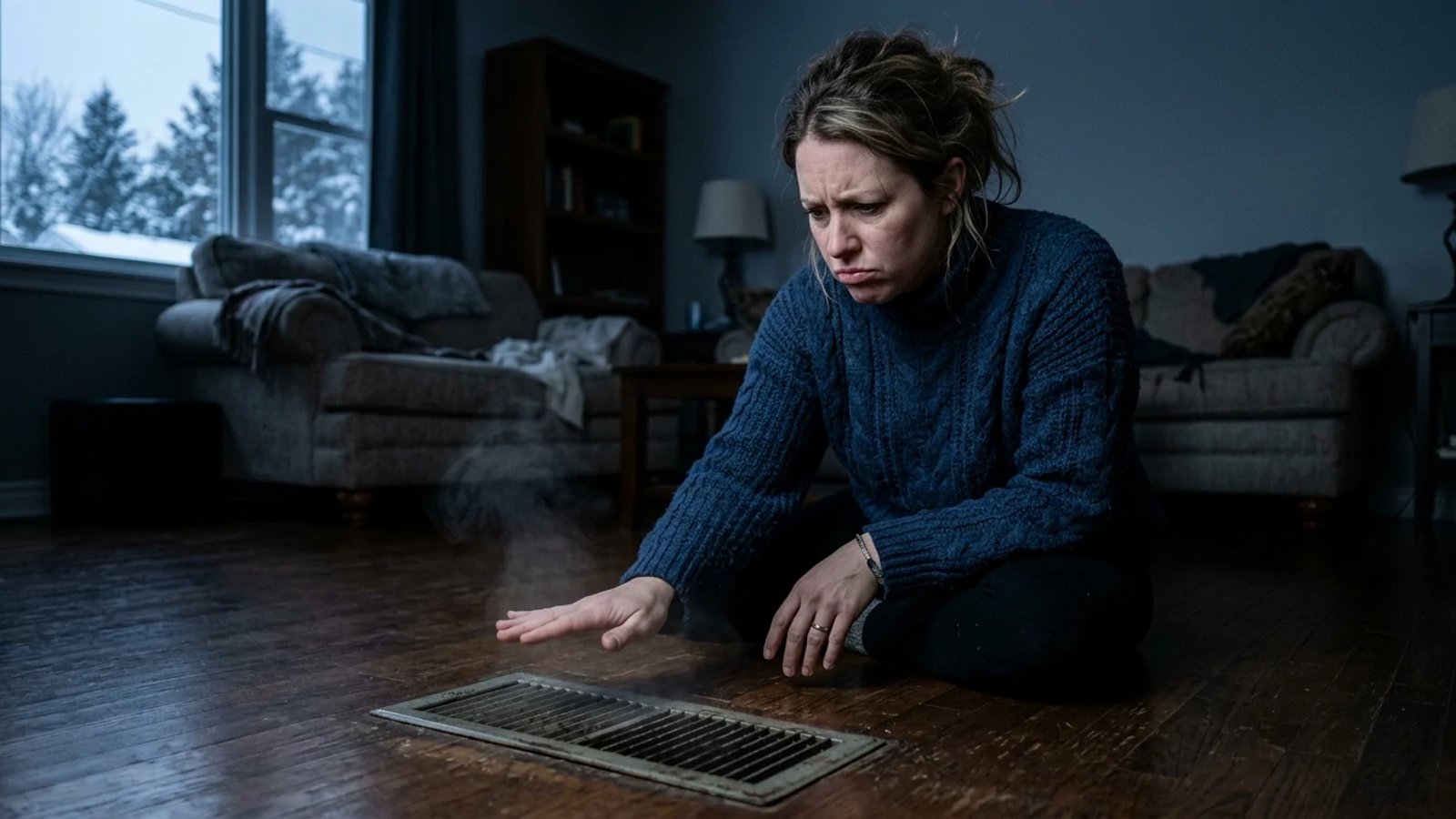
Full guide HVAC & Climate Control How your home heats, cools, and moves air, and the decisions that matter.You wake up, step out of bed, and immediately realize the house is freezing. You hear the familiar hum of the HVAC system running, so you walk over to the nearest floor register expecting a comforting blast of warmth. Instead, you find your furnace blowing cold air directly into the room. It is a frustrating and uncomfortable situation that instantly brings up worries about massive repair bills and days spent shivering in your own home.
Before you start researching the cost of a brand new heating system, take a deep breath. A furnace that runs but fails to produce heat is one of the most common calls HVAC companies receive. In my experience, the solution often requires no tools, no replacement parts, and absolutely no professional intervention. The issue often comes down to a simple setting, a forgotten maintenance task, or a tripped safety switch that you can correct yourself in minutes.
If the air is clear and there are no signs of a gas leak, you are safe to proceed. We are going to walk through a systematic troubleshooting process. We will start with the easiest, most common culprits and work our way up to the mechanical checks. By the end of this guide, you will either have warm air flowing through your vents again, or you will know exactly what to tell the technician when you call for backup.
Why is my furnace blowing cold air? (The Quick Answer)
To understand why your vents are acting like an air conditioner, it helps to know a little bit about how your heating system operates. Your furnace does not just turn on all at once. It follows a strict "sequence of operations." When the thermostat calls for heat, a small fan called the draft inducer starts up to clear residual gases. Next, the igniter glows hot or sparks, and the gas valve opens. Once the flame sensor verifies a steady fire, the main blower fan finally kicks on to push that newly heated air through your ductwork, typically aiming for an air temperature increase of 30-60 degrees Fahrenheit.
If your furnace is blowing cold air, it means the main blower fan is running, but the burners are either not igniting at all, or they ignited briefly and shut down prematurely. The system is essentially moving room-temperature air around the house without actually heating it. This usually happens for one of three reasons: a thermostat misconfiguration, a tripped internal safety switch caused by restricted airflow, or a disruption in the power or gas supply.
A few winters ago, I got a frantic text from a neighbor whose vents were blasting freezing air. They were convinced the entire system was dead and were bracing for a $4,000 replacement bill. We went down to the basement, pulled out the filter, and found a $15 pleated paper filter completely caked in dust and dog hair. We swapped it out, reset the system, and the heat kicked back on in three minutes. It is amazing how often a seemingly catastrophic failure is just the house asking for basic maintenance.
Fix 1: Check the Thermostat Settings First
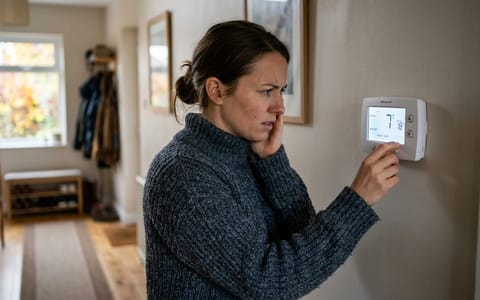
The very first place to look is the device mounted on your hallway wall. It sounds incredibly basic, but a simple thermostat setting is responsible for a massive percentage of "no heat" service calls. Thermostats have two main controls you need to check: the system mode (Heat/Cool/Off) and the fan setting (On/Auto).
If the fan setting is switched to "On," the blower motor inside your furnace will run 24 hours a day, 7 days a week, regardless of whether the furnace is actively heating the air. When the heating cycle finishes and the burners shut off, the fan just keeps pushing unheated air through the ducts. To the person standing over the vent, this feels like a broken furnace blowing cold air.
- Walk over to your thermostat. Wake up the screen if it is a digital or smart model.
- Locate the fan setting. This is usually a physical switch on older models or a menu option on digital screens.
- Switch the fan from "On" to "Auto." This ensures the blower only runs when the burners are actively creating heat.
- Check the system mode. Ensure the main mode is set to "Heat" and the temperature is set at least three degrees higher than the current room temperature.
Once you make this adjustment, wait a few minutes. The fan should shut down, and a new heating cycle should begin shortly after. If the air coming out is still cold, we need to move on to the next suspect.
Fix 2: Inspect and Replace a Clogged Air Filter
If the thermostat is set correctly but the air is still cold, the next culprit is almost always the air filter. Your furnace needs a constant, unobstructed flow of air to operate safely. When a filter becomes heavily clogged with dust, pet dander, and household debris, it chokes the system.
Inside your furnace is a crucial safety component called the high-limit switch. Its job is to monitor the internal temperature of the heat exchanger. When a dirty filter restricts the airflow, the heat inside the furnace cannot escape into your ductwork fast enough. The internal temperature spikes rapidly. To prevent a catastrophic fire or a cracked heat exchanger, the high-limit switch trips and instantly shuts off the gas burners.
However, the system knows it is too hot, so it keeps the main blower fan running to cool the equipment down. The result? Your furnace runs, but it only blows cold air. According to the Energy Star guidelines, checking and changing your air filter regularly is the single most important maintenance task for an HVAC system.
Here is how to check and replace your filter:
- Turn off the furnace power. Find the service switch near the unit (it looks like a light switch) and flip it off.
- Locate the filter compartment. This is usually a slotted compartment where the return air duct meets the main furnace body.
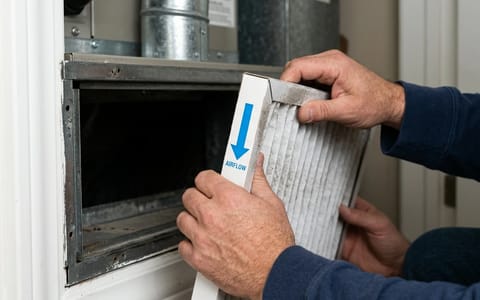
- Pull out the old filter. Hold it up to a light source. If you cannot see any light shining through the material, it is severely clogged and must be replaced.
- Insert the new filter. Look for the printed arrows on the edge of the new filter frame. These arrows must point toward the furnace (the direction of airflow).
- Turn the power back on. Give the system a few minutes to reset and initiate a new heating cycle.
For standard 1-inch thick pleated filters, you should be replacing them every 30 to 90 days. If you have pets, live in a dusty area, or run the system constantly, lean closer to the 30-day mark. Using ultra-high MERV rating filters (like MERV 13 or higher) in an older system can actually restrict airflow right out of the box, so stick to MERV 8 or 11 unless your technician advises otherwise.
Fix 3: Verify the Power Switch and Breaker
It might seem counterintuitive to check the power if the fan is actively blowing air, but modern HVAC systems are complex. Sometimes, a brief power surge or a tripped breaker can scramble the control board, causing it to run the fan in a default safety mode without ever attempting to ignite the burners. A hard reset is often all it takes to clear the error.
First, check the furnace service switch. This is usually mounted on the side of the furnace or on a wall nearby. It looks exactly like a standard light switch, often with a red cover plate. It is incredibly easy for someone to accidentally bump this switch while moving boxes in the basement or attic. If it is flipped down, flip it back up.
Next, head to your main electrical panel to check the breaker.
- Open the breaker panel door. Look for the breaker labeled "Furnace," "HVAC," or "Heating."
- Check for a tripped breaker. A tripped breaker will not be fully in the "OFF" position; the switch will be resting slightly out of line with the others, sitting in the middle.
- Reset the breaker. Push the switch firmly all the way to the "OFF" position until you feel a click, then push it firmly back to the "ON" position.
Sometimes, the simplest hard reset—just turning the power off and back on—clears temporary glitches in the furnace control board and restores your heat.
After resetting the power, go back to your thermostat and call for heat. Listen closely to the furnace. You should hear the sequence start: a small fan whirring, a click, and then the sound of the burners whooshing to life. If the main blower turns on immediately without the burner igniting, you may have a deeper mechanical issue.
Fix 4: Ensure the Gas Supply Valve is Open
If your furnace is getting power, the filter is clean, and the thermostat is calling for heat, the system might simply be starved for fuel. If the furnace cannot draw gas, the igniter will spark or glow, but no flame will appear. After a few failed attempts, the system will lock itself out for safety and run the blower fan to clear the chamber.
You need to verify that the gas supply valve leading to the furnace is fully open. This is particularly common if you recently had plumbing work done, had a new appliance installed, or if the gas was shut off during the summer months.
- Locate the gas line. Look for a black iron pipe or a flexible corrugated metal tube running into the bottom or side of your furnace.
- Find the shutoff valve. There should be a valve on this line with a brightly colored handle (usually yellow or red) located within a few feet of the unit.
- Check the handle position. If the handle is turned perpendicular (forming a cross or a "T") to the pipe, the gas is shut off.
- Open the valve. Turn the handle a quarter-turn so that it runs parallel (in line) with the pipe. This opens the flow of gas.
If you find that the valve was already open, do not start tinkering with the internal gas valve inside the furnace cabinet. The external shutoff is the only gas component a homeowner should ever adjust. If the gas is on but the burners still refuse to light, the problem lies with the internal ignition sequence.
When to Stop DIYing and Call a Professional
If you have walked through all the steps above—the thermostat is on auto, the filter is fresh, the breakers are set, and the gas is flowing—but your furnace is still blowing cold air, you have reached the limit of safe DIY troubleshooting. Continuing to force the system to run or opening up the sealed combustion chamber can be dangerous.
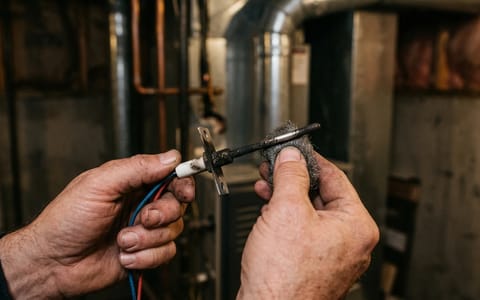
Modern furnaces are heavily reliant on sensitive electronics and precise gas pressures. A technician will use a multimeter to test the flame sensor, check the voltage reaching the hot surface igniter, and verify that the control board is sending the correct signals. These parts are relatively inexpensive to replace, but diagnosing them requires specialized training. A dirty flame sensor, for example, can often be cleaned with a piece of light sandpaper or steel wool by a pro in just a few minutes, restoring your heat for the cost of a standard service call.
Dealing with a cold house is stressful, but methodically checking the basics often saves the day. Keep spare filters on hand, check your thermostat settings as the seasons change, and never hesitate to bring in an expert when the simple fixes don't do the trick. Staying warm is important, but staying safe is always the priority.
- Always check your thermostat fan setting before assuming the furnace is broken.
- Replace your 1-inch furnace filters every 30 to 90 days to prevent high-limit switch trips and system overheating.
- Verify the furnace service switch (which looks like a standard light switch) hasn't been accidentally flipped off.
- Never attempt to repair gas valves, heat exchangers, or internal control boards yourself—leave those to licensed professionals.