How to Get Rid of Mice in the House: A Proven Guide
Spotting a mouse in your home is stressful. Learn exactly how to eliminate the problem with proper trapping, smart baiting, and permanent deterrents.
Full guide Pest Control Learn how to stop ants, mice, termites, and wasps from invading your home and know when to hire a pro.Spotting a mouse dart across the living room floor or finding droppings in a kitchen drawer is enough to make any homeowner panic. If you are frantically searching for how to get rid of mice in the house, you need immediate, practical steps—not a lecture on keeping your floors swept. Mice move indoors looking for food, water, and shelter, and evicting them requires a highly targeted physical approach.
The most common culprits are house mice (Mus musculus), known for their incredible adaptability and prolific breeding. These small rodents are typically gray or light brown with a lighter belly, large ears, and a long, hairless tail. They are nocturnal, highly curious, and can squeeze through incredibly tiny openings, making them expert invaders.
Assess the Situation: How to Get Rid of Mice in the House (Infestation vs. Single Wanderer)
Before setting a single trap, you have to know where the mice are spending their time. Mice can squeeze through openings as small as a quarter-inch, so look for tiny gaps. Look for physical clues in quiet, undisturbed areas like under the kitchen sink, behind the stove, or in the back of pantry shelves. Mouse droppings are dark and pointed, looking very much like grains of black rice. You might also notice greasy rub marks along light-colored baseboards where their fur brushes against the wall.
A few years ago, I noticed a single dropping under my sink. I assumed it was just a lone wanderer that had slipped in through the back door. However, after pulling out the dishwasher, we found a dense nest made of shredded paper towels and insulation. The rule of thumb in pest control is simple: if you see one mouse, assume there are more. Treat every sighting as a potential infestation.
Beyond droppings and rub marks, other tell-tale signs include gnaw marks on food packaging, wooden structures, or utility lines. Mice constantly chew to keep their incisors trimmed. You might also discover small nests made of shredded paper, fabric, or insulation in secluded spots. A faint, musky ammonia odor, particularly strong in enclosed spaces, can also indicate a significant mouse presence.
Early detection is paramount. The longer an infestation goes unnoticed, the more challenging and extensive the eradication process becomes. A single breeding pair can produce dozens of offspring in a year, leading to a rapidly escalating problem. Regular inspections, especially in less-frequented areas of your home, can help you catch the problem when it's still manageable.
Trapping Strategies that Work for Getting Rid of Mice in the House
While poisons are available at any hardware store, they are generally a bad idea for interior use. A poisoned mouse will often crawl into your wall cavity to die, leaving you with a terrible odor that can last for weeks. Snap traps remain the most effective, humane DIY method because they kill instantly and allow you to remove the body.
Catch-and-release traps are an option, but they require daily checking. If you use them, you must release the mouse at least a mile away from your property, or it will simply walk right back inside.
- Find the travel paths. Mice are nearly blind and navigate by keeping their whiskers touching a wall. They rarely run across open floors.
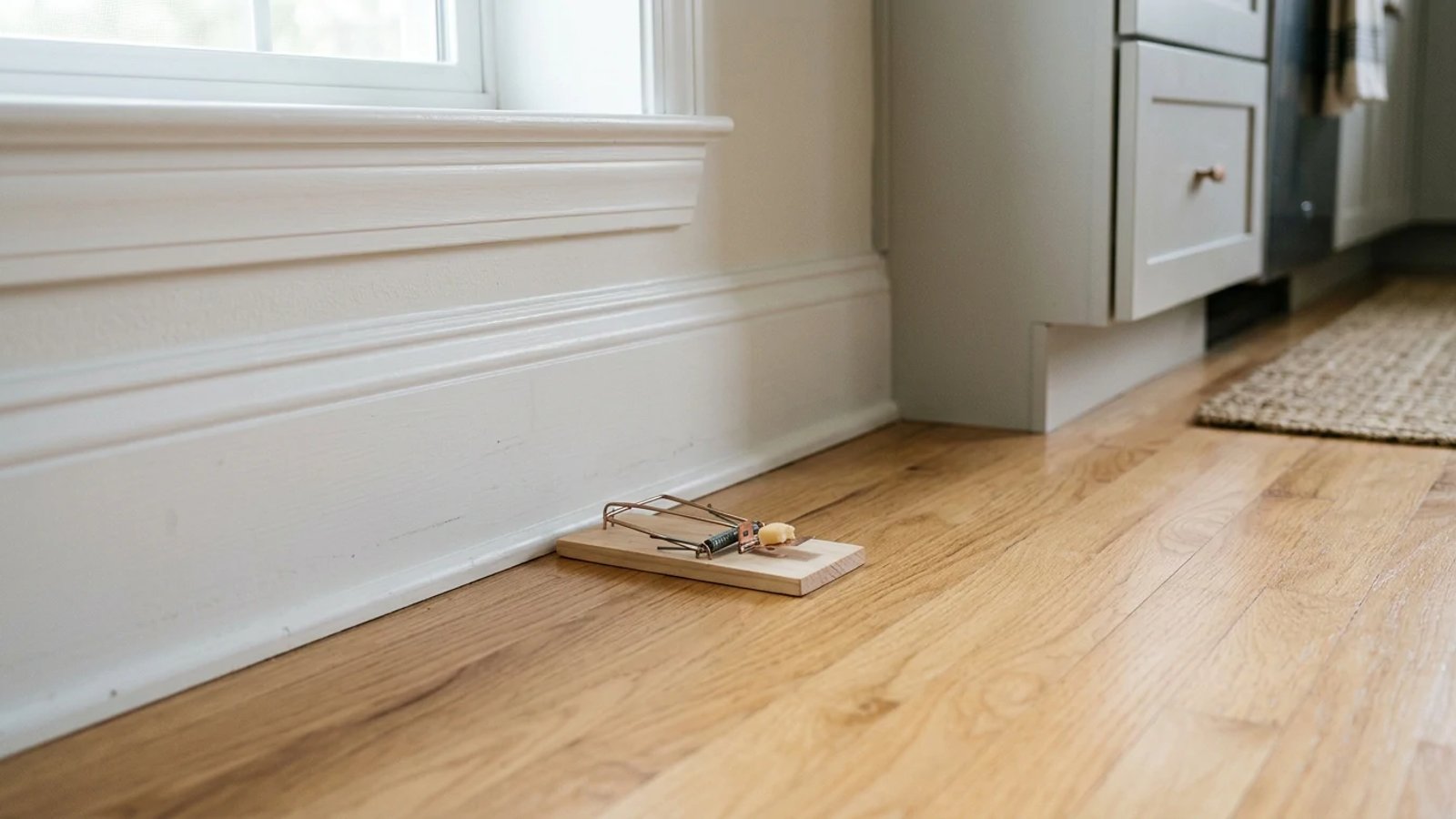
- Position traps correctly. Place traps perpendicular to the wall. The trigger end should be touching the baseboard so the mouse runs directly over it.
- Set multiple traps. Space them 2 to 3 feet apart in high-traffic areas. Over-trapping is the key to catching them quickly.
Beyond Snap Traps: Other Methods and Why They Fall Short
While snap traps are the gold standard for quick, humane elimination, other trapping methods exist, each with its own set of pros and cons. Glue traps, for instance, capture mice on a sticky surface. However, they are often considered inhumane as the mouse can suffer for extended periods before dying, and removal can be distressing. They are also less effective in dusty environments or areas with extreme temperatures.
Electronic traps use a high-voltage shock to kill mice instantly, similar to snap traps in efficacy and humanity. They can be a good option for those uncomfortable with traditional snap traps, though they are generally more expensive and require batteries. Live-catch traps, as mentioned, demand diligent daily checks and proper relocation, which can be time-consuming and often results in the mouse finding its way back if not released far enough away. For most homeowners, the balance of cost, effectiveness, and humane dispatch makes snap traps the superior choice.
Baiting Secrets: What Actually Works for Getting Rid of Mice in Your House
Forget the cartoon blocks of Swiss cheese. Mice are primarily seed and nut eaters. The absolute best bait is a standard creamy peanut butter or hazelnut spread. The sticky texture forces the mouse to lick and pull at the trigger, rather than just snatching the food and running away.
Too much bait allows the mouse to nibble the edges without setting off the trigger. Keep your bait portion smaller than a pea.
If your initial baiting efforts aren't yielding results, don't be afraid to rotate your bait. While peanut butter is a top contender, mice can develop "bait shyness" if they associate a particular food with danger. Other effective baits include small pieces of soft candy (like gummy bears), chocolate, or even a tiny dab of bacon grease. Always ensure the bait is fresh and securely attached to the trap trigger.
Prevention and Deterrents: Sealing Entry Points to Get Rid of Mice
Once you start clearing out the current intruders, you have to block their entry points. A standard house mouse can squeeze its body through a gap the size of a dime (about 1/4 inch). If you leave these holes open, a new family of mice will eventually move in to replace the ones you caught.
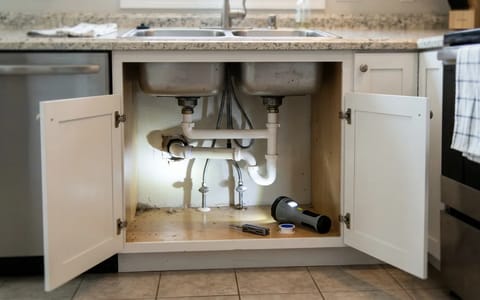
Inspect your exterior foundation, focusing on areas where pipes, gas lines, and dryer vents penetrate the siding. Inside, look closely at the gaps around the plumbing pipes under your kitchen and bathroom sinks.
Fill any gaps with coarse steel wool or copper mesh. Mice cannot chew through the sharp metal fibers. Once the mesh is packed tightly into the hole, seal over it with a high-quality silicone caulk or expanding foam. The CDC recommends aggressively sealing up holes both inside and outside the home as the primary defense against rodent-borne diseases.
Beyond sealing exterior entry points, internal sanitation plays a critical role in mouse prevention. Store all dry goods, including pet food, in airtight containers made of glass or heavy plastic. Don't leave pet food bowls out overnight. Regularly clean up crumbs and spills, and avoid leaving dirty dishes in the sink. Reducing clutter, especially in basements, attics, and garages, eliminates potential nesting sites and makes it harder for mice to hide.
Cleaning Up After the Infestation: Safety and Sanitation
Once you've successfully eradicated the mice, the cleanup process is just as important as the elimination itself. Mouse droppings, urine, and nesting materials can carry serious diseases like Hantavirus, Salmonellosis, and Lymphocytic Choriomeningitis (LCMV). Never sweep or vacuum droppings directly, as this can aerosolize viral particles, making them easy to inhale.
Instead, wear rubber or latex gloves and a respirator. Lightly mist droppings and nesting materials with a bleach solution (1 part bleach to 10 parts water) or a commercial disinfectant. Allow it to soak for at least five minutes before wiping them up with paper towels. Double bag all contaminated materials and dispose of them in outdoor trash cans. Thoroughly wash any contaminated surfaces with disinfectant. After cleanup, wash your hands thoroughly with soap and water, even if you wore gloves.
Ensure good ventilation during and after cleanup by opening windows. If the infestation was severe, consider professional cleaning services, especially for areas like attics or crawl spaces, to ensure all contaminants are safely removed.
When Should You Call a Professional Exterminator?
DIY trapping is highly effective for mild to moderate issues, but mice reproduce rapidly. A single female can have up to ten litters a year. If you are catching mice every day for weeks and the population doesn't seem to be dropping, it is time to bring in backup.
Professional exterminators have access to commercial-grade, tamper-resistant bait stations that are safe to use around pets and children. They also have the trained eye required to spot hidden entry points along your roofline or crawlspace that a homeowner might easily miss.
Be patient and persistent with your traps. Even after you think the problem is solved, leave a few baited, unset traps in your utility room or basement. Checking them once a week will give you an early warning if any new rodents decide to test your defenses.
- Mice travel along walls, so placing traps perpendicular to baseboards dramatically increases your catch rate.
- Peanut butter works far better than cheese, but keep the portion smaller than a pea so they have to work for it.
- A mouse can fit through a hole the size of a dime; sealing gaps with metal mesh is mandatory for long-term prevention.