Why Is My House So Dusty? (And How to Fix It Fast)

If you clean constantly but a gray film reappears on your furniture the next day, you do not have a housekeeping problem—you have an airflow problem.
Full guide HVAC & Climate Control How your home heats, cools, and moves air, and the decisions that matter.You spend Saturday morning wiping down the baseboards, bookshelves, and ceiling fans. The house looks immaculate. But by Tuesday, a fresh, highly visible gray film covers the coffee table and the top of the television. If you find yourself constantly asking, "why is my house so dusty," you are not alone—and you are not bad at cleaning. In my experience, this frustration is incredibly common.
Dust is not just soil from the garden. It is a complex mixture of dead skin cells, pet dander, fabric fibers from clothes and carpets, pollen, and microscopic outdoor pollutants. When a home feels impossibly dusty despite a rigorous cleaning schedule, it almost always points to a mechanical airflow, filtration, or sealing issue.
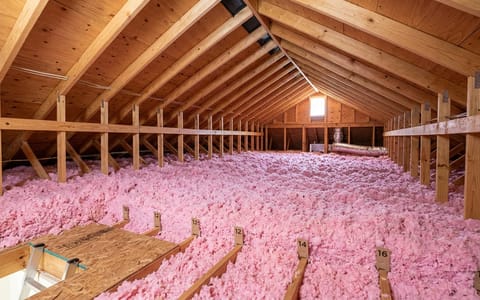
A few years ago, we bought a 1970s ranch house. No matter how often I ran the vacuum, a fine powder settled on flat surfaces within 48 hours. I eventually crawled into the attic and found a massive, disconnected return duct actively sucking up decades of attic insulation and blowing it straight into our living room. Once I sealed it, our weekly dusting routine was cut in half.
If you are tired of fighting a losing battle against household dust, here is exactly where the dirt is coming from and how to stop it.
Why Is My House So Dusty?
To understand why dust accumulates so fast, you have to look at how air moves through your home. Your house is essentially a giant set of lungs. It breathes in air from the outside through gaps, cracks, and open doors, circulates that air through the heating and cooling system, and breathes it back out. In fact, the average home can accumulate over 40 pounds of dust each year!
If your home feels impossibly dusty despite regular cleaning, you don't have a housekeeping problem—you have an airflow problem.
When the mechanisms designed to filter that air fail, or when the barriers designed to keep outdoor air outside break down, dust takes over. The particles are so light that normal household activity—walking down the hall, opening a door, or even shifting on the couch—keeps them suspended in the air. They only settle onto your furniture when the house is completely still, usually in the middle of the night.
Let's look at the four main culprits causing your dust problem and how to fix them.
1. The HVAC Filter Is Failing You
Your heating and cooling system is the primary air scrubber for your entire house. Every time the blower kicks on, it pulls air from your rooms, pushes it through a filter, and sends it back. If that filter is inadequate, the dust just loops through the house endlessly.
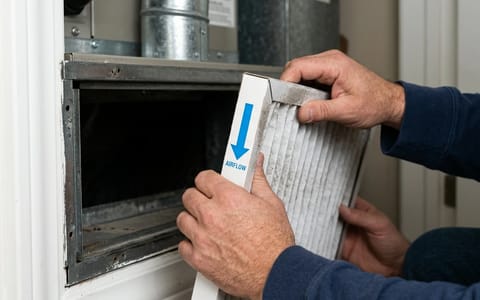
Many homeowners buy the cheapest filters available—those $3 to $5 blue fiberglass panels you can practically see right through. These filters are designed to stop large debris like dog hair and pebbles from destroying the furnace blower motor. They do absolutely nothing to stop fine dust, pollen, or pet dander.
To actually capture household dust, you need a pleated filter. The pleats increase the surface area, allowing the filter to catch microscopic particles without suffocating the HVAC system. Filter efficiency is measured by the Minimum Efficiency Reporting Value (MERV).
Switching from a fiberglass filter to a MERV 11 filter costs about $15 to $20 and takes two minutes, but it is the single most effective step you can take to reduce airborne dust. Just remember to check it every 30 to 60 days; because it actually catches dirt, it will clog much faster than a cheap fiberglass panel.
2. Leaky Ductwork Is Sucking in Dirt
If you have upgraded your filter and are still seeing heavy dust accumulation, your ductwork is the next suspect. The return ducts are the large pipes that pull air from inside your house back to the furnace. If these ducts run through an unconditioned space—like a dusty attic, a dirt-floor crawl space, or an unfinished basement—any leak in the metal joints acts like a giant vacuum cleaner.
Because the blower motor creates negative pressure inside the return ducts, a gap as small as a quarter-inch will actively suck in attic fiberglass, crawl-space dirt, and mold spores. The system then bypasses the room returns, conditions that dirty air, and blows it directly out of your ceiling and floor registers.
According to Energy Star guidelines on duct sealing, the average house loses 20 to 30 percent of the air moving through the duct system due to leaks, holes, and poorly connected ducts. Finding and sealing these leaks will drastically improve your indoor air quality.
If you can safely access your exposed ductwork, you can seal the joints yourself. Do not use standard cloth duct tape, as the adhesive dries out and fails within a year. Instead, use a tub of water-based mastic sealant (which paints on like thick gray cake batter) or UL-181 rated aluminum foil tape.
3. Drafty Windows and Doors Are Letting the Outside In
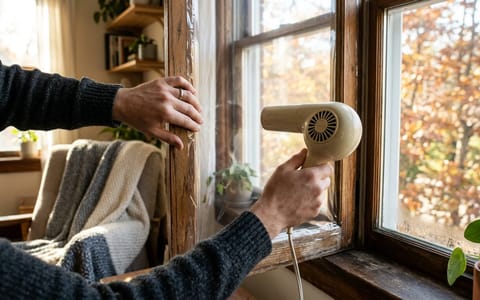
A house is never perfectly airtight, nor should it be. But if you have visible daylight around your exterior doors, or windows that rattle when the wind blows, you are inviting the outdoors inside. Wind carries a massive amount of fine soil, exhaust particulate, and pollen. When it hits the side of your house, it forces that dirt through any available gap.
Weatherstripping degrades over time. The rubber compresses, the foam rots, and the felt flattens. Replacing it is a fast, inexpensive project that pays for itself in lower heating bills while keeping exterior dust off your entryway floors.
Here is how to replace the weatherstripping around an exterior door:
- Remove the old material. Pull out the existing foam or rubber weatherstripping from the channel in the door jamb, using needle-nose pliers if it is stuck.
- Clean the door frame. Wipe down the jamb with soapy water and let it dry completely so the new material sits flush.
- Measure and cut the new weatherstripping. Measure the top and sides of the frame, and cut your new V-strip or tubular rubber to length with heavy scissors.
- Press the new strip into place. If using push-in weatherstripping, firmly press the barbed edge into the kerf (groove) of the door frame. If using adhesive-backed foam, peel the backing off a few inches at a time as you press it against the wood.
- Test the seal. Close the door and check for daylight. You should feel slight resistance as the door latches, indicating a tight, dust-proof seal.
4. Your Vacuum Is Just Moving Dust Around
The tools you use to clean could be the very things making your house dusty. Standard vacuum cleaners are great at picking up heavy debris like cheerios, dog kibble, and tracked-in gravel. But unless your vacuum has a completely sealed system and a true HEPA (High-Efficiency Particulate Air) filter, it is likely exhausting microscopic dust right back into the room.
As the vacuum's brush roll agitates the carpet, it kicks up fine particulate. The vacuum sucks it up, the heavy dirt falls into the canister, and the tiny, lightweight dust particles blow straight through the exhaust port. You are essentially aerosolizing the dust, which remains suspended in the air for hours before settling right back onto your furniture.
If you have hard floors, rely heavily on slightly damp microfiber mops rather than dry brooms. A traditional broom just launches dust into the air. Microfiber carries a slight static charge that grabs and holds onto dust, trapping it until you wash the mop head.
Taking Control of Your Indoor Air
A dusty house is frustrating, but it is rarely a mystery. By upgrading your HVAC filter to a pleated MERV 8-11, sealing up the glaring leaks in your ductwork, replacing worn weatherstripping, and ensuring your vacuum is actually trapping what it picks up, you can drastically change the air quality in your home. Take an hour this weekend to inspect your system and your weather seals. The time you invest now will save you countless hours with a duster in your hand down the road.
- Swap out 30-day fiberglass filters for pleated MERV 8, 10, or 11 filters to trap microscopic dust particles.
- Inspect the ductwork in your attic, basement, or crawl space for disconnected joints or holes, and seal them with mastic or aluminum foil tape.
- Replace worn weatherstripping around exterior doors and windows to stop outdoor wind from pushing pollen and soil inside.
- Invest in a vacuum with a completely sealed system and a true HEPA filter to permanently remove dust from your floors.