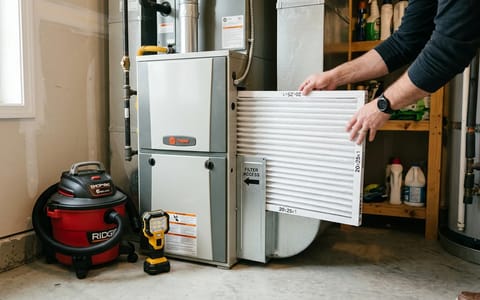
How Often to Change Furnace Filter (And Which Way It Goes)
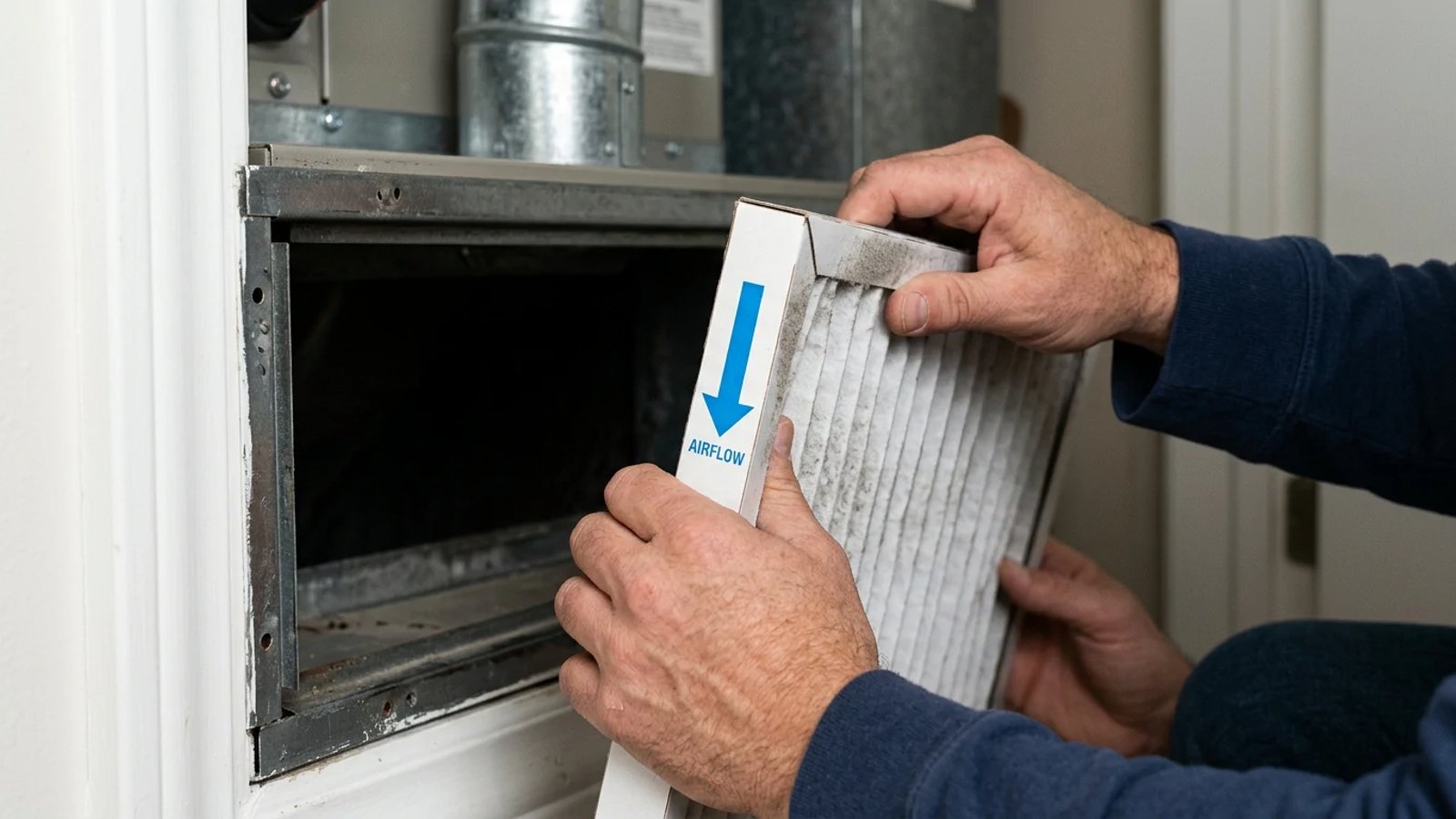
Holding a dusty furnace filter and wondering if you waited too long? Learn exactly how often to replace it and which way the airflow arrow should point.
Full guide HVAC & Climate Control How your home heats, cools, and moves air, and the decisions that matter.You just pulled your furnace filter out of the slot, and it looks like a gray, fuzzy sweater. If you are holding that dusty cardboard square right now, two questions immediately come to mind: Did I wait too long to change this? And when I put the new one in, which way does that little arrow point? Understanding how often to change furnace filter is key to a healthy home.
As we head into late fall and start relying heavily on our heating systems, knowing how often to change furnace filter is crucial. A clean filter is your first line of defense against high energy bills and expensive repairs. A clogged filter suffocates your HVAC system, forcing the blower motor to work twice as hard to push air through your home. The good news is that swapping it out is the cheapest, fastest maintenance task you can do.
In this guide, we'll break down exactly how often to change furnace filter, what factors speed up that timeline, and how to make sure you never install one backwards.
How Often to Change Furnace Filter Sizes?
The biggest mistake homeowners make is assuming all filters follow the exact same schedule. The thickness of your filter dictates its surface area, which directly determines how much dust it can hold before it chokes your system.
Standard 1-inch and 2-inch filters have relatively little surface area. You should check these every 30 days and replace them every 1 to 3 months. During the peak of winter or the dead of summer, when your system runs constantly, expect them to max out closer to the 30-day mark.
Thicker media filters—typically 4-inch or 5-inch models housed in a large cabinet next to your furnace—are designed for the long haul. Because their deep pleats offer massive surface area, they only need replacing every 6 to 12 months.
Last fall, I decided to test a standard 1-inch MERV 8 filter in my own house. We have two dogs and keep the fan running to circulate air. I checked it after 30 days, and it was already completely coated in a thick layer of dander and dust. Had I waited the "recommended" 90 days printed on the package, my furnace would have been gasping for air by Thanksgiving.
Understanding MERV Ratings: What They Mean for Your Home
Beyond physical size, another critical factor in filter performance and lifespan is its MERV rating. MERV stands for Minimum Efficiency Reporting Value, and it’s a standard developed by the American Society of Heating, Refrigerating and Air-Conditioning Engineers (ASHRAE) to measure a filter's effectiveness at trapping airborne particles.
MERV ratings range from 1 to 20, with higher numbers indicating greater filtration efficiency. For example, a MERV 13 filter is designed to capture over 85% of airborne particles between 0.3 and 1.0 microns, including very fine dust and bacteria. For most residential HVAC systems, filters typically fall between MERV 8 and MERV 13. A MERV 8 filter is excellent for capturing basic household dust, pollen, and pet dander. Stepping up to a MERV 11 or 13 will trap finer particles like mold spores, car emissions, and even some bacteria, significantly improving indoor air quality for allergy sufferers.
However, it's important not to over-filter. While a MERV 13 filter provides superior air cleaning, its denser material can restrict airflow more than a MERV 8. If your HVAC system isn't designed to handle the increased resistance, it can strain your blower motor and reduce efficiency. Always check your furnace manual for the maximum MERV rating recommended for your specific unit to avoid potential issues.
Factors That Shorten Your Filter's Lifespan
The timelines above are baselines. Several household factors will force you to change your filter much faster than the manufacturer suggests.
Pets are the biggest culprits. Dogs and cats shed constant hair and dander, which gets sucked directly into your return vents. If you have multiple pets, cut your expected filter lifespan in half.
Allergies and asthma also change the math. If someone in your home suffers from respiratory issues, you are likely using a higher-rated MERV filter (MERV 11 to 13) to catch pollen and microscopic dust. Because the weave on these filters is tighter, they clog faster. You will need to replace them more frequently to maintain both air quality and system airflow.
Finally, home renovations generate massive amounts of drywall dust and sawdust. If you are sanding floors or knocking down walls, check your filter weekly. Construction dust is incredibly fine and will blind a fresh filter in a matter of days.
The Bigger Picture: Why Regular Filter Changes Are Non-Negotiable
While we often focus on the immediate costs of energy bills, the benefits of consistently changing your furnace filter extend much further, impacting your home's air quality, the lifespan of your expensive HVAC system, and your overall comfort.
First and foremost, a clean filter is your primary defense against indoor air pollution. It actively removes dust, allergens, pet dander, mold spores, and other airborne irritants that can trigger allergies and respiratory issues. Cleaner air means a healthier home environment for everyone, especially children and those with sensitivities.
Secondly, regular filter replacement is crucial for the longevity of your HVAC system. A clogged filter forces your furnace's blower motor to work overtime, drawing more power and increasing wear and tear on vital components. This constant strain can lead to premature breakdowns, expensive repairs, and a significantly shortened system lifespan. Think of it as forcing your car to run on a clogged engine – it simply won't last as long.
Finally, proper airflow ensures consistent heating and cooling throughout your home. When a filter is clogged, air distribution becomes uneven, leading to hot and cold spots. By keeping your filter clean, you maintain optimal system performance, ensuring your home stays comfortable and your energy consumption remains efficient. It’s a small task with a huge return on investment.
Which Way Does the Furnace Filter Go?
You bought the right size, you unwrapped it, and now you are staring at an arrow printed on the cardboard edge. Getting this wrong is a very common mistake, but the rule is incredibly simple.
The airflow arrow on your furnace filter must always point toward the furnace and blower motor.
Your HVAC system pulls air from your house through the return ducts, pushes it through the filter, heats or cools it in the furnace unit, and blows it back out through the supply vents. The filter sits between the return ducts and the furnace.
Therefore, the arrow indicates the direction the air is traveling. It should always point away from the return ducts and directly toward the heavy metal cabinet housing your blower motor.
What Happens If You Put a Furnace Filter in Backwards?
Furnace filters are engineered with a specific front and back. The side facing the incoming air is usually more porous to catch large debris like pet hair, while the back side is denser to trap fine dust. Many filters also feature a wire mesh backing on the side facing the furnace to prevent the filter material from collapsing under the intense suction of the blower motor.
If you install the filter backwards, the blower motor has to fight to pull air through the dense side first. This instantly restricts airflow.
Restricted airflow causes your furnace to run longer to heat the house, driving up your utility bills. Worse, because the air isn't moving fast enough to carry heat away from the furnace, the internal components can overheat. The furnace's high-limit switch will trip, shutting the system down to prevent a fire.
How to Swap Your Filter in 3 Steps
Changing your filter takes less than five minutes. Here is the safest way to get it done.
- Turn off the thermostat. Switch your system to "Off" so the blower motor doesn't kick on while you have the filter slot open, which could suck loose debris directly into the fan.
- Remove the old filter and check the size. Slide the dirty filter out and look at the dimensions printed on the edge (for example, 16x20x1) to ensure you bought the exact same size.
- Insert the new filter with the arrow pointing toward the furnace. Use a permanent marker to write today's date on the cardboard edge of the new filter before sliding it in, so you never have to guess when you last changed it.
Keeping a stack of fresh filters in your utility room makes it much easier to stay on top of this chore. Take a quick look at your filter today—if it resembles a dirty gray blanket, toss it out, point that arrow toward the furnace, and enjoy cleaner air and a happier heating system all winter long.
- Check 1-inch filters monthly during peak heating and cooling seasons.
- Installing a filter backwards restricts airflow, which can damage your blower motor and spike energy bills.
- Write the date on the edge of your new filter so you never have to guess when you last changed it.