Your Complete 1st Home Checklist: What to Look For
Buying your first home is thrilling, but it is easy to overlook hidden problems. Use this comprehensive checklist to evaluate properties, ask the right questions, and avoid buying a money pit.
Full guide New Homeowner Guide Learn how to take control of your new house in the first year without getting overwhelmed.Stepping into a potential new home is a rush. You immediately start imagining where the couch will go, what color to paint the bedroom, and whether a dining table will fit by the window. But looking at a house as a buyer requires a completely different mindset than looking at it as a guest. You have to look past the fresh paint, the staging furniture, and the baking-cookie smells. This 1st home checklist will help you focus on what truly matters.
When my wife and I were hunting for our first place, I noticed a suspicious sag in the living room ceiling of a beautifully flipped house. It turned out to be a slow, persistent leak from the upstairs shower pan that the sellers had tried to hide with fresh drywall compound and a quick coat of flat white paint. That experience taught me to always look up, not just at the shiny new floors.
You need a systematic approach to avoid buying a money pit. This complete 1st home checklist will guide you through the structural, mechanical, and practical things you must evaluate before making an offer.
What Should You Look For During the Initial Walkthrough?
Your first tour of a house is usually brief, often just 15 to 30 minutes. You do not have time to inspect every single outlet, but you do have time to check the major warning signs. Bring a notepad, a strong flashlight (at least 500 lumens), and a simple $10 plug-in outlet tester.
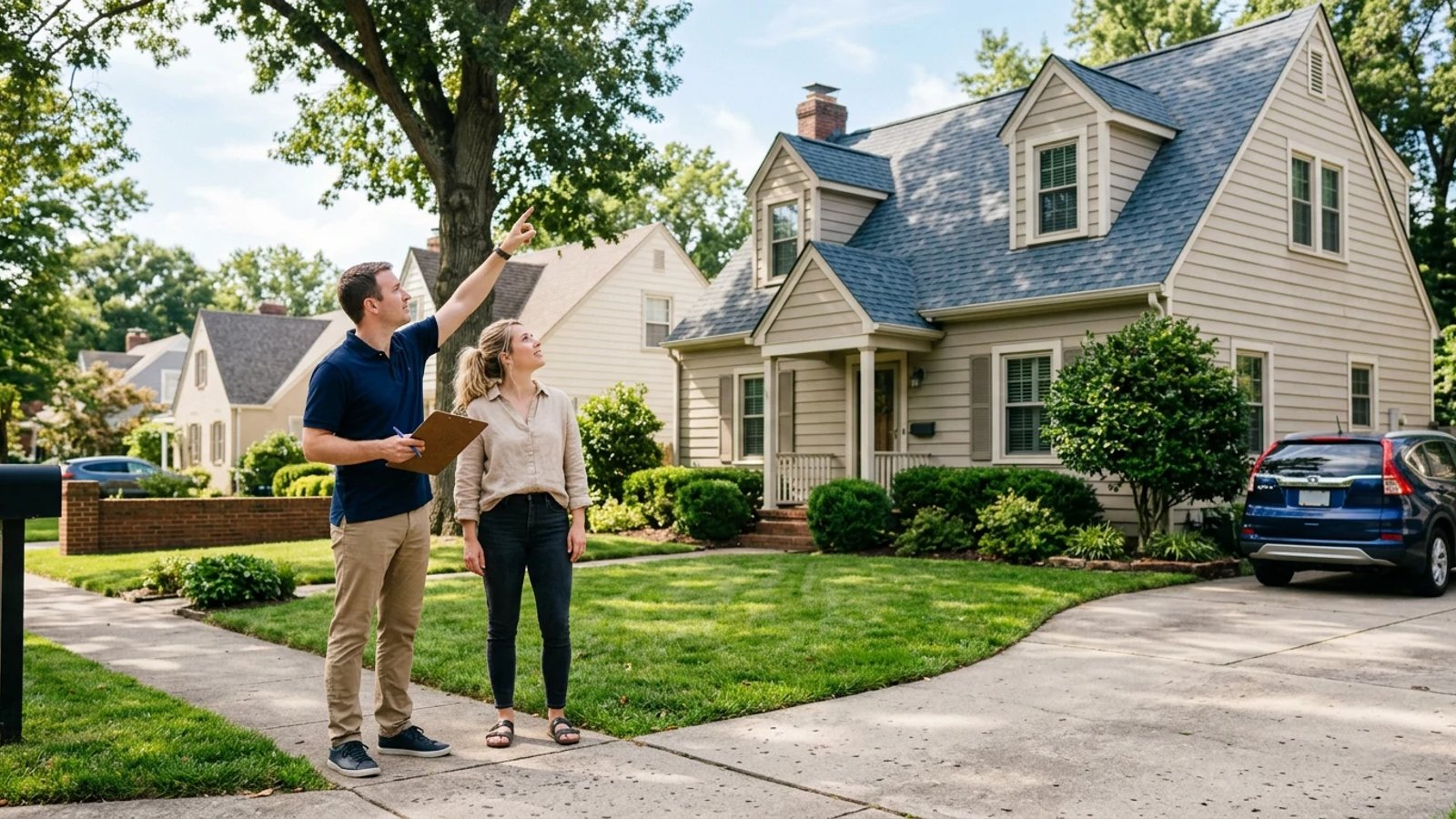
Start your evaluation before you even walk through the front door. Stand on the sidewalk and look at the roofline. Is the ridge perfectly straight, or does it sag in the middle? A sagging roofline points to structural framing issues. Next, look at the ground around the foundation. The soil should slope away from the house—ideally dropping about six inches over the first ten feet. If the ground slopes toward the house, rainwater is being funneled directly into the basement or crawlspace.
Once inside, look at the ceilings and the baseboards. You are hunting for water stains. A brown ring on a ceiling indicates an active or past leak from the roof or upstairs plumbing. Fresh, mismatched paint patches on an otherwise older ceiling are a major red flag.
The Essential 1st Home Checklist: Exterior and Systems
The cosmetic finishes of a home are cheap to change. The mechanical systems and structural envelope are not. A new roof can cost $10,000 to $20,000, and a new HVAC system can easily top $8,000. Here is exactly what to check on the major systems.
Roof and Exterior Envelope
You do not need a ladder to do a basic roof check. Use a pair of binoculars from the street. Look for asphalt shingles that are cupping (curling upward at the edges) or cracking. Look closely at the gutters—if you see a heavy buildup of sand-like granules, the shingles are nearing the end of their life. Check the siding for wood rot, especially near the bottom where it meets the foundation. Push a pen or a car key gently against any suspect wood trim; if it sinks in, the wood is rotten.
HVAC (Heating, Ventilation, and Air Conditioning)
Locate the outdoor air conditioning condenser and the indoor furnace or air handler. Look for the manufacturer's data plate on the side of the units. You will usually find the manufacturing date printed clearly. According to Energy Star guidelines, a typical central AC unit lasts 15 to 20 years, while a gas furnace might last 15 to 25 years. If the system is older than 15 years, you need to budget for a replacement soon.
Plumbing and Water Pressure
Do not be shy in the bathrooms. Turn on the shower to the hottest setting. While the shower is running, flush the toilet and turn on the sink faucet. Does the shower water pressure drop to a trickle? Does the temperature suddenly swing? This indicates outdated plumbing, likely galvanized steel pipes that have corroded from the inside out, restricting water flow.
Electrical Capacity
Find the main electrical panel. Open the metal door and look at the main breaker at the top. For a modern home, you want to see a 200-amp main breaker. A 100-amp panel is common in older homes, but it will struggle to support modern electrical loads like electric vehicle chargers, hot tubs, or induction stoves. Also, check if the wiring visible in the basement is modern plastic-sheathed Romex, or older, potentially hazardous knob-and-tube wiring.
What Are the Most Critical Questions to Ask When Buying a House?
Your real estate agent is your advocate, but you must direct them to ask the seller's agent the tough questions. Here are 4 critical questions to get you started. Sellers are legally required to disclose known defects in most states, but you still have to ask.
- Has water ever intruded into the basement or crawlspace? Do not accept a simple "no." Ask if a sump pump has ever failed, if the drain tiles have been serviced, or if they have ever had to use a wet vac after a heavy rain.
- Are there any unpermitted additions or renovations? If the seller finished the basement or added a deck without pulling city permits, you could be held liable for bringing the work up to code after you buy the house.
- How old is the roof, and is there a transferable warranty? Get the exact year of installation, not an estimate.
- What are the average winter and summer utility bills? This gives you a clear picture of the home's insulation and HVAC efficiency. A house with drafty single-pane windows will cost a fortune to heat in January.
Cosmetic issues like ugly paint or old carpet are cheap and easy to fix. Foundation cracks, a failing roof, or systemic plumbing leaks are not. Always buy the bones.
How to Evaluate the Interior Without Getting Distracted
It is incredibly easy to walk into a beautifully staged home and fall in love with the mid-century modern furniture and the perfectly styled bookshelves. You must train your eyes to ignore the decor and focus on the permanent fixtures.
Check the windows. Open and close at least three windows in the house. Do they slide smoothly, or are they painted shut? Look at the glass on double-pane windows. If you see fog, condensation, or a milky film between the two panes of glass, the thermal seal has failed. The window will not insulate properly, and the only fix is replacing the glass unit or the entire window.
Look at the floors. Walk slowly across the main living areas. Do you feel soft spots or significant dips? A slight slope in a 100-year-old house is normal settling. A sudden, bouncy soft spot in a 15-year-old house points to rotten floor joists or termite damage.
Bridging the Gap: Moving In and Initial Prep
Let's say the house passes your evaluation, you make an offer, survive the inspection period, and finally get the keys. The gap between closing day and moving day is your golden window. The house is completely empty, making it the perfect time to knock out essential maintenance and prep work.
Do not wait until the moving truck is backing into the driveway to start thinking about home security and cleanliness. Tackle these tasks the moment you have legal possession.
- Change the exterior locks immediately. You have no idea how many neighbors, dog walkers, or contractors have spare keys from the previous owner. Re-keying is cheap; your security is priceless.
- Locate the main water shutoff valve. Find it, test it by turning it off and on, and tag it with a bright piece of tape. If a pipe bursts at 2 AM, you need to know exactly where this is.
- Deep clean before the boxes arrive. Scrub the baseboards, clean the insides of the kitchen cabinets, and steam clean the carpets. Using a house cleaning checklist app or a printed guide can help you ensure no cabinet is left unscrubbed.
- Replace all safety batteries. Put fresh 9-volt or AA batteries in every single smoke detector and carbon monoxide alarm, regardless of what the seller claimed.
- Reset the garage door opener codes. Erase the old remotes from the motor's memory and program your own, along with a new exterior keypad PIN.
Organizing Your New Home Maintenance Routine
Once you are moved in, the reality of homeownership sets in. There is no landlord to call when the sink clogs or the furnace filter needs changing. The secret to protecting your investment is preventative maintenance.
Start building a maintenance calendar immediately. Note the sizes of your HVAC filters so you can buy them in bulk. Figure out where your dryer vent exits the house so you can clean it annually. Keep a running list of the small quirks you notice during your first month—a door that sticks in high humidity, a gutter that drips near the porch. By keeping a close eye on the small things, you prevent them from turning into massive, expensive repairs down the road. You are the captain of the ship now, and a little routine care goes a long way.
- Bring a strong flashlight and an outlet tester to every house tour.
- Water is a house's biggest enemy; check grading, gutters, and basement walls for moisture signs.
- Always verify the manufacturing date on the HVAC condenser and water heater.
- Never skip the professional inspection, even in a competitive seller's market.