What Is A Blower Door Test?
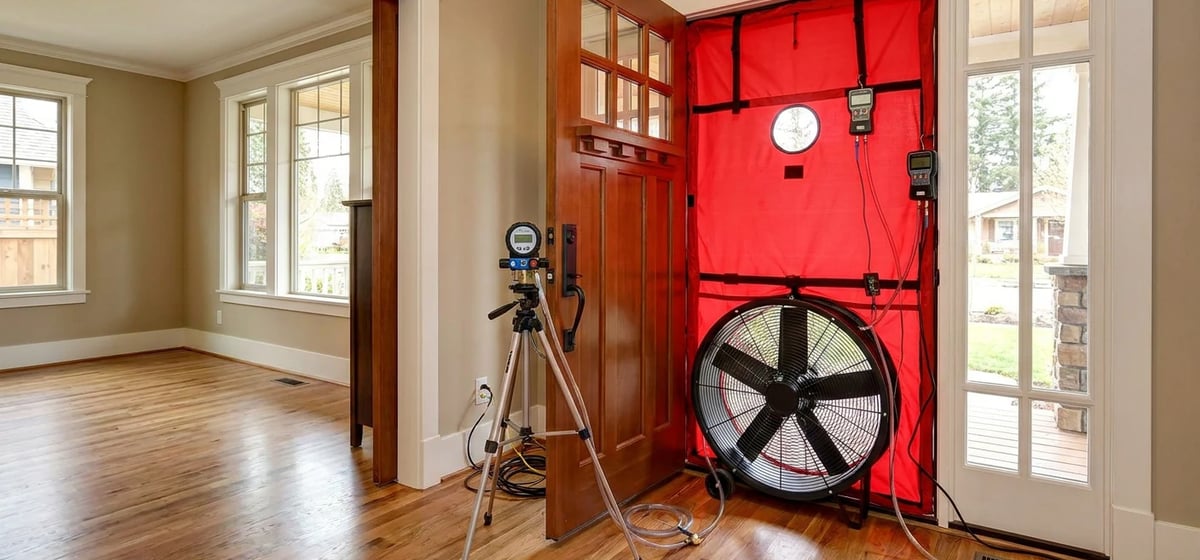
A blower door test measures how airtight your home is. An inspector places a temporary frame with a powerful fan into an exterior doorway. This fan pulls air out of the house. As the indoor pressure drops, the higher outside air pressure rushes in through any unsealed cracks or openings. This helps the inspector find hidden air leaks. Researchers at Princeton University invented this testing method in the late 1970s to study energy loss in homes. Today, energy auditors use it to figure out exactly where you need more insulation or caulking.
Why It Matters For Your Home
Air leaks make your heating and cooling systems work harder. This drives up your utility bills and makes some rooms feel drafty. A blower door test takes the guesswork out of fixing these problems. Instead of blindly adding weatherstripping, you'll know exactly where the air is escaping.
Many homeowners get this test done as part of a complete home energy audit. It's also very common when you upgrade your HVAC & Climate Control system. A properly sealed house means you might be able to buy a smaller, less expensive air conditioner or furnace.
What To Expect During The Test
The test usually takes about an hour or two. You don't need to leave the house. The inspector will walk you through a few simple preparation steps before they turn on the big fan.
- They'll close all exterior doors and windows.
- They'll open all interior doors so air can move freely through the rooms.
- They'll make sure any fireplace dampers are shut tightly.
- They'll turn off any gas appliances to prevent dangerous fumes from pulling back into the house.
Once the fan starts running, the auditor will walk through your home. They often use a special smoke pencil or an infrared thermal camera. These tools make the invisible drafts easy to see. You might be surprised to find leaks around your baseboards, electrical outlets, or attic hatches.
Common Places You Will Find Leaks
Most homeowners assume their windows are the biggest source of drafts. While old windows do leak, the blower door test often reveals bigger problems in hidden areas. The inspector will check places you rarely think about.
The attic is usually the worst offender. Air escapes through recessed lighting fixtures, plumbing vent pipes, and the gaps around your chimney. The basement or crawlspace is another major trouble spot. The area where your home's wooden frame meets the concrete foundation is called the rim joist. If this area lacks proper sealing, massive amounts of outside air gets sucked right into your living space.
Even small holes add up to a big energy loss. The test will show how much air leaks through electrical outlets on outside walls. It will also highlight gaps where cable wires or plumbing pipes enter the home. Fixing these small spots with a cheap can of spray foam can make a huge difference in your winter comfort.
Costs And Hiring A Pro
A standalone blower door test usually costs between 300 to 500 dollars. Prices and ranges vary based on where you live and the size of your home. However, you'll often get the best value by hiring an inspector for a full home energy audit. An audit includes the blower door test along with a full inspection of your insulation and ductwork.
Before you hire someone, check with your local utility company. Many power and gas companies offer heavy rebates for energy audits. Some even provide the test for free to encourage energy savings. If you need help finding a qualified auditor, look for professionals certified by the Residential Energy Services Network or the Building Performance Institute. You can also read more about finding good help in our guide on Hiring Contractors & What Things Cost.