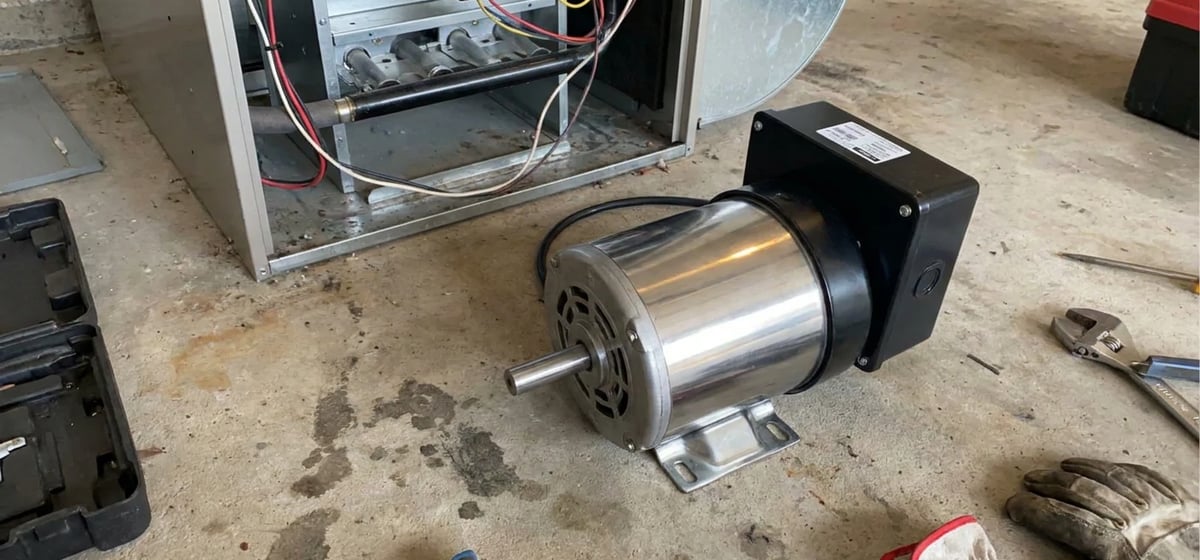
What an ECM Motor Is
An ECM motor is the heart of a modern heating and cooling system. The letters stand for electronically commutated motor. This part sits inside your furnace or air handler and acts as the blower fan. Older systems use a standard motor that only turns on at full speed and then turns completely off. An ECM motor is different because it changes its speed based on what your house needs. It can run very slowly to just move a little bit of air, or it can ramp up smoothly when you need a lot of heating or cooling.
This technology was created in the 1980s by General Electric. The word commutated just means how the motor switches electrical currents to control the magnetic fields that spin the fan. Inside the motor, a built in microprocessor acts like a tiny brain. It constantly calculates how fast the fan needs to spin to push the right amount of air through your ducts. This means it can adjust itself if your filter gets a little dirty or if you close a few vents.
Why It Matters to You
This part makes a huge difference in your comfort and your monthly bills. Because an ECM motor can run at lower speeds, it uses much less electricity than an older motor. Running a fan at half speed uses only a fraction of the power compared to running it at full blast. Over a full year, this can save you a noticeable amount of money on your electric bill. It also keeps your house at a more even temperature. You won't feel huge swings between hot and cold because the fan gently mixes the air all day long.
Another big benefit is better air quality. Since the fan can run quietly on a low speed all day, it constantly pushes air through your filter. This pulls more dust, pet dander, and allergens out of the air you breathe. It also helps control humidity in the summer. A slow fan speed gives your air conditioner more time to pull moisture out of the air before it blows back into your rooms. If you want to learn more about your whole system, check out our guide on HVAC & Climate Control.
Where You Run Into It
You'll usually hear about an ECM motor when you are buying a new furnace or heat pump. Contractors list this part on their quotes to show you're getting a high efficiency system. Some quotes might call it a variable speed motor or a constant torque motor. You might also see it mentioned if you are trying to get a rebate from your local utility company. Many power companies offer rebates of 50 to 150 dollars if you upgrade to a system with an ECM motor because it reduces the strain on the local power grid.
You might also run into this term when your old blower motor breaks. If you have an older system, an HVAC technician might suggest replacing your broken standard motor with an aftermarket ECM motor to save energy. This is a common upgrade for homeowners who want better efficiency but aren't ready to replace their entire furnace just yet.
What to Watch For
The biggest thing to watch out for is the replacement cost. ECM motors are like small computers. They have a control module attached to the back of the motor. This makes them very expensive to replace if they break out of warranty. A standard motor might cost 300 to 500 dollars to replace. An ECM motor replacement usually costs 800 to 1500 dollars. Prices always vary based on where you live, the brand of your equipment, and the specific size of the motor.
Here are the most common reasons these motors fail:
- Dirty air filters that force the motor to overwork.
- Power surges that fry the sensitive computer board.
- Moisture leaking from your air conditioner coil onto the motor.
Because they are sensitive to electrical issues, power surges can easily damage the control module. You might want to ask your contractor about adding a whole house surge protector to your electrical panel. You can read more about dealing with contractors in our guide to Hiring Contractors & What Things Cost.
If your fan stops working, a pro will need to test it with a special meter. They can tell if the motor itself is bad or if just the control module needs to be replaced. Sometimes replacing just the module saves you a few hundred dollars.