What is a rafter?
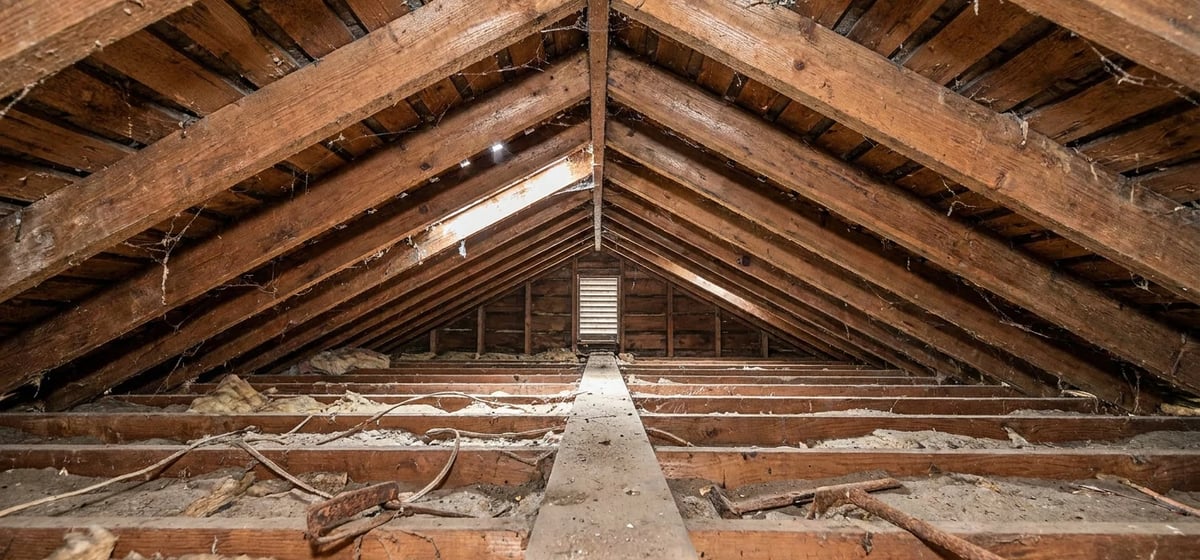
Rafters are the angled wooden boards that support the weight of your roof. They run from the very peak of your house down to the outside walls. This creates the slope of your roof so rain and snow can slide off. You can easily see them if you look up while standing inside an unfinished attic. They look like a series of ribs holding up the roof deck.
The word comes from the Old English term raefter. That meant a beam or pole used in a roof. It shares ancient roots with words describing rafts made of lashed wooden logs. In older homes, builders cut and nailed rafters right on the job site. Builders call this method stick framing. Many newer homes use prefabricated trusses instead. Trusses are pre-built webs of smaller wood pieces that do the same job. However, true rafters leave a large open space in the middle of your attic. This makes it much easier to use your attic for storage or turn it into a finished room later.
Why rafters matter to you
Your rafters do a massive amount of heavy lifting every single day. They hold up the wooden roof deck, the waterproof underlayment, and the heavy shingles. They also have to support temporary loads like heavy snow and ice during the winter months. High winds push hard against your roof during storms, and your rafters keep the whole structure stable.
Because they support so much weight, they absolutely must stay dry and strong. If moisture gets trapped in your attic, the wood can slowly rot away. This is why good attic ventilation is so incredibly important for your home. Proper airflow keeps the rafters dry and extends the life of your Roofing materials. Without good vents, the heat and humidity will cook the wood and weaken it over time.
Signs of rafter trouble
You should poke your head into your attic at least once a year. Look at the rafters with a bright flashlight. You want to spot small problems before they turn into major structural damage.
- Water stains: Dark spots or streaks on the wood mean your roof is leaking. You need to find and fix the leak right away before the wood begins to rot.
- Sagging wood: If a board looks bowed, bent, or cracked, it is failing under the weight. This often happens if heavy snow sits on the roof for a long time.
- White powder or tiny holes: Small holes or piles of sawdust mean insects are eating the wood. You'll need to look into Pest Control to stop the damage before it spreads.
- Mold or mildew: Fuzzy white, green, or black growth on the wood means your attic is too damp. You likely need to add better vents to the roof or soffits.
Repair costs and hiring a pro
If you find a cracked or rotting rafter, don't panic. You don't always have to replace the entire roof. A skilled carpenter or roofing contractor can often fix the problem by sistering the board. This means they bolt and glue a brand new piece of wood directly alongside the damaged one. The new wood takes over the job of supporting the weight.
Sistering a single rafter typically costs 150 to 400 dollars. If you have extensive rot or termite damage across multiple boards, the job will cost much more. A major structural repair can easily run 1,000 to 3,000 dollars. Keep in mind that prices vary widely based on your location, how hard it is to reach the damaged board, and the current cost of lumber. If you need to hire someone to inspect your attic, check out our guide on Hiring Contractors & What Things Cost.