Best Humidity for Home: Finding Your Ideal Indoor Balance
Finding the optimal indoor moisture level is crucial for comfort and protecting your house. Learn the ideal humidity range and how to maintain it year-round.
Full guide HVAC & Climate Control How your home heats, cools, and moves air, and the decisions that matter.Achieving the best humidity for home is crucial for indoor comfort, especially during the sticky late-summer months when your air conditioning unit works overtime to keep your living space cool. Temperature is only half the equation of indoor comfort. The amount of moisture lingering in the air dictates whether your living room feels like a crisp retreat or a damp swamp. It involves more than just avoiding frizzy hair—it is a critical part of protecting your property from hidden damage.
Homeowners often overlook moisture control until they spot peeling paint or smell a musty odor in the basement. By understanding how moisture behaves inside your house, you can stop these problems before they require expensive repairs.
What is the best humidity for home?
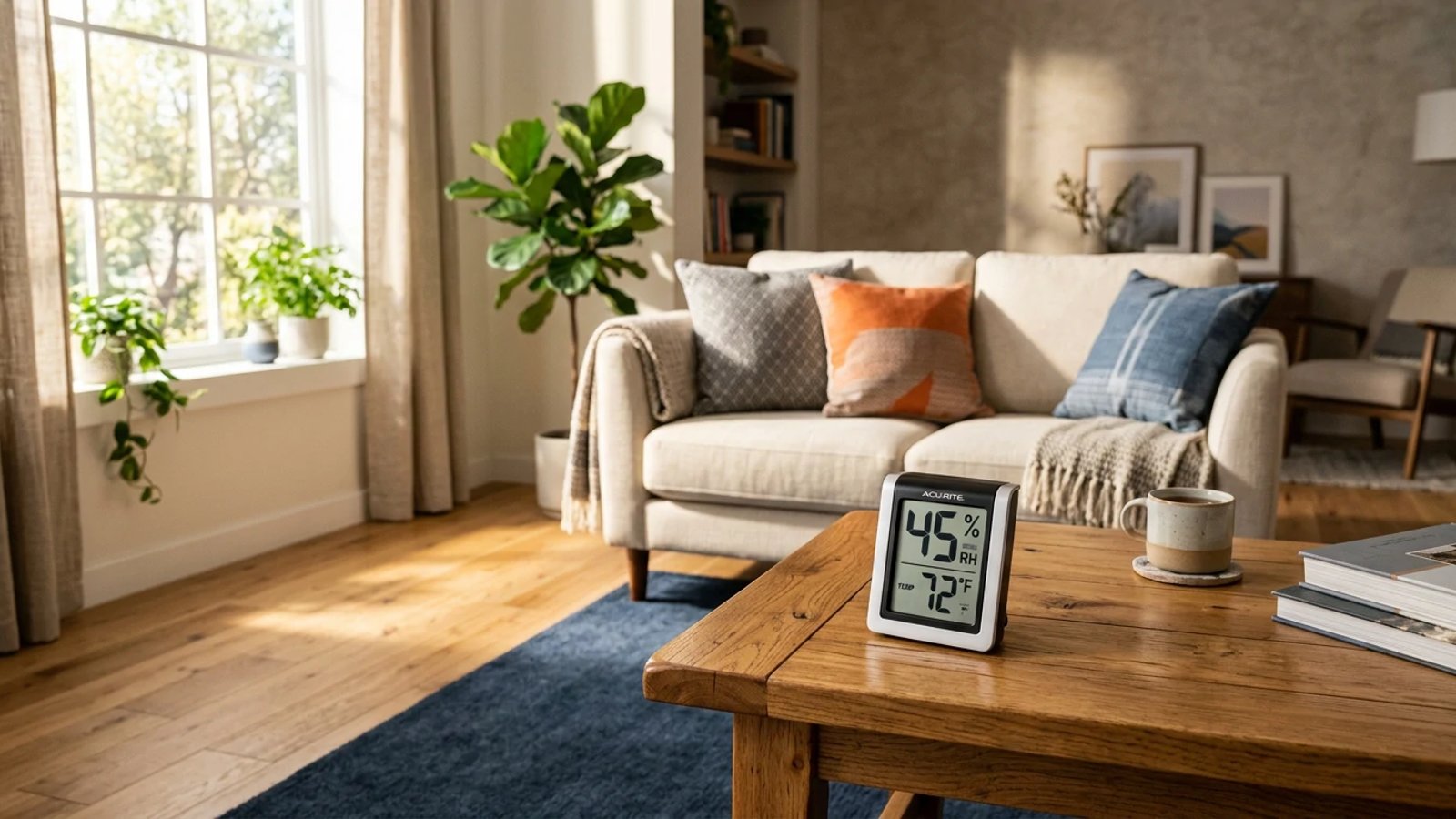
The short answer is that the best humidity for home environments falls between 30% and 50%, a range you can easily monitor with a simple hygrometer. This specific range provides the ideal balance for human comfort, structural health, and indoor air quality.
According to guidelines from the EPA, keeping indoor relative humidity below 60% is essential for stopping mold growth. When the air holds too much water vapor, that moisture eventually has to go somewhere. It settles onto your cooler surfaces—like exterior walls, window panes, and air ducts—creating the perfect breeding ground for mildew and fungi.
Conversely, letting the air drop below 30% creates a different set of headaches. Extremely dry air pulls moisture out of everything it touches. This is why you wake up with a scratchy throat in the middle of winter, and why your hardwood floors might start to gap or squeak.
Warning signs your indoor moisture is off-balance
Your house will usually tell you when the moisture levels are out of whack long before a major failure occurs. Learning to read these environmental clues can save you from replacing rotted window sills or warped flooring.
Signs your home is too humid
When the air is saturated, you will notice physical condensation. Look closely at your windows early in the morning. If you see heavy fog or water droplets pooling on the glass and running down onto the sill, your indoor air is too wet.
Other common indicators of high humidity include doors that suddenly stick in their frames, hardwood floor planks that cup or crown at the edges, and a persistent musty smell in lower-level rooms. If your bare feet feel slightly sticky walking across a tile or vinyl floor, the air is holding too much water.
Signs your home is too dry
Dry air is usually a larger problem during the heating season, but it can occur anytime your HVAC system strips out too much moisture. The most obvious sign is frequent static electricity shocks when you touch light switches or doorknobs.
You might also notice the caulk around your baseboards and crown molding beginning to crack or pull away from the wall. Wooden furniture can develop hairline splits, and houseplants will often show brown, crispy tips on their leaves despite regular watering.
How to measure the best humidity for home accurately
You cannot manage what you do not measure. Guessing the moisture level based on how the air feels is notoriously inaccurate. To get a real reading, you need a hygrometer.
A digital hygrometer is a small, inexpensive device that measures both temperature and relative humidity. You can pick up a reliable model at any local hardware store like Home Depot or Lowe's for $10 to $15. Last August, I tested the humidity in my own basement after noticing a faint damp smell. The cheap hygrometer read 68%. Adding a standard 50-pint dehumidifier dropped the reading to 45% in two days, and the smell vanished completely.
To get the most accurate reading from your new device, follow a simple setup process.
- Place the device centrally. Set the hygrometer on a table or shelf in the middle of the room you want to test.
- Keep it away from extremes. Avoid placing it in direct sunlight, near an HVAC supply register, or right next to an exterior door.
- Wait for the sensor to acclimate. Leave the device completely alone for at least 24 hours so it can adjust to the ambient room conditions.
- Check the reading at different times. Note the humidity level in the morning and the late afternoon to see how your daily routine affects the moisture.
How your HVAC system controls humidity
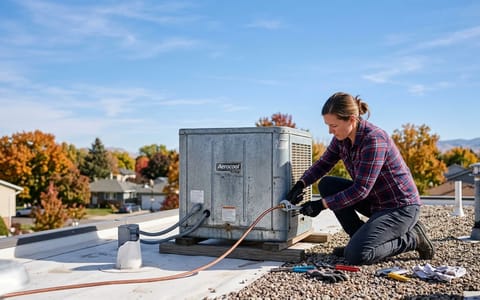
Your air conditioner does not just cool the air; it conditions it. As warm indoor air blows across the freezing cold evaporator coils inside your HVAC unit, the moisture in that air condenses into liquid water. This water drips into a drain pan and flows safely outside or into a floor drain.
However, this dehumidification process takes time. If your house feels cold but clammy, your AC unit might be "short-cycling." This happens when an oversized air conditioner cools the house down to the target temperature in just 10 or 15 minutes and shuts off. Because it did not run long enough, it never had the chance to pull the excess humidity out of the air.
Another common HVAC mistake is leaving the thermostat fan setting on "On" rather than "Auto." When the fan runs continuously, it blows the moisture that just condensed on the coils right back into your living space before it has a chance to drain away.
Quick ways to adjust your home's humidity right now
If your hygrometer shows that you are outside the ideal 30% to 50% range, you do not necessarily need to install a whole-home humidification system. There are several fast, inexpensive ways to bring things back into balance.
Use your exhaust fans properly
Every time you take a hot shower or boil a pot of pasta, you are pumping gallons of water vapor directly into your home's air. Bathroom and kitchen exhaust fans are your first line of defense.
Turn your bathroom exhaust fan on before you step into the shower, and leave it running for at least 20 minutes after you turn the water off.
Seal up the envelope
During late summer, heavy, humid outdoor air will push its way into your home through any available gap. Check the weatherstripping around your exterior doors and the caulking around your window frames. Replacing flattened or torn door seals with a $15 roll of foam weatherstripping tape from the hardware store can make a massive difference in how much outdoor moisture infiltrates your home.
Deploy a standalone dehumidifier
For naturally damp spaces like finished basements or crawlspaces, your central AC often isn't enough. A portable dehumidifier is the best tool for the job.
A standard 50-pint dehumidifier costs between $200 and $250 and can easily handle a 1,000-square-foot basement. If you are tired of emptying the water bucket every day, look for a model with a built-in pump or attach a short length of garden hose to the gravity drain port and route it directly into a floor drain.
Utilize houseplants strategically
If your home is slightly too dry, adding a few large houseplants can help. Through a process called transpiration, plants release moisture from their leaves into the air. Grouping several plants together in a sunny corner can naturally bump up the humidity in that specific room by a few percentage points.
Maintaining the best humidity for home comfort is an ongoing process, not a one-time fix. As the seasons shift from sticky late-summer afternoons to crisp late-fall evenings, your indoor moisture levels will fluctuate. Keep a hygrometer on your bookshelf, check it once a week, and adjust your fans, thermostats, and dehumidifiers accordingly to keep your house healthy and comfortable year-round.
- Keep indoor humidity below 50% to prevent mold growth, dust mites, and musty odors.
- Use bathroom and kitchen exhaust fans during showers and cooking to vent excess moisture outside.
- If your AC cools the house quickly but leaves it feeling sticky, it might be oversized and failing to dehumidify.
- Set your HVAC thermostat fan to 'Auto' rather than 'On' to allow moisture to drain away from the cooling coils.