Mini Split Installation Cost: The Honest Price Guide

Wondering what a ductless mini split actually costs to install? We break down the price per zone, hidden fees, and how to find local rebates now that federal tax credits have ended.
Full guide HVAC & Climate Control How your home heats, cools, and moves air, and the decisions that matter.Many older homes lack the ductwork required for traditional central air conditioning. If you are looking to heat or cool a specific space—like a sunroom, a finished basement, or an older cape-style house—ductless systems are usually the best solution. But when you start calling local HVAC companies, you will quickly run into a major hurdle: figuring out the true mini split installation cost.
Quotes can be incredibly confusing. One company might bid $3,500, while another wants $12,000 for what sounds like the exact same job. This massive price spread leaves many homeowners worried about overpaying or getting stuck with shoddy workmanship. We are going to break down the national price ranges, explain the cost per zone, and highlight the hidden fees so you know exactly what you are paying for.
Why Does the Mini Split Installation Cost Vary So Much?
When you receive a quote for a ductless system, you are paying for three main components: the equipment, the installation materials, and the contractor's labor and overhead. The equipment itself is the first major variable. A premium, hyper-heat unit from a top-tier brand like Mitsubishi or Daikin costs significantly more wholesale than a budget-friendly unit from Pioneer or MrCool.
Labor and overhead make up the rest of the difference. A large HVAC company with a fleet of wrapped trucks, a dedicated dispatch office, and heavy marketing expenses will charge more per hour than a smaller, owner-operator outfit. In my experience, when we replaced the noisy window units in my 1940s home with a ductless setup, the first quote I got was nearly double the third. I noticed the high bidder was automatically including a full electrical panel upgrade that my local electrician later confirmed I didn't actually need.
Average National Price Ranges for Ductless Systems
To set a realistic budget, it helps to look at national averages. Keep in mind that prices in high-cost-of-living areas like New York or California will lean toward the higher end of these ranges, while prices in the Midwest or South may be lower.
These figures include standard installation labor, basic mounting hardware, and standard-length refrigerant lines. If your home has brick or stone siding, expect to pay a slight premium for the extra labor required to drill the 3-inch hole necessary for the line sets to pass through the wall.
Cost Per Zone: Single-Zone vs. Multi-Zone Setups
A "zone" simply refers to one indoor air handler (the head unit mounted on your wall or ceiling). A single-zone system pairs one outdoor compressor with one indoor head. A multi-zone system uses a larger outdoor compressor to run two, three, four, or even five indoor heads.
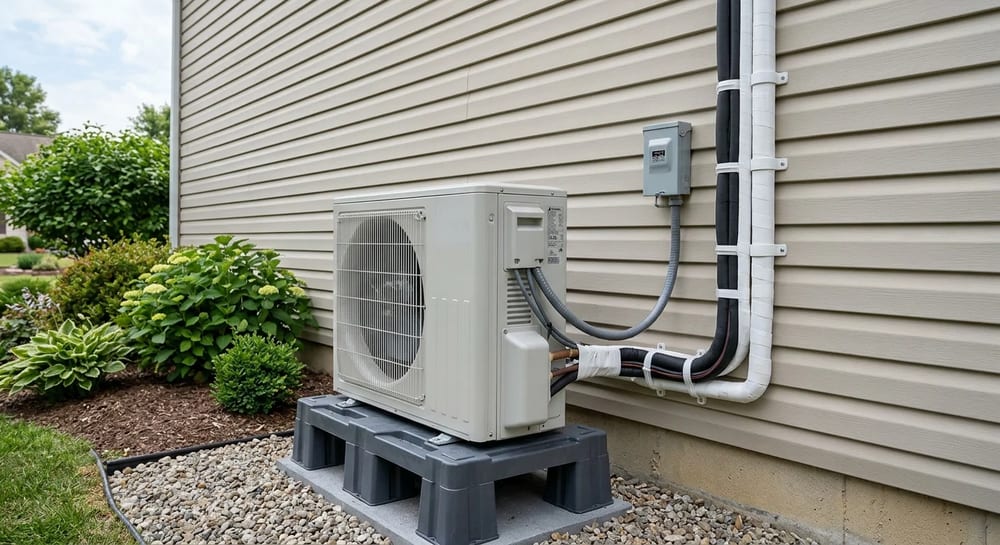
Homeowners often assume that adding a second zone just means buying a second indoor head for $500. Unfortunately, the math doesn't work that way. Adding another zone requires a larger, more expensive outdoor compressor to handle the increased capacity. It also requires running a second set of copper refrigerant lines and control wires from the outdoor unit all the way to the new indoor unit.
As a rule of thumb, expect to add $1,500 to $2,500 to your total bill for every additional zone you install.
Hidden Installation Factors You Need to Budget For
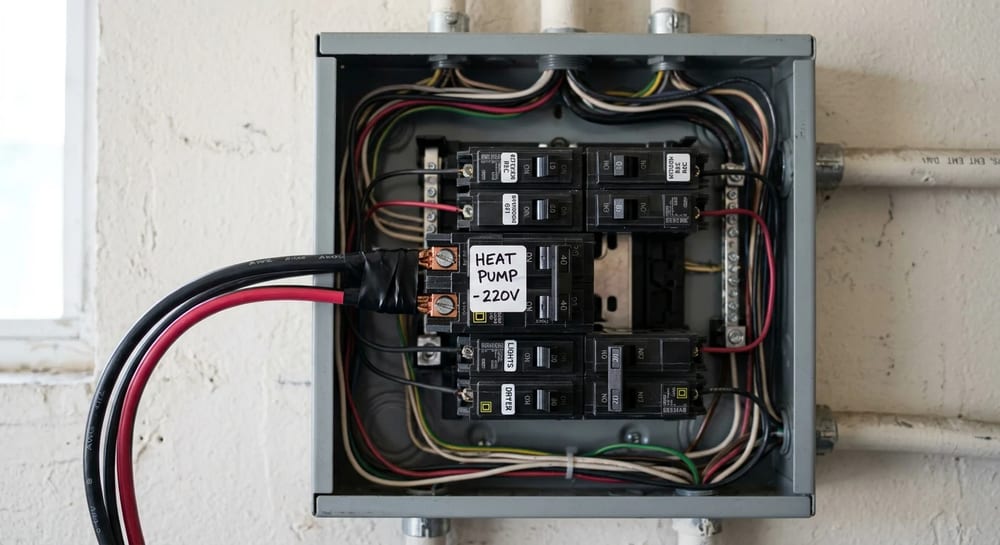
Even with a solid baseline price, a few hidden factors can inflate your final bill. The most common surprise is the electrical requirement. Mini splits require a dedicated 220V circuit. If you live in an older home with a 100-amp electrical panel that is already full, you cannot simply squeeze in another double-pole breaker.
Upgrading your electrical service to 200 amps will easily add $1,500 to $3,000 to your project. Even if your panel has room, running a new wire from a basement panel to an outdoor compressor on the opposite side of the house requires an electrician's time and materials.
Another factor is the length of the line set. Most systems come pre-charged with enough refrigerant for 15 to 25 feet of copper line. If your indoor unit is located far from the outdoor compressor, the installer must use longer copper lines and manually add extra R-410A or R-32 refrigerant to the system to maintain the proper pressure.
Navigating Rebates After the Federal Tax Credit Ended
For several years, the government heavily subsidized heat pump installations to encourage energy efficiency. However, the financial landscape has recently changed, and you need to be aware of the current rules before you sign a contract.
The federal Energy Efficient Home Improvement Credit (Section 25C), which provided up to a $2,000 tax credit for qualifying heat pumps, officially ended on December 31, 2025. If an HVAC contractor gives you a sales pitch claiming you can write off $2,000 on your 2026 federal taxes, they are using outdated sales materials. Do not factor a federal tax credit into your budget for any work completed this year.
Instead, you must look locally. Many state energy offices and local utility providers still offer substantial instant rebates for installing high-efficiency equipment. These local rebates often range from $300 to $1,200, depending on the SEER2 (cooling efficiency) and HSPF2 (heating efficiency) ratings of the unit you choose. Call your local electric company directly or check their website before you finalize your equipment choice.
How to Evaluate Quotes and Choose the Right Pro
Because the installation quality matters just as much as the equipment brand, choosing the right contractor is critical. A poorly installed premium unit will leak refrigerant and fail just as fast as a cheap unit. Aim to get at least three detailed quotes to compare. Here is how to vet the quotes you receive:
- Check for manufacturer certifications. Many top brands offer extended 12-year warranties only if the system is installed by one of their certified contractors (e.g., a Mitsubishi Diamond Contractor).
- Ask for a Manual J calculation. A contractor should measure your rooms, check your insulation, and calculate the exact heating and cooling load needed. If they just guess the size based on square footage, find someone else.
- Compare the efficiency ratings. Look closely at the SEER2 and HSPF2 numbers on each quote. A slightly more expensive quote might be offering a much more efficient machine that will save you money on your monthly electric bill.
- Verify the labor warranty. Manufacturers cover the parts, but the contractor covers the labor. Look for a company that guarantees their installation labor for at least one to two years.
Taking the time to get three detailed quotes and asking the right questions about electrical requirements and local rebates will protect your wallet. A ductless mini split is a fantastic upgrade for home comfort, provided you go into the project knowing exactly what you are paying for.
- Always get at least three quotes; prices vary wildly based on contractor overhead and equipment brand.
- Check your electrical panel before committing—mini splits require a dedicated 220V circuit, which may trigger a costly panel upgrade.
- Ask your contractor to perform a Manual J load calculation to ensure the system isn't oversized, which wastes money and reduces comfort.
- Contact your local utility provider to ask about instant rebates for high-efficiency heat pumps before signing a contract.