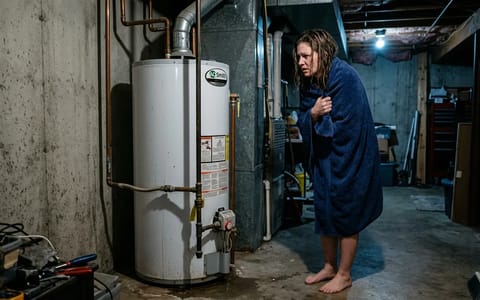
No Hot Water? Safe Steps to Troubleshoot and Relight It
Stepped into a freezing shower? Learn how to safely troubleshoot a gas water heater with no hot water, perform basic checks, and relight the pilot.
Full guide Plumbing Learn how your home plumbing works and how to stop leaks before they ruin your house.Few things wake you up faster than stepping into a shower expecting steam and getting hit with a blast of ice-cold water. If you suddenly have no hot water, your gas water heater has likely stopped firing. Before you panic and start calling emergency plumbers with high weekend rates, there are a few safe, straightforward checks you can perform to diagnose the issue and get the heat back on.
Gas water heaters are generally reliable appliances, but they rely on a delicate sequence of events to keep your water warm. A small pilot light must stay lit to ignite the main burner whenever the tank's temperature drops. If that pilot goes out, the whole system shuts down. Troubleshooting this system requires a calm approach and a strict respect for natural gas safety.
The Sniff Test: Is It Safe to Troubleshoot?
Before you touch a dial, grab a flashlight, or look closely at the tank, you must perform a basic sniff test. Stand at least three feet back and smell for any unusual odors. Natural gas is naturally odorless, but utility companies add a chemical called mercaptan to give it a distinct, pungent smell resembling rotten eggs or sulfur. This is your built-in warning system.
If you walk up to your water heater and smell rotten eggs, stop immediately. Do not flip any light switches, do not attempt to turn the gas valve, and absolutely do not strike a match or push the igniter button. A strong gas odor means you have an active leak, and the safety mechanisms on the heater have failed or the supply line itself is compromised.
Why Do I Have No Hot Water? Basic Checks First
If the air smells clean and you have cleared the safety check, you can start looking for the simple culprits. In my experience, about half the times I have helped a neighbor with a sudden lack of hot water, the actual machine was perfectly fine. The issue was a bumped dial or a closed valve.
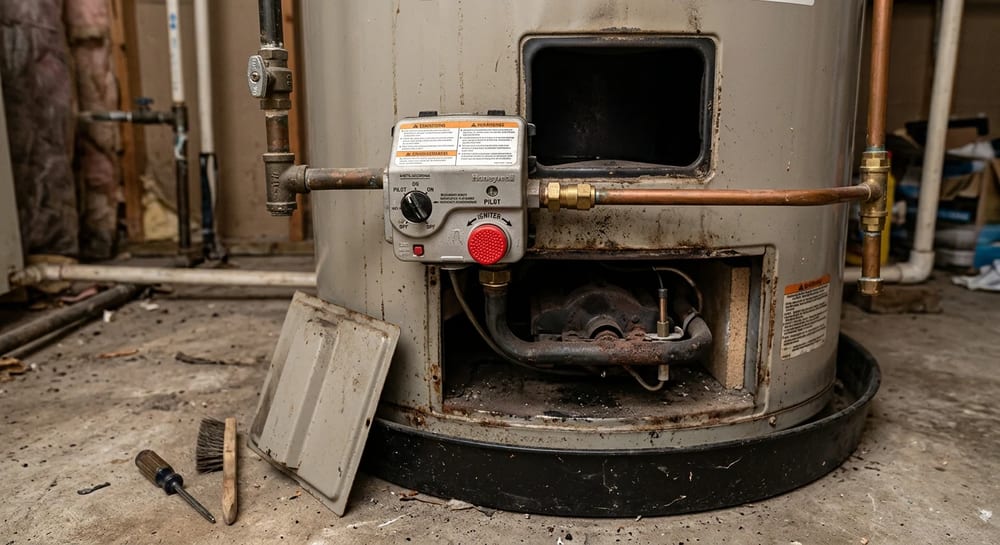
First, check the gas supply valve. Follow the rigid metal or flexible yellow gas pipe leading into the bottom of the water heater control box. You will see a shutoff valve on this pipe. The handle should be parallel to the pipe, which indicates the gas is flowing. If someone was sweeping the basement or moving boxes and bumped the handle so it sits perpendicular to the pipe, the gas is shut off. Turn it back parallel.
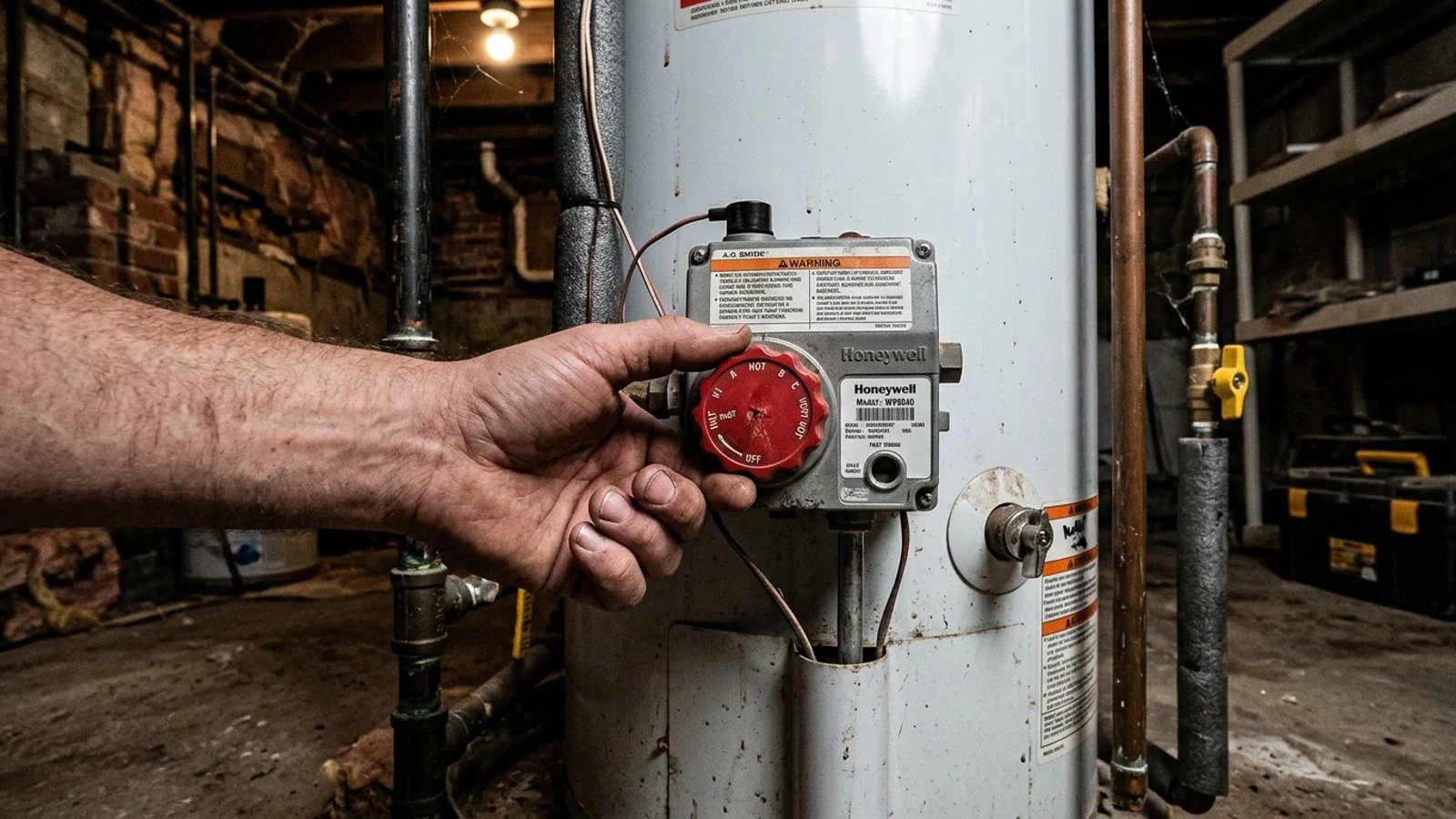
Next, check the thermostat dial on the front of the water heater control valve. It should be set to the "Hot" setting, which on most modern heaters correlates to 120°F. This is the optimal temperature recommended by safety agencies to prevent scalding while keeping the water hot enough to deter bacterial growth in the tank. If the dial got bumped to "Vacation" or "Low," the burner will not fire. Turn it back to the correct setting, and you might hear the main burner ignite immediately.
The Pilot Light: Finding the Culprit
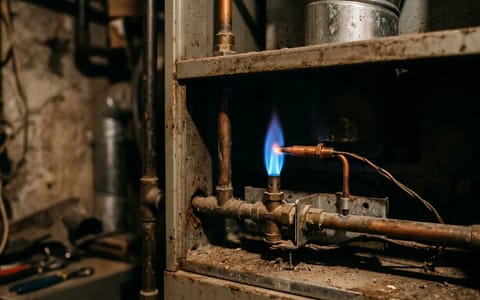
If the gas is on and the thermostat is set correctly, the most likely reason you have no hot water is that the pilot light has gone out. The pilot light is a tiny, continuous blue flame located inside the combustion chamber at the very bottom of the tank.
To check it, get down on your knees and look at the control valve. Below the valve, there is usually a small metal access panel. On newer heaters, this panel is sealed with a small glass window called a sight glass. Cup your hands around your face to block out the basement light and look through the glass. You are looking for a small blue flame. If it is completely dark in there, your pilot is out.
Pilot lights can blow out for highly mundane reasons. A strong draft from a nearby door, a sudden pressure drop in the municipal gas line, or a bit of dust falling down the flue can extinguish the flame. Fortunately, relighting it is a standard homeowner task.
Step-by-Step: How to Safely Relight a Water Heater Pilot
Every water heater has a specific set of lighting instructions printed directly on a sticker on the side of the tank. Always read and follow those instructions first, as they are specific to your exact model. However, the process for modern gas water heaters with a push-button piezo igniter generally follows this sequence.
- Turn the gas valve to OFF. Locate the large knob on top of the control valve and turn it from "ON" to the "OFF" position.
- Wait exactly five minutes. This is a non-negotiable safety step. Waiting allows any unburned gas lingering in the combustion chamber to safely dissipate, preventing a flash-fire when you create a spark.
- Turn the knob to PILOT. After the five minutes have passed, turn the main knob to the "PILOT" position.
- Press and hold the knob down. Pushing the knob down manually overrides the safety valve, allowing a tiny amount of gas to flow to the pilot tube. Keep holding it down firmly.
- Click the igniter button. While still holding the knob down, repeatedly press the red or black igniter button (usually located right next to the valve). You should hear a loud click and see a spark through the sight glass. Keep clicking until the pilot flame lights.
- Hold the knob for one full minute. Once the flame is lit, do not let go of the knob. Continue holding it down for 60 seconds to allow the thermocouple to heat up.
- Release the knob and turn to ON. Let go of the knob. The pilot flame should stay lit. If it does, turn the knob from "PILOT" to "ON," and then adjust your temperature dial to 120°F. The main burner should ignite with a low roar.
What If the Pilot Won't Stay Lit?
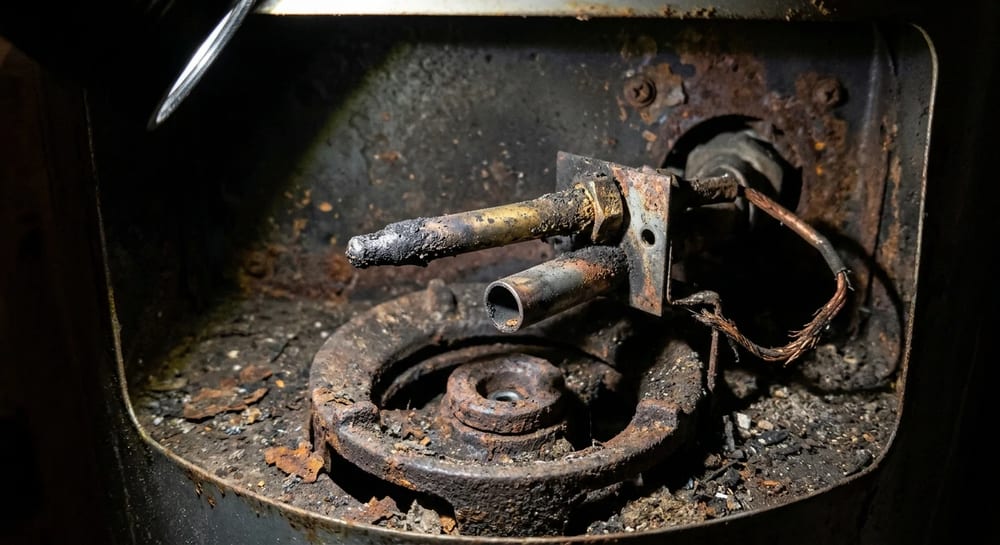
Sometimes you will follow the relighting steps perfectly, see the pilot flame ignite, hold the button for a full minute, and the second you let go, the flame dies. If this happens repeatedly, you have a mechanical failure. The most common culprit is a failed thermocouple.
The thermocouple is a small copper rod that sits directly in the pilot flame. It is a brilliant, simple safety device. As the pilot flame heats the copper, the thermocouple generates a tiny electrical current. This current travels up a wire to the main gas valve, telling an electromagnet to hold the gas valve open. If the pilot blows out, the rod cools down, the current stops, and the gas valve snaps shut. This prevents your basement from filling with unburned gas.
Over time, thermocouples build up carbon deposits or simply burn out. When they fail, they stop sending the electrical signal, and the gas valve refuses to stay open, even if you are manually lighting the flame. A replacement thermocouple costs about $15 to $25 at any local hardware store. Replacing it involves shutting off the gas, unscrewing the old unit from the control valve, sliding it out of the burner assembly, and threading the new one in.
A failing thermocouple is the number one reason a water heater pilot refuses to stay lit.
When to Call a Professional Plumber
While relighting a pilot and replacing a basic thermocouple are tasks many handy homeowners tackle, water heaters involve combustible gas and carbon monoxide venting. There is a hard line where DIY stops and professional help begins.
Additionally, if you hear the main burner ignite but you still have no hot water, or if the water is only lukewarm, the dip tube inside the tank may have snapped off, or the tank itself may be full of heavy sediment. A plumber can diagnose internal tank issues and advise whether a repair or a full replacement makes more financial sense.
Losing hot water is an abrupt disruption to your day, but it does not always mean a costly repair bill. By keeping a flashlight handy, knowing how to read your specific unit's lighting instructions, and understanding the basic mechanics of the pilot and thermocouple, you can resolve the most common issues safely and get your household running smoothly again.
- Safety dictates that a rotten egg smell means immediate evacuation and a call to the gas company, not DIY troubleshooting.
- A bumped thermostat dial or accidentally closed gas valve are common, easy-to-fix culprits for a lack of hot water.
- Modern water heaters feature sealed combustion chambers and push-button igniters, making relighting the pilot safer than in older models.
- Replacing a thermocouple is a manageable DIY task, but gas valve or internal burner repairs require a licensed professional.