Requirements for First Time Home Buyers: A Simple Guide
A practical, step-by-step guide to the financial requirements and timeline of buying your first home, from pre-approval to the closing table.
Full guide New Homeowner Guide Learn how to take control of your new house in the first year without getting overwhelmed.Tired of renting, paying someone else's mortgage, and endlessly scrolling through real estate listings late at night? Taking the leap from renter to owner is exciting, but the financial jargon and sheer amount of paperwork can stop you in your tracks. If you just typed "requirements for first time home buyers" into a search bar, you are not alone. In my experience, the process often feels like a secret club with unwritten rules.
When I bought my first house, I almost lost the deal because I didn't understand how earnest money worked. We scrambled to wire $3,000 in two days, entirely stressed out because we hadn't prepared for the upfront cash requirements. Buying a house does not have to be a chaotic scramble. Once you understand the basic financial benchmarks and the order of operations, the path to homeownership becomes a clear, predictable checklist.
Let's break down exactly what lenders expect from you, how to prepare your bank accounts, and the step-by-step process of actually purchasing a property.
What are the requirements for first time home buyers?
Before you start picking out paint colors or attending open houses, you have to prove to a bank that you are a safe bet. Lenders look at three main pillars to determine if you qualify for a mortgage: your credit score, your down payment, and your debt-to-income ratio.
1. Credit Score Requirements
Your credit score dictates not only if you can get a loan, but how much that loan will cost you in interest. For a standard conventional loan, you generally need a minimum credit score of 620. If your score sits between 580 and 619, you can often qualify for an FHA (Federal Housing Administration) loan, which is heavily favored by first-time buyers. To get the absolute best interest rates, aim for a score of 740 or higher.
2. The Down Payment Myth
The biggest misconception in real estate is that you need a 20% down payment to buy a house. If you are buying a $300,000 home, saving $60,000 in cash is a massive barrier. Fortunately, conventional loans for first-time buyers often require as little as 3% down ($9,000 on that same house). FHA loans require 3.5%. VA loans (for veterans) and USDA loans (for rural properties) can even offer 0% down. Just keep in mind that putting down less than 20% means you will pay Private Mortgage Insurance (PMI) every month until you build enough equity.
3. Debt-to-Income (DTI) Ratio
Lenders want to know that your new mortgage payment won't stretch your budget to the breaking point. They calculate your Debt-to-Income (DTI) ratio by dividing your total monthly debt payments (car loans, student loans, minimum credit card payments) by your gross monthly income (your income before taxes).
What is the first step in buying a home?
The absolute first step in buying a home is getting pre-approved for a mortgage. Do not start touring homes without a pre-approval letter in hand. Real estate agents and sellers will not take your offers seriously if you cannot prove you have the backing of a financial institution.
Pre-approval is an official process where a lender verifies your financial background. Unlike a "pre-qualification," which is just a quick estimate based on numbers you type into a web form, a pre-approval requires hard proof. You will need to hand over:
- W-2 forms from the past two years.
- Pay stubs from the last 30 days.
- Bank statements from the last two months.
- Proof of any other assets (like retirement accounts).
Once the lender reviews this, they will issue a letter stating exactly how much money they are willing to lend you. This gives you a hard ceiling for your house hunting budget and shows sellers you mean business.
Things to do before buying a house
With your pre-approval in hand, you might be tempted to sprint to the nearest open house. Pause for a moment. There are a few critical financial preparations you need to handle before making an offer.
Save for Closing Costs
Your down payment is not the only cash you need to bring to the closing table. Closing costs cover the administrative fees of buying a house: loan origination fees, title insurance, appraisal fees, and prepaid property taxes. These typically run between 2% and 5% of the total purchase price. On a $300,000 home, that is an extra $6,000 to $15,000 you need in the bank.
Lock Down Your Credit
From the moment you get pre-approved until the day you get the keys, your credit must remain frozen in time. Lenders will pull your credit report one final time right before closing. If your profile has changed, they can kill the loan entirely.
What are the steps in buying a house?
You have your finances in order and your pre-approval letter ready. Now the actual fun (and stress) begins. Here is the standard timeline of how to buy a house, step by step.
- Find a great real estate agent. Look for a buyer's agent who knows the specific neighborhoods you want. They will schedule tours, point out potential issues, and negotiate on your behalf.
- Start touring homes strategically. Look past ugly paint colors and outdated furniture. Focus on the "bones" of the house: the layout, the neighborhood, the age of the roof, and the natural light.
- Make a competitive offer. When you find the right place, your agent will help you draft a purchase agreement. This document outlines your price, your timeline, and your contingencies (conditions that let you walk away safely).
- Deposit your earnest money. If the seller accepts your offer, you usually have 48 hours to wire 1% to 3% of the purchase price into an escrow account. This "good faith" deposit proves you are serious. It will be credited toward your down payment at closing.
- Enter the escrow period. This is the 30 to 45-day window where your lender finalizes the loan, the title company checks the property's legal history, and you conduct your inspections.
What to expect when buying a house: The final stretch
Having an accepted offer is thrilling, but the house isn't yours yet. The escrow period, typically lasting 30-45 days, is full of hurdles you have to clear before you get the keys. The two biggest hurdles are the inspection and the appraisal.
The Home Inspection
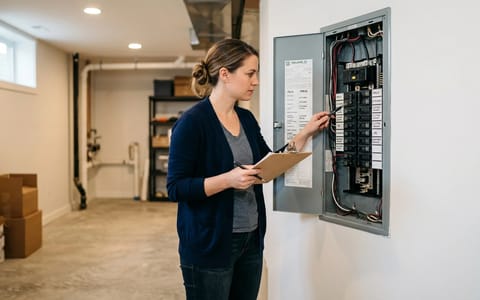
Never skip the home inspection. You will hire an independent, licensed inspector to spend a few hours crawling through the attic, testing the HVAC system, checking the electrical panel, and looking for plumbing leaks. They will hand you a massive report detailing every single flaw in the house. Do not panic—every house has flaws. You are looking for major structural failures, safety hazards, or expensive mechanical issues. If the inspector finds a failing roof or a cracked foundation, you can negotiate with the seller to fix it, lower the price, or you can walk away from the deal entirely.
The Bank Appraisal
While the inspector works for you, the appraiser works for the bank. The lender needs to ensure the house is actually worth the amount of money you are borrowing. If you offered $300,000 but the appraiser determines the home is only worth $280,000, the bank will only lend you $280,000. You will have to make up the $20,000 difference in cash, convince the seller to drop the price, or cancel the contract.
The Closing Table
If the inspection goes well, the appraisal comes in at value, and your lender gives you the "Clear to Close," you have made it to the finish line. Three days before closing, you will receive a Closing Disclosure document. According to the Consumer Financial Protection Bureau, you must have three full days to review this document to ensure the loan terms and interest rates match what you agreed upon.
On closing day, you will sit at a large conference table with a notary and sign a stack of legal documents that feels three inches thick. You will wire your down payment and closing costs to the title company. Once the funds clear and the deed is recorded with the county, the agent will hand you the keys.
Buying your first home requires patience, a lot of paperwork, and strict financial discipline. By understanding the credit requirements, saving for those hidden closing costs, and moving step-by-step through the inspection process, you protect yourself from expensive surprises. Take your time, lean on your agent for guidance, and trust the process. That first night sleeping under a roof you actually own makes all the paperwork worth it.
- Calculate your debt-to-income (DTI) ratio before applying for a loan to know exactly how much house you can afford.
- Hire a dedicated buyer's agent to represent your interests; their commission is almost always paid by the seller.
- Always include an inspection contingency in your offer to protect yourself from hidden structural or mechanical failures.
- Keep a cash reserve after closing for emergency repairs and unexpected move-in expenses.