Why Your Washing Machine Smells (And How to Fix It Fast)
If your fresh laundry smells like a damp basement, your washer is likely harboring mold and detergent buildup. Learn how to deep clean it and banish odors for good.
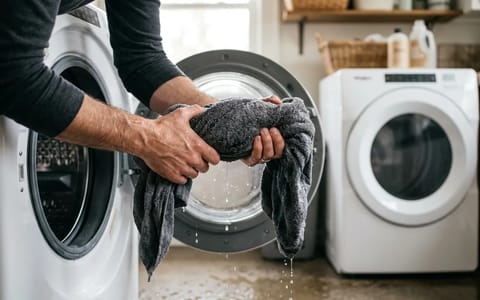
Full guide Appliances Learn how long your home appliances will last and when to repair or replace them.You just pulled a load of towels out of the washer, expecting the scent of clean laundry. Instead, you are hit with a musty odor that smells exactly like a damp basement. When your washing machine smells, it transfers that mildew scent directly into the fabric of your clothes, defeating the whole purpose of doing laundry.
This is a notoriously common issue, especially for modern machines. The good news is that you do not need to replace your appliance. You just need to clear out the hidden grime that is turning your laundry room sour.
Why Does My Front-Load Washing Machine Smell Like a Damp Basement?
High-efficiency (HE) front-load washers are fantastic at saving water and energy. They can use up to 60% less water per load compared to traditional top-loaders. However, that same low-water design makes it harder for the machine to flush away all the soap suds, dirt, and body oils from your clothes. Over time, that leftover residue coats the outer drum and the rubber door gasket.
Because front loaders need a watertight seal to keep water from pouring onto your floor, they use a thick, folded rubber gasket. This gasket is a magnet for lint, stray hair, and standing water. When you shut the door after a cycle, you trap that moisture inside a dark, warm drum. It creates the perfect environment for mold and mildew to thrive.
When we bought our first front-loader, I spent three months wondering why our fresh towels smelled like a wet dog before I finally checked inside the folds of the rubber door seal. It was entirely coated in black sludge.
How to Clean a Smelly Washing Machine
To get rid of the odor, you need to attack the mold and soap scum directly. I tested a few different commercial cleaners, but honestly, plain white vinegar combined with a bit of elbow grease did the best job on our five-year-old LG front loader. Gather some white vinegar, an old toothbrush, a few microfiber cloths, and a shallow baking dish.
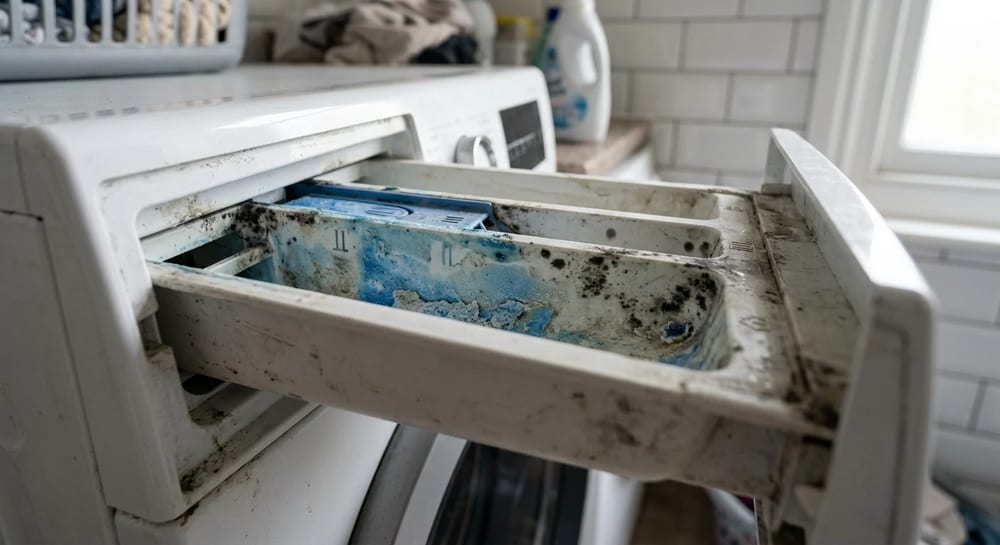
- Remove and wash the detergent dispenser. Pull the drawer out entirely (most have a small tab you press down to release it) and scrub it in the sink with warm, soapy water to remove dried detergent and mold.
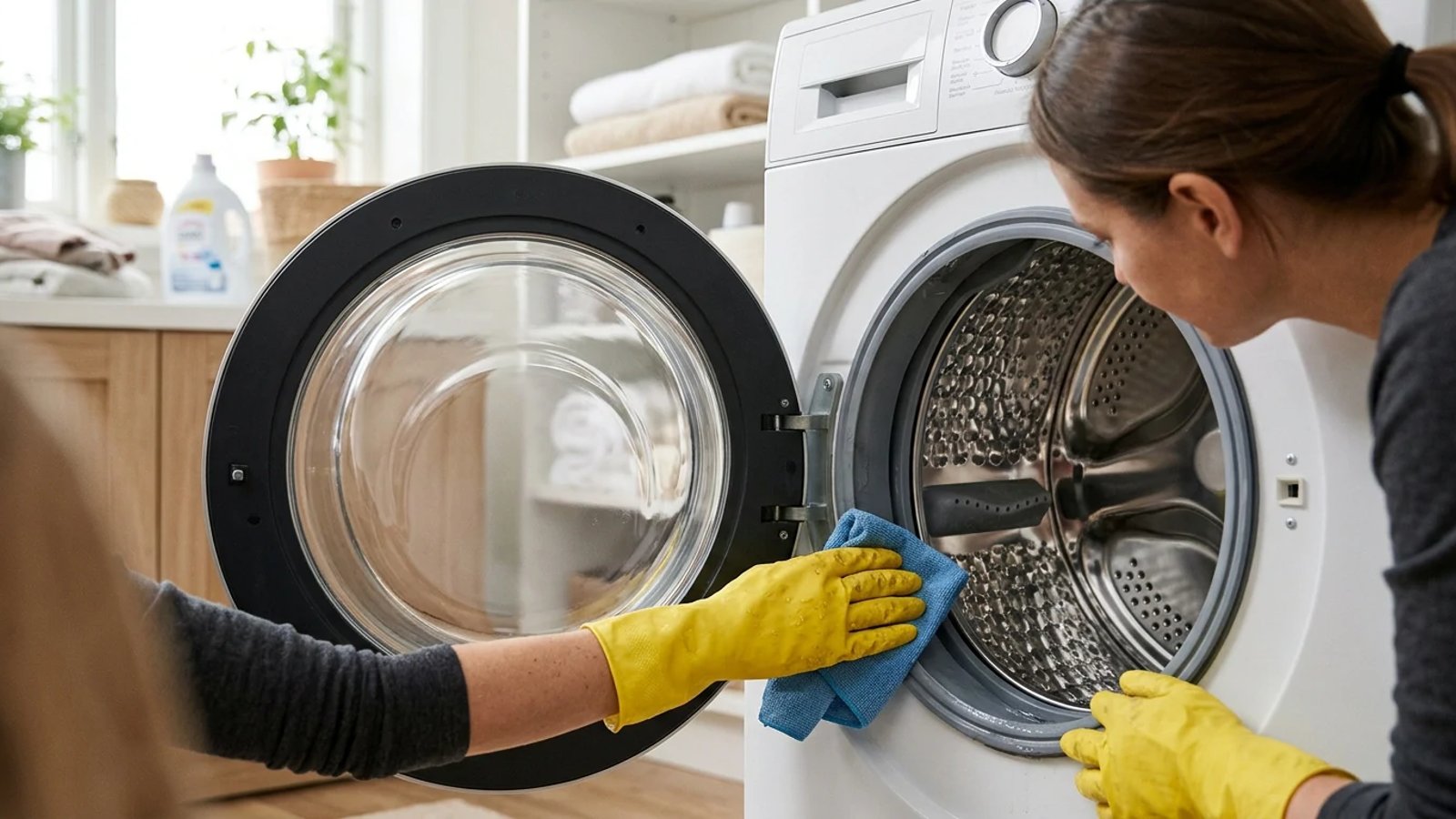
- Scrub the rubber door gasket. Peel back the layers of the rubber seal around the door opening, spray it generously with white vinegar, and use a cloth and toothbrush to wipe away all the hidden sludge, lint, and mildew.
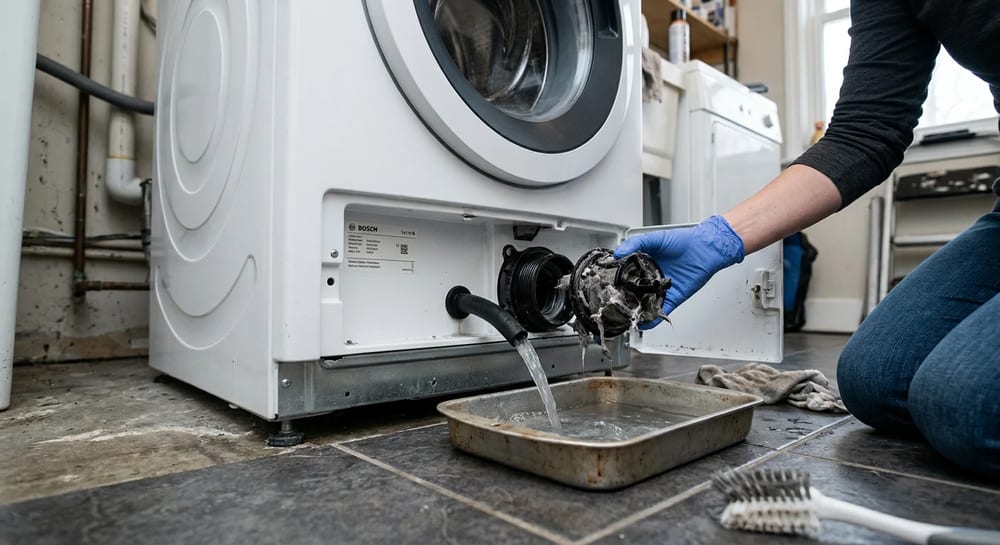
- Drain the pump filter. Locate the small access door on the bottom front of your washer, place a shallow dish underneath, unclip the small drain hose to let the trapped water flow out, then unscrew the plastic filter and rinse it clean in the sink.
- Clean the inside of the drum. Pour two cups of white vinegar directly into the empty washer drum, bypassing the dispenser.
- Run a hot sanitizing cycle. Set your machine to its "Tub Clean" or "Sanitize" setting (or the hottest, longest cycle available) and let it run completely empty.
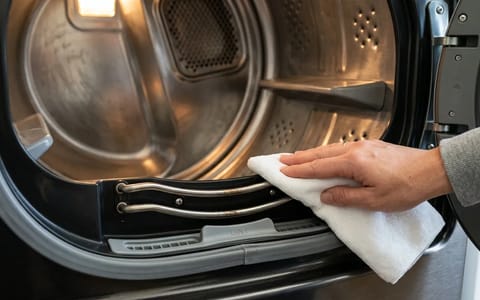
- Wipe it dry. Once the cycle finishes, use a dry microfiber cloth to wipe down the inside of the drum, the inside of the glass door, and the rubber gasket.
Beyond Mildew: Troubleshooting Other Smelly Washing Machine Issues
While mildew is the most common culprit behind a stinky washer, it's not the only one. Sometimes, your washing machine might emit odors that suggest a different underlying problem, ranging from plumbing issues to mechanical failures. Identifying the specific smell can help you pinpoint the cause and address it effectively.
The Rotten Egg or Sewage Smell
If your washing machine smells like rotten eggs or sewage, the problem likely stems from your plumbing. This sulfuric odor often indicates a clogged drain line, a dry P-trap, or issues with your home's main sewer line. A dry P-trap, which is designed to hold water and block sewer gases, can dry out if the machine hasn't been used in a while, allowing foul odors to back up into your laundry room. You can often flush it by running a hot cycle with some water.
More seriously, a partial clog in the drain hose or standpipe can trap stagnant water and organic matter, leading to bacterial growth that produces hydrogen sulfide gas. Ensuring your drain hose is correctly installed (not pushed too far down the standpipe, creating a siphon) and regularly flushing it can help. If the problem persists, it's wise to consult a plumber to inspect your drain lines and ventilation system.
Chemical or Detergent Residue Odor
Sometimes, your machine might smell less like mildew and more like a stale chemical or an overpowering, cloying detergent scent. This usually means you're using too much detergent, or the wrong type (non-HE in an HE machine). Excess detergent creates a residue that doesn't fully rinse away, clinging to the drum and clothes. This residue can then mix with trapped moisture and bacteria, leading to a distinct, unpleasant chemical-mildew hybrid smell. Cutting back on detergent and regularly running cleaning cycles can resolve this.
Burning or Electrical Smell
A burning smell from your washing machine is a serious warning sign that should never be ignored. This could indicate an an electrical problem, such as a faulty motor, a short circuit, or damaged wiring. It might also be caused by an overloaded motor working too hard or a slipping drive belt. If you detect a burning smell, immediately unplug the machine and do not use it. Call a qualified appliance repair technician to diagnose and fix the issue, as continuing to operate it could pose a fire hazard.
Advanced Cleaning Tips for a Smelly Washing Machine
Beyond the regular vinegar wash, there are other powerful methods and considerations for tackling stubborn odors and ensuring your washing machine stays pristine. Incorporating these into your routine can provide a deeper clean and prevent future smells.
Using Baking Soda for a Deeper Clean
Baking soda is a natural deodorizer and mild abrasive that can work wonders on washing machine odors. After you've scrubbed the gasket and cleaned the dispenser, you can run a two-part cleaning cycle. First, pour one cup of baking soda directly into the empty drum and run a hot water cycle (without detergent). The baking soda helps neutralize odors and loosen grime. Follow this with a vinegar cycle as described previously for maximum effect.
The Bleach Method (Use with Caution)
For particularly severe mold and mildew infestations, some manufacturers recommend using bleach. However, bleach should be used sparingly and never mixed with vinegar, as this creates dangerous chlorine gas. To use bleach safely, add half a cup of liquid chlorine bleach to the detergent dispenser (or bleach dispenser if your machine has one) and run a hot water sanitizing cycle with an empty drum. Afterwards, run an additional rinse cycle to ensure all bleach residue is gone. Always consult your machine's manual before using bleach.
Addressing Hard Water Buildup
If you live in an area with hard water, mineral deposits can accumulate inside your washing machine, providing another surface for mold and mildew to cling to. These deposits can also reduce your machine's efficiency. Periodically running a cleaning cycle with a descaling agent (like a commercial washing machine cleaner designed for hard water, or even a stronger citric acid solution) can help break down these mineral scales. Follow the product instructions carefully.
Remember, consistency is key. Regular, thorough cleaning, combined with good laundry habits, will keep your washing machine smelling fresh and extend its lifespan. Don't let a stinky washer ruin your clean laundry!
The Problem with Liquid Fabric Softener
If you constantly battle a smelly washer, take a hard look at your laundry products. Liquid fabric softener is essentially a mixture of animal fats and petroleum-based chemicals designed to coat your clothes. Unfortunately, it also coats the inside of your washing machine.
This sticky residue does not wash away easily in cold water. It builds up on the outer drum, acting as a food source for mildew and bacteria. If you want fresh-smelling laundry, ditch the liquid softener. You can use half a cup of white vinegar in the softener dispenser instead—it naturally softens clothes without leaving any residue behind.
Liquid fabric softener coats your clothes in animal fats and petroleum—and it does the exact same thing to the inside of your washing machine drum.
How to Keep the Mildew Odor Away
Once your washer is clean, a few simple habit changes will keep it that way. The most important rule of owning a front-load washer is to never shut the door completely when the machine is not in use. Always leave the door ajar by a few inches to allow air to circulate and dry out the drum.
Next, cut back on your detergent. Modern HE detergents are highly concentrated. According to Energy Star guidelines, you should only use HE-specific detergent in these machines, and you rarely need more than two tablespoons for a normal load. Using a full cap of detergent just creates excess suds that the machine cannot rinse away, leading straight back to swampy odors.
By managing moisture and avoiding heavy, sticky laundry products, you can easily keep your washing machine smelling fresh. It takes just a few minutes of monthly maintenance to ensure your clothes actually come out clean.
- Peel back the rubber door seal to find the hidden grime and mold causing the musty smell.
- Most front loaders have a drain pump filter at the bottom that needs to be emptied and cleaned every few months.
- Stop using liquid fabric softener—it coats the drum and feeds mildew.
- Two tablespoons of high-efficiency (HE) detergent is plenty for a normal load.