What is a balance point?
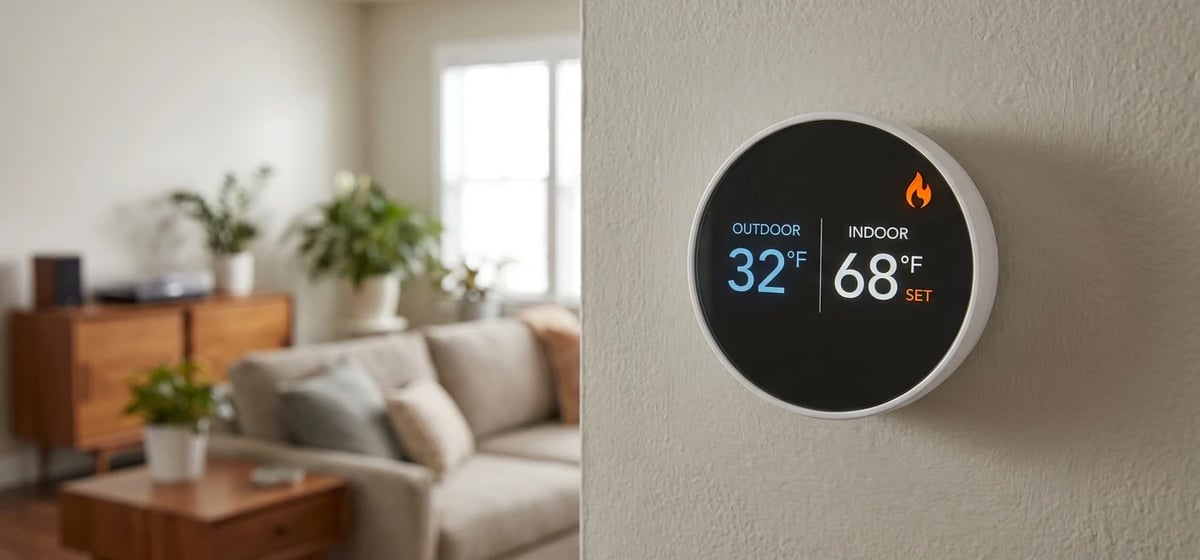
Your heat pump keeps your home warm by pulling heat from the outdoor air and moving it inside. This works very well during mild winter weather. However, as the temperature drops outside, there is less heat available in the air for the machine to grab. At a certain exact temperature, your heat pump can only pull in just enough heat to match the heat your house naturally loses through its walls and roof. This specific temperature is called your balance point.
When the outdoor weather drops below this mark, your heat pump can no longer keep your house warm on its own. Your heating system must turn on its backup heating elements to keep you comfortable. You will usually see this point set between 30 and 35 degrees Fahrenheit. You can read more about how these systems operate in our HVAC & Climate Control guide.
Why your balance point matters
Knowing your balance point helps you understand your winter utility bills. When your outdoor temperature crosses this line, your system switches on auxiliary heat. This backup heat usually comes from electric resistance strips. These strips act like a giant space heater or toaster hidden inside your ductwork. They use a massive amount of electricity compared to the regular heat pump cycle.
If your balance point is too high, your backup heat turns on too often. This causes your winter electric bills to skyrocket. A lower balance point means your heat pump runs efficiently even in very cold weather. This keeps your monthly costs down and keeps your home at a steady, comfortable temperature.
Factors that change your number
Every single house has a different balance point. It is not just a factory setting on a machine. It is a mathematical calculation based on how your specific house interacts with the weather. Three main things control this number.
- Your home insulation: A drafty house loses heat fast. This forces the backup heat to turn on much sooner. Thick, modern insulation traps the heat inside and significantly lowers your balance point.
- Your heat pump size: An oversized unit can pump more heat at lower temperatures. An undersized unit struggles faster and relies on backup heat more often.
- Your local climate: Homes in freezing northern states need different equipment than homes in mild southern states. A contractor will calculate your local weather patterns before installing a system.
Dual fuel systems and your balance point
Some homes use a dual fuel system instead of electric backup heat. This means you have an electric heat pump for mild weather and a gas furnace for freezing weather. In a dual fuel setup, the balance point is the exact moment the heat pump shuts off completely and the gas furnace takes over.
Gas is often cheaper than running electric resistance strips. If you have a dual fuel system, you might actually want to set your balance point a little higher. This lets the gas furnace take over sooner when electricity prices are high in your area.
How to lower your balance point
If your electric bills are too high in the winter, you can take steps to lower your balance point. The cheapest way is to seal air leaks around your exterior doors and windows. Basic weatherstripping costs only 20 to 50 dollars. Adding new insulation to your attic is the next best step. This project usually costs 1000 to 3000 dollars, though ranges vary based on the size of your home.
If your heat pump is old, upgrading to a cold climate model will make the biggest difference. Modern cold climate heat pumps can pull heat from the air even when it is well below zero outside. Buying a brand new heat pump costs 5000 to 10000 dollars, but it drastically lowers your balance point. If you want to explore the prices of these major upgrades, check our guide on Hiring Contractors & What Things Cost.