What It Is
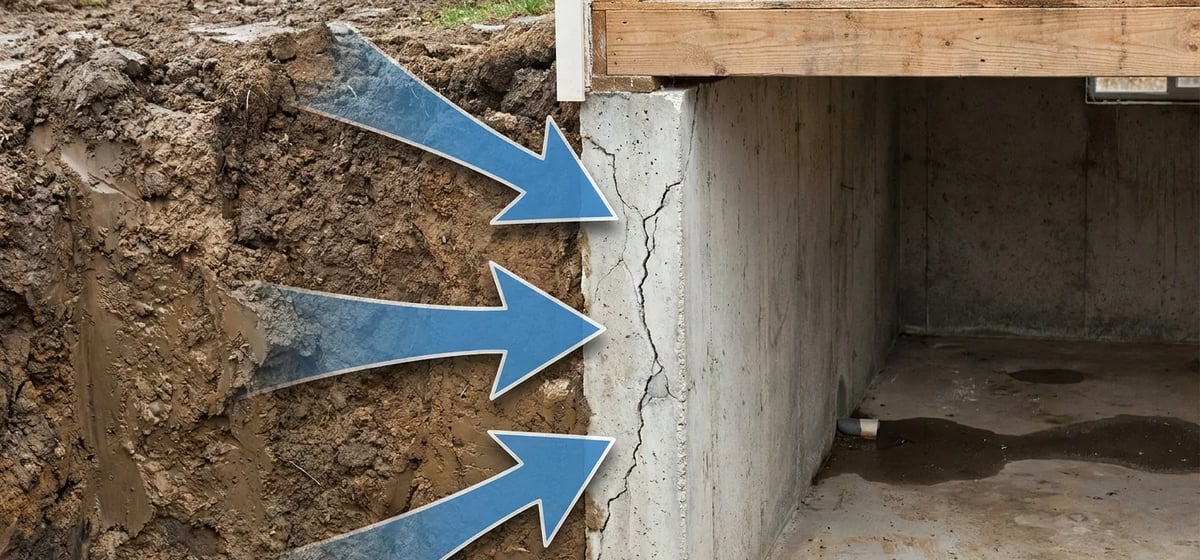
Hydrostatic pressure is the intense force that resting water places on your basement walls and foundation. The word hydrostatic combines the Greek prefix hydro, meaning water, with static, meaning standing still. Physicists coined the term in the 1600s to describe the mechanics of fluids at rest. In your home, this pressure happens when heavy rain or melting snow saturates the soil around your house. Water is incredibly heavy. When the dirt around your house fills with water, it expands and pushes hard against your concrete foundation.
Why It Matters
Concrete looks solid, but it is actually porous and brittle. When the soil gets soaked, it can exert tens of thousands of pounds of pressure against your basement walls. Your foundation is designed to hold up the weight of your house, but it is not always built to withstand massive sideways pressure from wet dirt.
If you lack proper drainage, this pressure will eventually win. It forces water into the tiny pores of your concrete. Over time, the constant pushing causes the concrete to crack, bow inward, and leak. If you ignore it, you could face severe structural damage that makes your home unsafe. You can learn more about how your home supports itself in our guide to Foundation & Structure.
What to Watch For
You can usually spot the signs of hydrostatic pressure before a major collapse happens. Catching these clues early will save you a lot of money and stress. Head down to your basement or crawlspace and look for these common warning signs.
- Horizontal cracks: Cracks that run sideways along your basement walls are a major red flag. This means the wall is bowing inward from the soil pressure.
- Stair-step cracks: If you have concrete block walls, you might see cracks that look like a staircase following the mortar joints.
- Water seepage: Look for water pooling right where the basement floor meets the wall. This joint is a weak spot where pressure forces water inside.
- White powder: You might notice a chalky white substance on your concrete walls. This is called efflorescence. It happens when water pushes through the wall and leaves mineral deposits behind.
How to Fix It
You cannot stop it from raining, but you can stop water from sitting against your house. The goal is to relieve the pressure by giving the water a place to go. You should always start with the easiest fixes outside.
Make sure your gutters are clean and your downspouts push water at least six feet away from your house. You also want the dirt around your foundation to slope down and away from the walls. If water still pools near your house, you might need to look into professional drainage solutions. You can find more tips on grading your yard in our Landscaping, Drainage & Outdoor guide.
If the pressure has already caused leaks, you will likely need an interior or exterior drainage system. An interior French drain and a sump pump will catch the water as it enters and pump it outside. Digging out the soil outside to install an exterior waterproof barrier is the most effective fix, but it is also the most expensive.
What It Costs
Fixing hydrostatic pressure issues can be a major investment. Simple fixes like extending your downspouts might only cost 20 to 50 dollars. However, professional foundation repairs get expensive quickly. Keep in mind that these ranges vary based on your location and the size of your home.
- Sump pump installation: Expect to pay 500 to 1,500 dollars to have a pro install a new pump and pit.
- Interior French drain: Installing a perimeter drain inside your basement usually costs 2,000 to 6,000 dollars.
- Exterior waterproofing: Excavating the dirt around your home to install exterior drains and barriers is a massive job. This typically runs 5,000 to 15,000 dollars or more.
- Wall anchors: If your walls are bowing, contractors will install steel anchors to pull them straight. This costs about 500 to 1,000 dollars per anchor.
Always get at least three quotes from licensed foundation specialists before you start a big project. You can read more about evaluating estimates in our guide to Hiring Contractors & What Things Cost.