Furnace Leaking Water? How to Find and Fix the Cause Fast
Finding a puddle under your furnace is stressful, but it's usually a simple fix. Learn how to diagnose the leak and clear a clogged condensate line yourself before calling a pro.
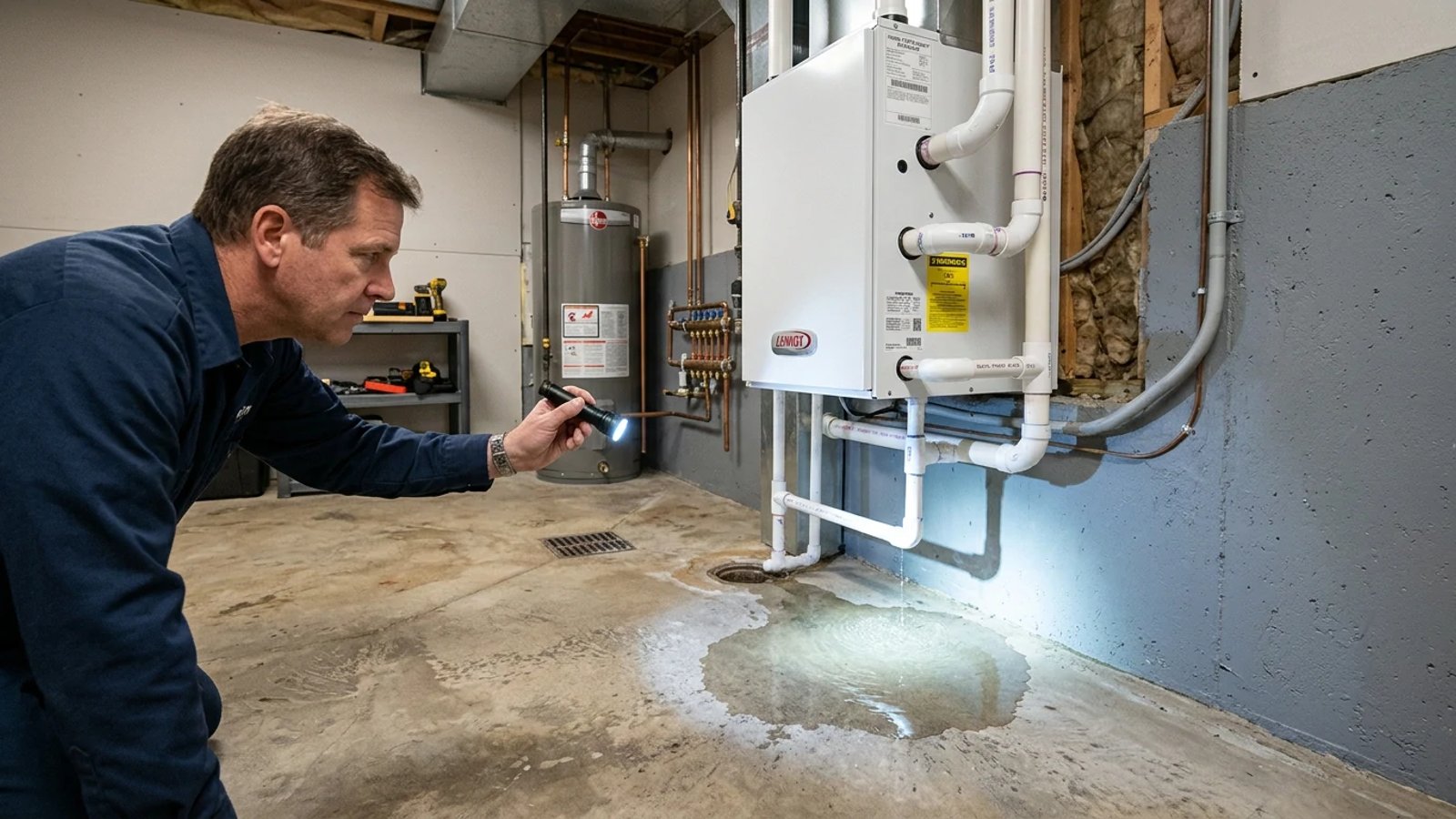
Full guide HVAC & Climate Control How your home heats, cools, and moves air, and the decisions that matter.Finding a puddle of water spreading across your basement floor right as the weather turns cold is a stressful moment. When I noticed a similar puddle under my own heating unit last November, I immediately assumed the worst. I pictured a cracked heat exchanger, a ruined control board, and a massive replacement bill right before the holidays.
Fortunately, a furnace leaking water is a very common issue, and it rarely points to a catastrophic failure. In most cases, the heater itself is working exactly as it should, but the system designed to carry away normal condensation has failed. Before you pay for an expensive emergency service call, you can often diagnose and fix the problem yourself with a few basic tools.
Safety First: Shut Down the System Using the Breaker
Before you touch the water or open any access panels on your HVAC equipment, you need to eliminate the risk of electrical shock. Furnaces use high-voltage electricity, and water pooling around the base of the unit is a serious hazard.
First, go to your thermostat and switch the heating system to the "Off" position. Next, locate your main electrical panel and flip the breaker that powers the furnace. Some furnaces also have a dedicated power switch mounted on the side of the unit or on a nearby wall that looks exactly like a standard light switch. Turn that off as well. Once the power is isolated, grab a mop or some old towels and dry up the puddle so you have a safe, slip-free area to work in.
Why Is My Furnace Leaking Water?
To figure out why your furnace is leaking, you first need to know what kind of furnace you have. The diagnostic process is completely different depending on the efficiency rating of your unit.
High-Efficiency Furnaces (90% AFUE or higher): These units extract so much heat from the combustion gases that the gases actually cool down and turn into liquid condensation. A high-efficiency furnace is supposed to produce water—sometimes up to several gallons a day during heavy use. This water is collected in a drain pan and routed out of the house through a PVC pipe. If this unit is leaking, you almost certainly have a plumbing blockage, not a mechanical failure.
Standard-Efficiency Furnaces (under 90% AFUE): These units vent hot exhaust gases up a metal chimney or flue before they have a chance to cool and condense. A standard furnace does not produce water. If you see a puddle under a standard unit, the water is coming from an external source attached to the ductwork, such as a whole-house humidifier or a leaking air conditioning coil.
The 3 Main Culprits Behind the Puddle
Once you know your furnace type, you can narrow down the source of the leak. Here are the three most common reasons you have water on the floor.
1. A Clogged Condensate Drain Line
This is the number one cause of a high-efficiency furnace leaking water. Over time, dust, dirt, and mold get washed down into the 3/4-inch PVC drain pipe. This debris eventually forms a sludge that clogs the pipe or the drain trap. As the furnace continues to run and produce condensation, the water backs up, overflows the internal drain pan, and leaks out of the bottom of the cabinet.
2. A Leaking Whole-House Humidifier
If you have a standard furnace and a humidifier mounted to the side of your ductwork, inspect it closely. Humidifiers tap directly into your home's water supply to add moisture to the winter air. The internal water feed valve can get stuck open, or the drain line carrying away the excess water can clog, causing the humidifier to leak down the side of the furnace.
3. A Poorly Designed Flue Pipe
Standard furnaces vent exhaust gases through a metal flue pipe. If the pipe is improperly sized, lacks the correct upward slope, or is blocked by an animal nest, the hot gases get trapped. They will cool down inside the pipe, turn into condensation, and leak back down into the furnace. You will often see rust streaks on the outside of the metal pipe if this is happening.
How to Fix a Clogged Condensate Line
If you have a high-efficiency furnace and suspect a clogged drain line, you can usually clear it yourself in about 15 minutes. You will need a wet/dry shop vacuum and a damp rag.
- Locate the end of the drain line. Follow the white PVC pipe from the side of the furnace to where it empties, usually into a floor drain, a utility sink, or a small condensate pump on the floor.
- Inspect the condensate pump. If the pipe drains into a small plastic pump box, check if the box is overflowing. If it is, the pump has failed and needs to be replaced (a $50 part at most hardware stores). If the pump is working, move to the next step.
- Attach the vacuum to the pipe. Remove the PVC pipe from the floor drain or pump. Place the hose of your wet/dry vacuum over the end of the pipe.
- Seal the connection. Wrap a damp rag tightly around the gap where the vacuum hose meets the PVC pipe to create an airtight seal.
- Vacuum the line. Turn the vacuum on for 15 to 30 seconds. You should hear the suction pull out a plug of dirty water and algae.
- Test the flow. Go back to the furnace and pour a cup of warm water into the top opening of the drain trap (usually a small vertical PVC vent pipe). If the water flows freely down the pipe, the clog is clear.
If the clog is particularly stubborn, you can pour a 1/4 cup of white vinegar down the vent pipe and let it sit for 30 minutes to break down the algae before vacuuming it again. Doing this once a year is a great addition to your routine HVAC maintenance schedule.
When to Call a Pro for a Leaking Furnace
While clearing a drain line is a straightforward DIY task, some leaks require professional intervention. If you clear the drain line and the furnace still leaks, or if you cannot locate a clog at all, it is time to call an HVAC technician.
You should also hire a professional if the internal drain pan is cracked. Replacing the pan requires partially disassembling the furnace and evaporator coil, which is not a DIY-friendly job. Expect a typical diagnostic service call to cost between $100 and $250, plus the cost of any replacement parts.
Taking care of a puddle quickly protects your floors and keeps your heating system running efficiently. While you have the panels open and the vacuum out, take a minute to check your furnace filter. A severely clogged air filter restricts airflow, which can cause the internal coils to freeze over and eventually melt into another puddle. Keep the area around the unit clean, swap that filter every 90 days, and you will stay warm and dry all winter long.
- Identify your furnace type first: white PVC exhaust pipes mean high-efficiency, while metal exhaust pipes mean standard.
- A clogged 3/4-inch PVC condensate drain is the most common cause of a high-efficiency furnace leaking water.
- Use a wet/dry vacuum wrapped with a damp rag to suck out algae and debris from the drain line.
- If water is leaking directly from the internal metal casing, shut the unit off and call a professional immediately to check for heat exchanger failure.