Furnace Not Igniting? How to Check Your Furnace Ignitor
Furnace clicking but no heat? Learn how to safely diagnose a faulty furnace ignitor, understand the ignition sequence, and know when to call an HVAC pro.
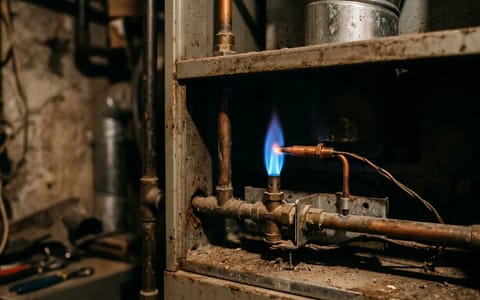
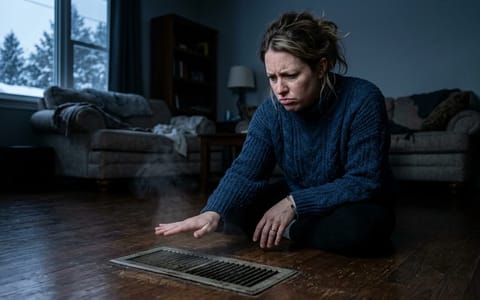
Full guide HVAC & Climate Control How your home heats, cools, and moves air, and the decisions that matter.It is the first chilly week of November. You turn up the thermostat, expecting a rush of warm air, but instead, the vents blow cold. Or worse, you hear a faint clicking sound coming from the basement, followed by total silence. If your heating system refuses to fire up, a faulty furnace ignitor is often the culprit.
There is nothing quite as frustrating as waking up to a freezing house, but diagnosing the problem does not have to be a mystery. Before you start tearing panels off, let's walk through how a modern ignition system works and how to figure out exactly where the failure is happening.
Safety First: When to Stop Immediately
Natural gas safety is not something to take lightly. If you detect a leak, evacuate the home and call 911 or your local gas utility from outside. For more details on emergency gas protocols, you can review the guidelines provided by the National Fire Protection Association (NFPA). Only proceed with troubleshooting if the area is completely free of any gas odors.
Why Is My Furnace Not Igniting? The Easy Checks
Before you assume the furnace ignitor is dead, rule out the simple stuff. A furnace is packed with safety sensors that will shut down the burner if they detect a problem elsewhere in the system.
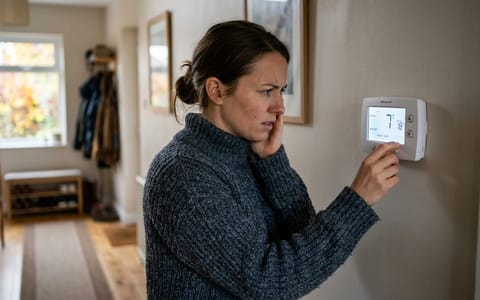
First, verify that your thermostat is set to "Heat" and the setpoint is actually higher than the current room temperature. Next, check the furnace power switch—usually a standard light switch mounted on or near the unit—to ensure it hasn't been bumped to the "Off" position.
Beyond the thermostat settings, a simple check at your electrical panel can save a service call. Locate the circuit breaker labeled for your furnace (it might be "Furnace," "HVAC," or "Blower"). If it's tripped (usually halfway between "On" and "Off"), flip it completely to "Off" and then back to "On." A tripped breaker often indicates an electrical overload, but sometimes it's just a momentary glitch.
Finally, check your air filter. Last November, I tested a neighbor's "broken" furnace only to find a 1-inch fiberglass filter so caked with dust it had triggered the high-limit safety switch. The furnace thought it was overheating and shut off the gas. A $5 filter swap fixed the issue in 60 seconds.
Another common, often overlooked issue in high-efficiency furnaces is a clogged condensate drain line. These furnaces produce acidic water vapor that needs to drain away. If the line gets blocked by algae or debris, a safety float switch will activate, preventing the furnace from starting to avoid water damage. Check for standing water in the drain pan and ensure the PVC drain pipe is clear. A simple flush with a vinegar solution can often resolve this.
Finally, confirm that the gas supply valve to your furnace is fully open. This valve is typically a lever-style handle on the gas pipe leading into the furnace. It should be parallel with the pipe for gas to flow. If it's perpendicular, it's closed. While rare for it to be accidentally closed, it's a quick check to ensure the furnace has fuel to burn. Without gas, even a perfect ignitor won't be able to do its job.
The Ignition Sequence: What Should Happen
To spot a bad ignitor, you need to know what a normal startup sounds and looks like. Modern gas furnaces follow a strict, step-by-step sequence. If any step fails, the system locks out for safety.
- The thermostat calls for heat. You will hear a click from the thermostat on your wall.
- The draft inducer motor starts. This small fan pulls combustion gases out of the heat exchanger and pushes them up the flue. It sounds like a low hum.
- The pressure switch engages. Once the furnace confirms the inducer is moving air safely, a small switch clicks.
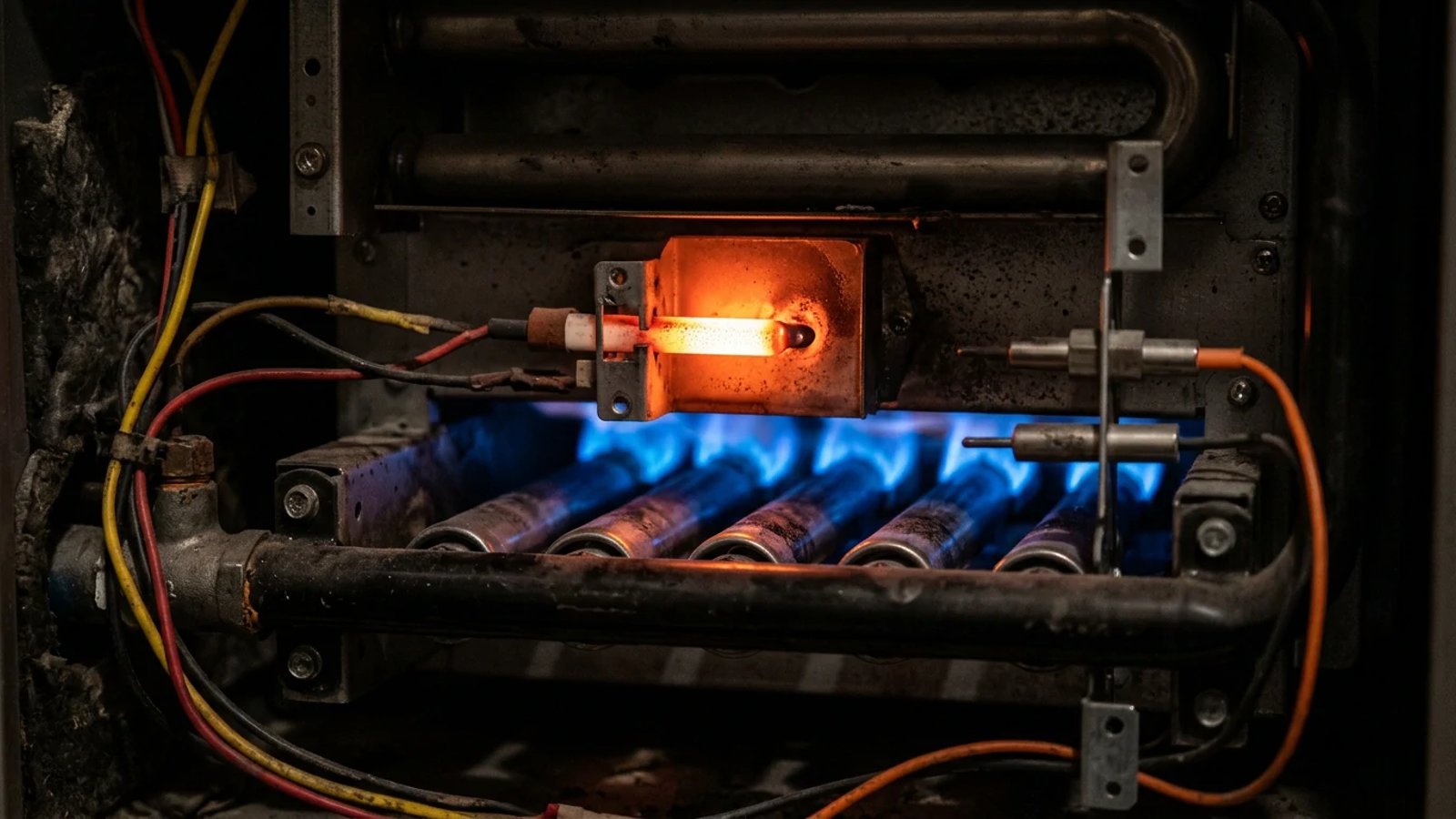
- The furnace ignitor activates. Depending on your model, a hot surface ignitor will glow bright orange, or a spark ignitor will make a rapid clicking noise.
- The gas valve opens. You might hear a soft click as the valve releases gas into the burners, where it meets the ignitor and lights.
- The blower motor turns on. After the burners warm up for about 30 to 60 seconds, the main fan pushes warm air through your house.
If the sequence stops right before the gas valve opens, or if you smell unburned gas for a few seconds before the system shuts down, the ignitor is your prime suspect.
Following the ignition, a crucial component called the flame sensor takes over. This small metal rod, positioned directly in the flame path, confirms to the control board that the gas has successfully ignited. If the flame sensor is dirty or faulty, it won't detect the flame, and the furnace will immediately shut off the gas supply as a safety measure, preventing a dangerous buildup of unburned fuel. This often results in the burners lighting for only a few seconds before extinguishing, a tell-tale sign of a flame sensor issue.
How to Diagnose a Bad Furnace Ignitor
Modern furnaces generally use one of two ignition types: a hot surface ignitor (HSI) or a direct spark ignitor. The HSI is the most common. It is a small component made of silicon carbide or nitride that acts like a high-powered lightbulb filament, reaching temperatures over 2,500 degrees Fahrenheit to ignite the gas.
To inspect a hot surface ignitor, turn off power to the furnace at the breaker panel. Remove the front access door. The ignitor is usually mounted on a bracket right next to the burner tubes. Use a flashlight to inspect it closely without removing it.
Look for these two visual signs of failure:
- Hairline cracks: Even a microscopic crack in the fragile silicon element will break the electrical circuit, stopping it from heating up.
- White powdery residue: As the ignitor ages and degrades, it often develops a white, ashy spot right where the element is about to burn out.
For hot surface ignitors, if visual inspection doesn't reveal obvious damage, you can test for continuity with a multimeter. First, ensure the power to the furnace is off at the breaker. Disconnect the ignitor's wires and set your multimeter to the ohms (Ω) setting. Touch the probes to the ignitor terminals. A working HSI should show a resistance reading between 40 and 100 ohms. An open circuit (OL or infinity) indicates a broken element, confirming the need for replacement.
If you have a spark ignitor, you won't see a glow. Instead, you should hear a rapid "tick-tick-tick" sound, similar to a gas BBQ grill. If you don't hear the ticking, or if the spark is weak and erratic, the ignitor or its control board may be failing.
For spark ignitors, the visual inspection focuses on the ceramic insulator and the electrode tip. Over time, the ceramic can crack or become fouled with carbon deposits, which can divert the spark. The electrode gap—the distance between the ignitor tip and the ground rod—is also critical. Refer to your furnace's manual for the precise gap specification, as an incorrect gap can lead to a weak or inconsistent spark. Clean any visible carbon buildup with a fine-grit sandpaper or emery cloth, taking care not to damage the ceramic.
Regardless of type, ignitors have a finite lifespan. Hot surface ignitors typically last 3-5 years due to the constant heating and cooling cycles. Spark ignitors, being less prone to thermal stress, often last longer, sometimes 7-10 years. Factors like frequent furnace cycling, voltage fluctuations, and even dust accumulation can shorten an ignitor's life. Regular furnace maintenance, including cleaning around the burner assembly, can help extend the life of these critical components.
When Should I Call a Professional?
Inspecting the ignitor visually and changing your air filter are safe tasks for any homeowner. Swapping out a dead hot surface ignitor is also a manageable DIY job that requires only a quarter-inch nut driver and about 30 minutes of your time. An exact OEM replacement part usually costs between $30 and $60 at a hardware store.
Beyond ignitor issues, several other problems require the expertise of a licensed HVAC technician. These include persistent issues with the blower motor, which can indicate failing capacitors or bearings, or problems with the heat exchanger. A cracked heat exchanger is a severe safety hazard, as it can allow deadly carbon monoxide to leak into your home. Technicians use specialized tools to inspect these components and ensure the safe operation of your furnace. Any repair involving refrigerant lines in heat pumps or complex electrical diagnostics should also be left to the pros.
A failing furnace on a cold day is stressful, but taking a few minutes to watch and listen to the ignition sequence can save you from paying a diagnostic fee for a simple fix. Keep your filters clean, know where your power switches are, and leave the heavy gas repairs to the experts.
- A clogged air filter can trip safety switches, mimicking a broken ignitor.
- Hot surface ignitors typically last 7 to 10 years before burning out and needing replacement.
- Never touch the fragile element of a new ignitor with bare hands, as skin oils can cause premature failure.
- Leave gas valve, burner, and heat exchanger repairs strictly to licensed HVAC professionals.