Concrete Board Siding: Is It Right for Your Home?
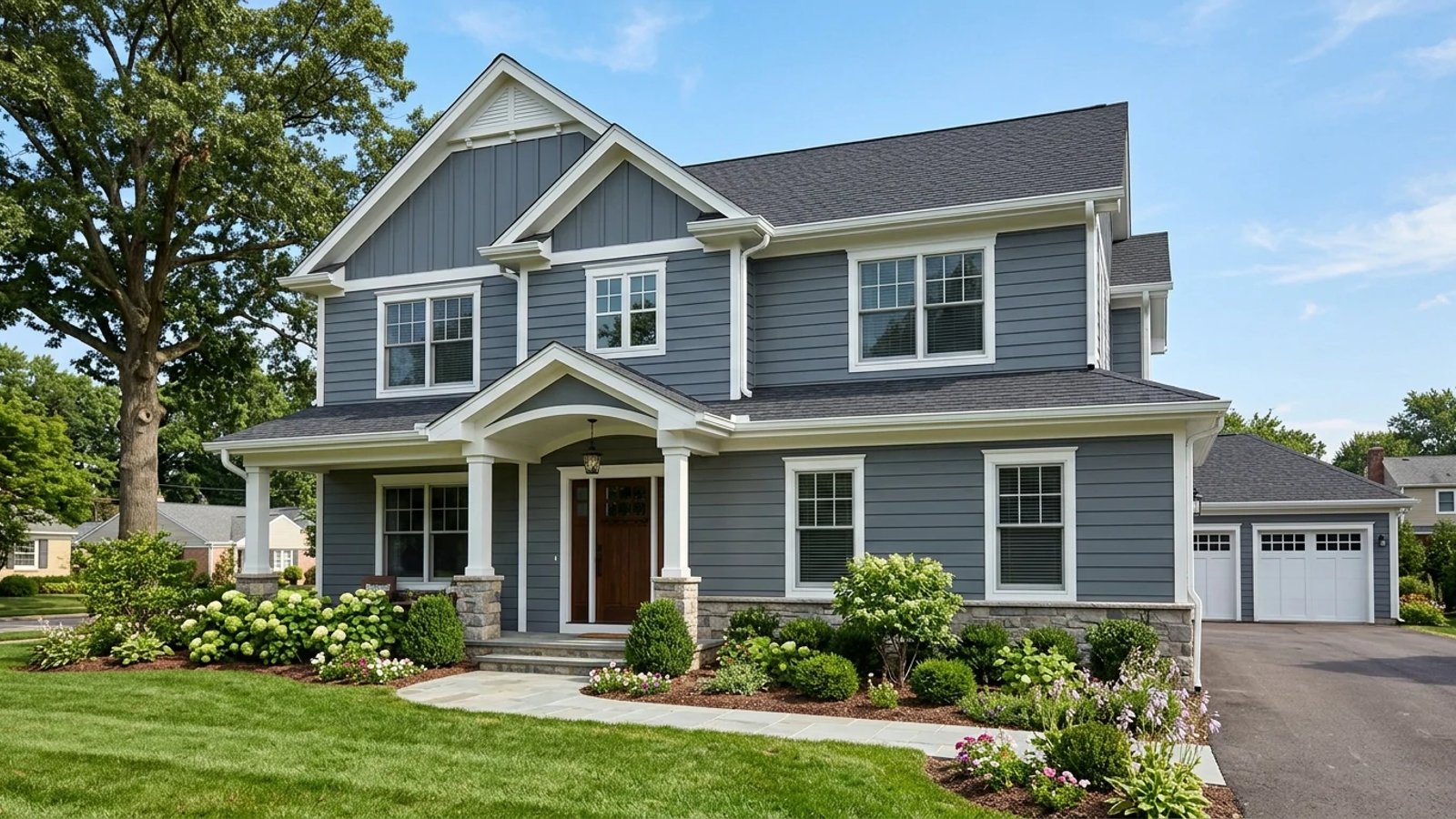
Concrete board siding offers incredible durability, fire resistance, and curb appeal. Learn how it compares to vinyl and wood, and what it costs to install.
Full guide Exterior: Siding, Garage & Decks Learn how to maintain your siding, garage doors, and decks to protect your home from the weather.Homeowners researching new home siding usually hit a wall of confusing choices almost immediately. Standard vinyl is affordable but can melt near grills or crack from a stray baseball. Wood looks beautiful but requires constant painting and is a magnet for rot and woodpeckers. If you want something tougher, you keep hearing about concrete board siding.
Last year, we replaced the warped cedar siding on a 1980s colonial with concrete board, and the difference in noise reduction and wind resistance was immediate. The house simply felt more solid. But it is a major financial investment, and the installation process is not for the faint of heart.
If you are trying to decide if this heavy-duty material is the right fit for your exterior renovation, here is a plain-english breakdown of what concrete board is, how it performs, and what you should expect to pay.
What Is Concrete Board Siding?
Concrete board siding—almost universally known in the building industry as fiber cement—is exactly what it sounds like. It is a manufactured product made from a mixture of Portland cement, fine sand, water, and cellulose (wood) fibers. The wet mixture is pressed into molds to create a realistic wood-grain texture, then baked in a high-pressure steam oven called an autoclave.
The resulting planks are incredibly dense, weighing about 2.5 pounds per square foot. For comparison, a piece of vinyl siding weighs practically nothing, and even solid wood is significantly lighter. This density is the secret to concrete board's legendary durability.
You will often hear contractors refer to this material simply as "Hardie board." James Hardie is the manufacturer that pioneered the modern fiber cement process in the 1980s, and their brand name has become synonymous with the product, much like Kleenex or Xerox. However, other manufacturers like Allura and Nichiha produce excellent concrete board products as well.
Beyond traditional lap siding, fiber cement is available in a variety of profiles to suit almost any architectural style. You can find panels that mimic cedar shakes, board and batten designs, or even vertical siding. This versatility means you can achieve a highly customized look while still benefiting from the material's superior durability and low maintenance.
How Does It Compare to Vinyl and Wood?
When you are weighing concrete board against standard vinyl siding board or composite siding panels, the comparison usually comes down to three factors: durability, maintenance, and aesthetics.
Fire Resistance: Concrete board is non-combustible. It holds a Class A fire rating, meaning it will not ignite when exposed to a direct flame. Vinyl will melt, and wood will burn. In wildfire-prone areas, this fire resistance is a massive advantage and can sometimes even lower your homeowner's insurance premiums.
Pest and Rot Resistance: Termites and carpenter ants have zero interest in eating cement. Woodpeckers cannot drill through it. Unlike natural wood, fiber cement will not rot, swell, or warp when exposed to decades of rain and humidity.
Impact Resistance
While not indestructible, fiber cement siding offers superior impact resistance compared to vinyl. It can withstand impacts from hail, wind-blown debris, and even a stray baseball without denting or cracking, which are common issues with thinner vinyl panels. This robust quality contributes to its long lifespan and fewer repair headaches over the decades.
Aesthetics: Vinyl siding overlaps at the seams, creating vertical lines that give away its plastic nature. Concrete board planks are thick—usually 5/16 of an inch—which casts deep, realistic shadow lines that mimic traditional wood lap siding perfectly.
Paint Adhesion and Longevity
One of concrete board's standout features is its exceptional ability to hold paint. Unlike wood, which can absorb moisture and cause paint to peel or blister, fiber cement is dimensionally stable and provides an ideal surface for paint. A high-quality exterior paint job on concrete board can last 15-25 years, significantly longer than paint on wood, and it allows for color changes down the line, unlike pre-colored vinyl.
Concrete board gives you the classic profile of painted wood without the endless cycle of scraping and replacing rotted boards.
The Bigger Picture: Integrating Fascia and Gutters
Siding does not exist in a vacuum. It is just one component of your home's exterior weatherproofing system. When you tear off your old siding, you expose the structural bones of the house, making it the perfect time to evaluate your fascia siding and inspect your gutter downspout parts.
The fascia is the horizontal board that runs along the lower edge of the roof, right behind the gutters. If your old siding failed due to water damage, there is a high chance your fascia boards are quietly rotting as well. Installing brand-new siding while leaving rotting fascia intact is like putting expensive new tires on a car with a rusted-out suspension.
Another critical, often overlooked component is the house wrap or weather-resistive barrier (WRB). This material is installed directly over the sheathing before the siding goes on, acting as a secondary line of defense against moisture intrusion. A properly installed WRB, with seams overlapped by at least 6 inches, ensures that any water that might penetrate the siding is directed away from the wall cavity, protecting your home from mold and structural damage.
In addition, heavy-duty siding needs to be paired with a reliable drainage system. Upgrading to a durable aluminum gutter downspout ensures that heavy rainfall is pushed safely away from the foundation. If a downspout is clogged or missing an extension, the resulting waterfall will constantly splash dirt and moisture against your new concrete board. While fiber cement will not rot, constant ground-moisture splashing can cause the paint to peel and leave unsightly mud stains.
How Much Does Concrete Board Siding Cost?
Concrete board sits firmly in the middle-to-high end of the siding price spectrum. It is significantly more expensive than vinyl, roughly on par with high-end composite siding panels, and generally cheaper than natural cedar or stone veneer.
The high installation cost of concrete board comes down to labor. Because the boards are so heavy and fragile before they are fastened to the wall, it usually takes a two-person crew just to carry and position a single 12-foot plank.
Can You Install It Yourself?
I'll be honest: carrying 12-foot planks of this stuff up an extension ladder is a workout you'll feel for days. While a highly skilled DIYer can install concrete board, it is notoriously difficult for amateurs.
The biggest hurdle is the cutting process. Cutting fiber cement generates a massive amount of crystalline silica dust, which is highly hazardous to your lungs. You cannot simply chop it with a standard woodworking saw. You need specialized tools, like a 7-1/4 inch circular saw equipped with a polycrystalline diamond-tipped blade and a heavy-duty dust extractor.
How to Inspect Your Current Siding
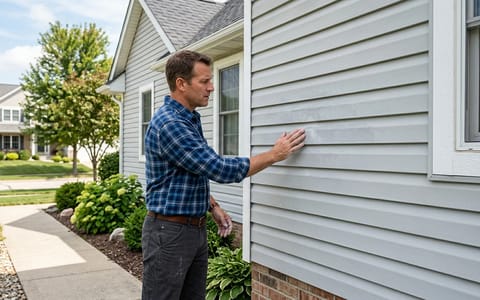
Not sure if you actually need a full siding replacement yet? Before you start calling contractors for quotes, take 20 minutes to walk around your house and evaluate the current state of your exterior.
- Check the bottom edge. Walk the perimeter of your foundation and press a screwdriver gently against the lowest siding boards; if wood feels spongy, rot has set in.
- Look for warping. Stand at the corner of your house and look down the wall to spot wavy, warped, or buckling panels.
- Inspect the caulk joints. Check where the siding meets your windows and doors to see if the sealant is cracked, missing, or pulling away.
- Search for interior moisture. Go inside and check the drywall directly opposite the worst-looking exterior walls for peeling paint or water stains.
If you find widespread rot, severe warping, or moisture making its way into your wall cavities, patching is no longer an option. It is time to replace the system.
Upgrading to concrete board siding is a major project, but it offers lasting confidence. By choosing a material that shrugs off pests, resists fire, and holds paint beautifully, you are protecting your home's structural integrity for decades to come. When you are ready to move forward, gather at least three quotes from local contractors, and make sure they have specific experience—and the right dust-management tools—for handling fiber cement.
- Expect to pay between $10 and $15 per square foot for professional installation of concrete board siding.
- Always pair heavy-duty siding upgrades with a thorough inspection of your home's fascia and gutter systems.
- Avoid DIY installation unless you have experience handling heavy materials and the specialized equipment needed to mitigate silica dust.
- Concrete board is not entirely maintenance-free; you will need to repaint it every 10 to 15 years and maintain the caulk joints.