Average Annual Home Maintenance Cost: The Honest Budget Guide
Stop guessing how much you need for home repairs. Learn the real average annual home maintenance cost, why the 1% rule is flawed, and how to build a reliable budget.
Full guide New Homeowner Guide Learn how to take control of your new house in the first year without getting overwhelmed.Most new buyers calculate their mortgage, property taxes, and homeowners insurance down to the absolute penny. Then, six months after moving in, the water heater dumps forty gallons of rusty water across the basement floor, and panic sets in. Figuring out your average annual home maintenance cost is one of the hardest parts of owning a house because no two properties age exactly the same way.
If you rely on rough guesses or wait until things break to figure out how to pay for them, you risk draining your emergency fund or taking on high-interest credit card debt. Let's look at the real numbers, break down the difference between cheap upkeep and massive repairs, and build a budget that actually holds up when your house throws a tantrum.
What is the real average annual home maintenance cost?
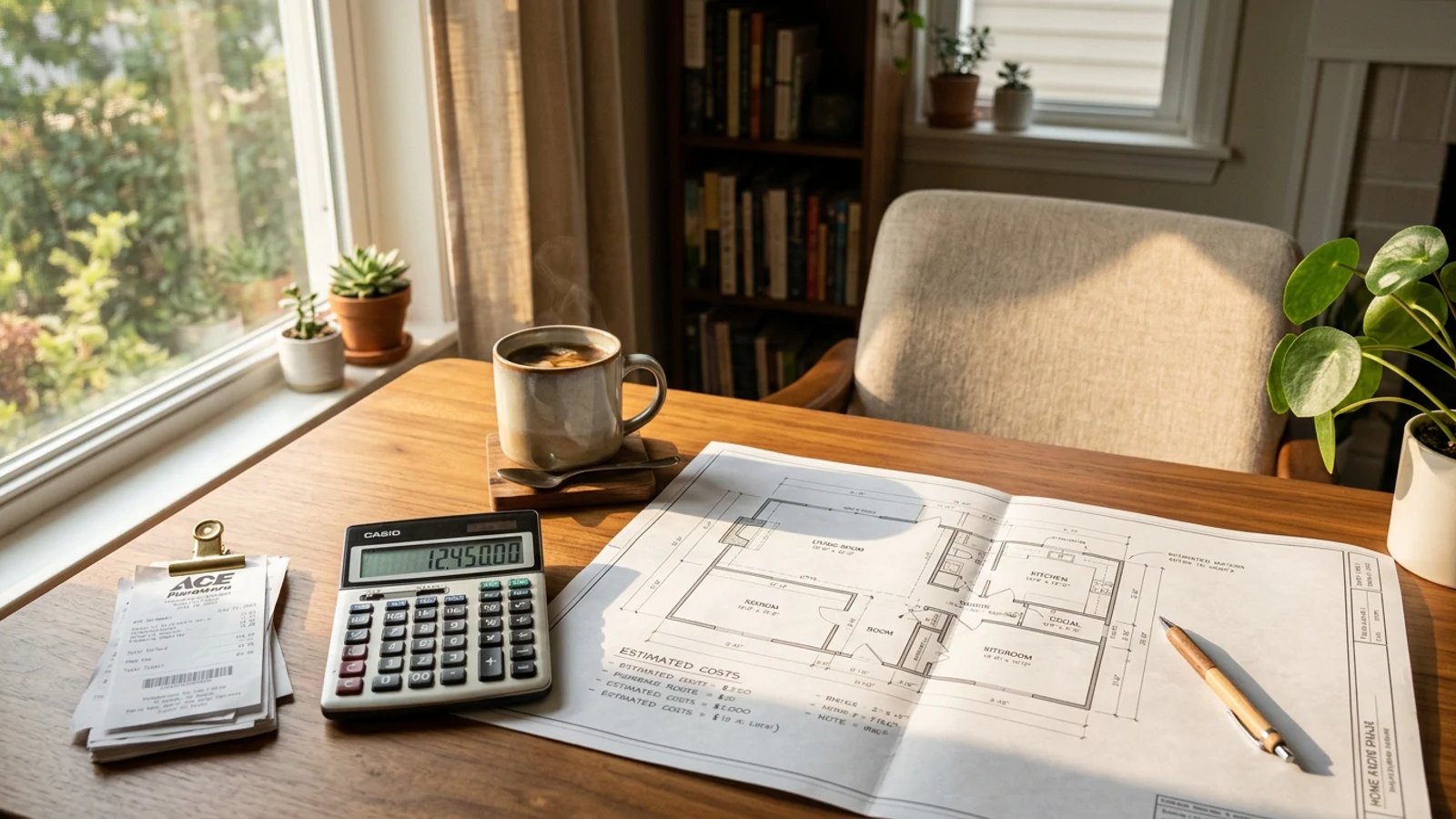
In our experience, most homeowners spend between $3,000 and $6,000 a year keeping their house in working order. This broad range covers both the small, predictable tasks—like buying a three-pack of $20 MERV-11 furnace filters every few months—and saving up for the massive, inevitable hits, like a $12,000 roof replacement.
Many financial advisors push the "1% rule," which suggests setting aside one percent of your home's purchase price each year. If you buy a $400,000 house, you stash away $4,000 annually, or about $333 a month. It sounds clean, simple, and easy to remember.
The problem with rule-of-thumb budgets is that your furnace doesn't care what your house appraised for.
While the 1% rule is better than having no plan at all, it has severe limitations in the modern housing market. We need a more accurate way to measure what your specific house will demand from your wallet.
Does the 1% rule actually work?
The 1% rule falls apart quickly when you factor in real estate inflation. Housing prices have surged dramatically in recent years. A modest 1,500-square-foot ranch might cost $600,000 in a high-cost-of-living coastal city and $250,000 in a Midwestern suburb. But if both houses need a new 40-gallon gas water heater, the hardware store is going to charge roughly the same $600 for the unit, plus a few hundred dollars for labor.
Because of this, budgeting based strictly on your home's current market value can leave you either massively over-saving in an expensive zip code or dangerously underfunded in a cheaper one.
When we bought our 1970s split-level, I stubbornly stuck to the 1% rule. The house cost $250,000, so I kept $2,500 in a repair fund. Then, the original cast-iron plumbing stack cracked behind a basement wall. The $4,200 emergency plumber bill taught me a hard lesson about budgeting for the actual age of the materials, not just the price tag of the property.
Instead of the 1% rule, the "Square Foot Rule" is often much more accurate. Set aside $1 to $2 per square foot of living space per year. A 2,000-square-foot home needs $2,000 to $4,000 annually. If the house is older than 20 years, lean closer to the $2 mark. This ties your budget directly to the physical size of the structure you have to maintain, which makes far more mathematical sense.
Splitting the Budget: Routine Upkeep vs. Major Repairs
To get a realistic handle on your average annual home maintenance cost, you have to split your expenses into two distinct buckets. Lumping them together is a fast track to budget failure.
Bucket one is routine preventative maintenance. These are the recurring costs that keep the house running efficiently and prevent premature breakdowns. Think gutter cleaning, having the HVAC system serviced in the spring and fall, buying salt for the water softener, swapping out smoke detector batteries, and buying a $15 tube of exterior-grade polyurethane sealant to patch cracks in the driveway.
You will spend this money every single year. For a standard single-family home, bucket one usually costs between $500 and $1,200 annually. It is cash out the door, but it is highly predictable.
Bucket two is capital expenditures, often called "CapEx." These are the big-ticket items that degrade slowly over decades. A standard architectural asphalt shingle roof lasts 20 to 25 years. A traditional tank water heater lasts 8 to 12 years. A central air conditioning compressor might give you 15 years. You aren't buying a new roof every year, but you need to be saving a fraction of its replacement cost annually so the money is sitting there waiting when the shingles finally start curling.
The True Cost of Deferred Maintenance
The fastest way to blow past your planned budget is to ignore the cheap, boring tasks. In homeownership, procrastination is incredibly expensive. Water is the enemy of every house, and keeping it out is your primary job as an owner.
If you notice a tiny, 1/8-inch gap in the caulking around your bathtub, a $10 tube of 100% silicone caulk and 15 minutes of your time will fix it completely. If you ignore that gap for three years, water will slowly seep behind the tile, rot the drywall, soak into the subfloor, and compromise the floor joists. You are now looking at a $4,000 bathroom tear-out and structural repair.
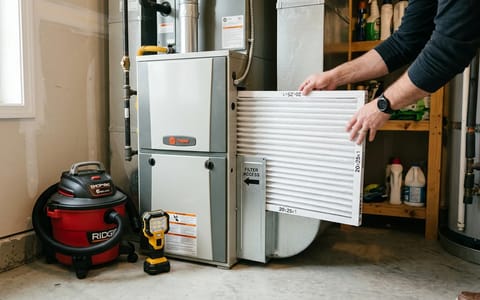
The same logic applies to your HVAC system. Skipping a $20 filter change forces your blower motor to work twice as hard to pull air through a wall of dust. Eventually, that strain burns out the motor, turning a $20 piece of maintenance into an $800 emergency repair call in the middle of a heatwave. Preventative maintenance is essentially risk management. You are spending pennies today to protect thousands of dollars tomorrow.
How Age and Climate Change the Math
A brand-new construction home will cost very little to maintain for the first five years. Everything is under a builder's warranty, the appliances are fresh from the factory, and the exterior materials haven't faced significant weather wear. During this honeymoon phase, your average annual home maintenance cost might barely scrape $1,000.
However, once a house hits the 15-to-20-year mark, it enters what contractors call the "replacement wave." The original roof, the builder-grade HVAC system, the water heater, and the major kitchen appliances will all start failing within a 36-month window of each other. If you buy a house in this specific age bracket, you need to aggressively double your savings rate immediately.
Your local climate also dictates your spending. Homes in coastal areas face constant salt-air corrosion, meaning exterior paint, deck screws, and outdoor metal fixtures degrade twice as fast. Homes in the upper Midwest endure brutal winter freeze-thaw cycles that crack concrete driveways, destroy wood siding, and test the limits of your roof's ice-and-water shield.
How to Build a Stress-Free Sinking Fund
A sinking fund is simply a dedicated savings account meant entirely for home repairs. Keeping this money completely separate from your daily checking account prevents you from accidentally spending it on vacations, groceries, or new furniture.
The goal is to smooth out the financial spikes. Let's say you have a quiet year where you only spend $400 on basic upkeep. You don't stop saving. You let the fund grow so that when year six arrives and the air conditioning compressor dies, you can write a $4,500 check without a second thought.
- Calculate your monthly target. Take your estimated average annual home maintenance cost (e.g., $3,600 using the square-foot rule) and divide it by 12 to get your monthly goal ($300).
- Open a high-yield savings account. Look for an online bank offering a strong annual percentage yield (APY) so your repair fund actively earns money while it sits waiting for an emergency.
- Automate the transfer. Set up a recurring, automatic transfer from your main checking account to the sinking fund on the exact day you get paid. Treat it like a non-negotiable utility bill.
- Cap the fund at a safe ceiling. Once your account holds $10,000 to $15,000 (which is enough to cover a major roof or full HVAC replacement in most markets), you can pause the monthly contributions and redirect that cash to other financial goals.
Houses are expensive, but they rarely break completely without warning. If you change your filters, clean your gutters, keep water away from your foundation, and watch the calendar on your major appliances, you can extend the life of your home's most expensive systems.
Budgeting properly means you stop crossing your fingers every time the furnace kicks on or a heavy rainstorm hits. When you know exactly what it costs to run your home and you have the cash quietly waiting in a sinking fund, you can handle whatever repair comes next with total confidence.
- Calculate your budget using the square-foot rule rather than your home's purchase price to avoid inflation distortion.
- Keep a running list of the installation dates for your roof, HVAC, and water heater so you know exactly when the 'replacement wave' will hit.
- Automate monthly transfers into a dedicated home repair savings account until you hit a $10,000 to $15,000 safety net.
- Never skip routine preventative tasks; a $15 tube of caulk today prevents a $3,000 rot repair tomorrow.