Furnace Smells Like Burning? When to Worry and What to Do
Did you turn on your heat for the first time this fall only to be greeted by a burning odor? Learn when to wait it out and when to evacuate.
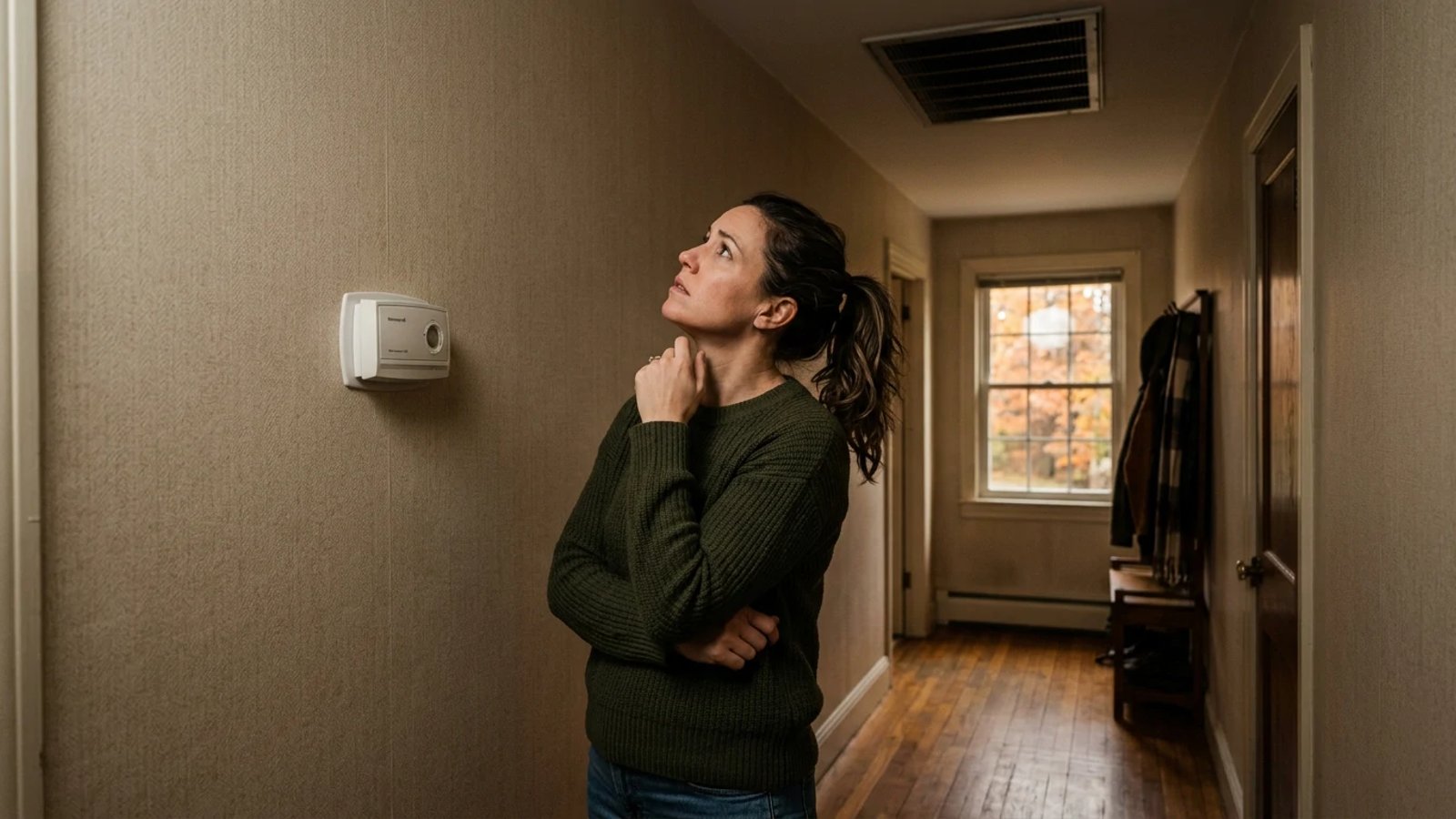
Full guide HVAC & Climate Control How your home heats, cools, and moves air, and the decisions that matter.The first real cold snap of late-fall arrives, you walk over to the thermostat, and you bump the temperature up to a comfortable 68 degrees. A few minutes later, the blower kicks on, warm air flows from the vents, and then it hits you. Suddenly, your furnace smells like burning. Standing in the hallway, it is entirely reasonable to feel a spike of panic. You wonder if a wire is melting, if a fire is starting in the basement, or if you need to grab the fire extinguisher.
Before you make a frantic call to an emergency repair service, take a deep breath. In the vast majority of cases, a burning odor on the first day of heating season is a completely normal, harmless physical reaction. However, because your furnace relies on combustion and high-voltage electricity, you need to know exactly how to tell the difference between a harmless nuisance and a severe safety threat.
Understanding Why Your Furnace Smells Like Burning
To understand the smell, you have to look at what happens inside the metal cabinet of your HVAC system during the long off-season. From spring through early fall, your furnace sits completely idle. Over those months, household dust, pet dander, dead skin cells, and microscopic debris settle on the burners, the blower motor, and most importantly, the heat exchanger.
The heat exchanger is a series of metal tubes or coils that get incredibly hot—often reaching internal temperatures between 140 and 170 degrees Fahrenheit. When the burners ignite for the first time in six months, those metal surfaces heat up rapidly. All that accumulated summer dust instantly incinerates.
Last October, I tested this exact scenario in my own 1960s split-level home. The furnace had not run since April. Within five minutes of the thermostat clicking on, a sharp, dusty burning odor filled the hallway. I timed it—it took exactly 42 minutes for the smell to completely clear the house. This is the standard "dust burn-off." It smells a bit like toasted lint or a space heater that just got plugged in. It is annoying, but it is not dangerous, and it will fade away on its own within 30 to 60 minutes.
How to Identify the Danger Smells
While burning dust is normal, other odors are massive red flags. Your nose is an excellent diagnostic tool. Pay close attention to the specific character of the odor coming from your vents.
An electrical or ozone smell is a serious warning sign. It often smells like a hot model train engine, a running laser printer, or burning wire insulation. This indicates an overheating blower motor, a failing capacitor, or a frayed wire shorting out against the metal casing. If you smell electrical burning, the 60-minute waiting rule does not apply. Turn off the power to the furnace immediately.
A melting plastic smell usually points to a foreign object. Homes with floor registers are notorious for this. Small children drop plastic toys, crayons, or wrappers down the grates. When the hot air hits the plastic, it melts and sends toxic fumes through the ductwork. You will need to remove the vent covers and shine a flashlight down the ducts to fish out the offending item.
The Rotten Egg Rule: What to Do If You Smell Gas
There is one smell that overrides every other troubleshooting step: rotten eggs or sulfur. Natural gas is naturally odorless, so utility companies add a chemical called mercaptan to give it that distinct, nauseating sulfur smell. If you smell this near your furnace or coming from your vents, you have a gas leak. Natural gas is highly flammable, igniting at concentrations as low as 5% in the air, making this an immediate explosion and fire hazard.
The National Fire Protection Association (NFPA) outlines strict protocols for suspected gas leaks. You must treat this as a true emergency.
- Leave the house immediately. Get all family members and pets out the front door without stopping to grab belongings.
- Leave the doors open. As you exit, leave the exterior door wide open to help ventilate the concentrated gas.
- Do not touch the thermostat. Do not attempt to turn the furnace off at the wall, as the electrical relay click can create a spark.
- Call for help from outside. Once you are safely across the street or in a neighbor's yard, call 911 or your local gas utility's emergency line.
Safe DIY Checks: How to Inspect Your Air Filter
If you only smell hot metal or burning dust, and the smell lasts longer than an hour, the most likely culprit is a severely clogged air filter. Your furnace requires a massive volume of return air to keep the internal components cool while they operate. When a filter becomes caked with dirt, airflow is choked off. The heat exchanger retains too much heat, causing the system to run dangerously hot and produce a persistent burning smell.
Checking and replacing your filter is the easiest and most effective maintenance task you can perform. You should be doing this every 90 days, or every 30 days if you have multiple shedding pets.
- Turn off the furnace power. Locate the power switch on the side of the furnace (it looks like a standard light switch) and flip it off.
- Locate the filter slot. Look for the narrow metal slot where the return air duct meets the main furnace cabinet.
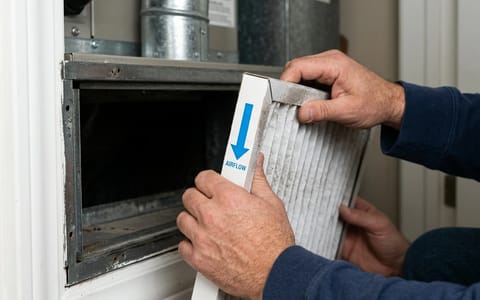
- Slide out the old filter. Pull the filter straight out. Hold it up to a light bulb; if you cannot see light shining through the material, it is completely clogged.
- Check the size measurements. Look at the cardboard frame for the dimensions, such as 16x25x1 or 20x20x1.
- Insert the new filter. Slide the new filter into the slot, ensuring the printed arrows on the frame point toward the furnace unit (the direction of airflow).
- Restore the power. Flip the furnace switch back on and monitor the system for the next hour.
When Is It Time to Call a Furnace Professional?
Homeowners can safely manage filters, thermostat batteries, and clearing debris from floor vents. However, the internal mechanics of a gas furnace are strictly off-limits for DIY repairs. The combination of carbon monoxide, combustible gas, and high voltage requires specialized training and tools.
If the burning smell persists after a fresh filter and an hour of run-time, shut the system down. It is time to call for backup.
Dealing with a furnace that smells like burning is a stressful way to start the cold season. But by keeping a close eye on your air filters and knowing exactly which odors demand an evacuation, you can keep your home safe, warm, and comfortable all winter long. Give the system an hour to clear its throat, and if things still do not smell right, trust your instincts and make the call.
- Time the smell: harmless dust burn-off should fade within an hour.
- Never ignore a rotten egg odor; evacuate and call your gas utility.
- Check and replace your furnace filter every 90 days to prevent overheating.
- Leave heat exchanger and gas valve inspections to licensed HVAC technicians.