Heat Pump Blowing Cold Air? Here Is Why (And How to Fix It)
Don't panic if your heat pump feels chilly this fall. Learn how to tell if it is running a normal defrost cycle, or if you need to troubleshoot an actual repair.
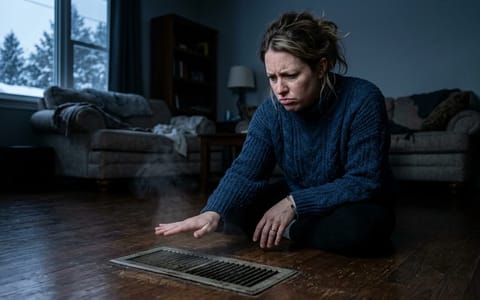
Full guide HVAC & Climate Control How your home heats, cools, and moves air, and the decisions that matter.The first real chill of fall hits, and you walk over to the thermostat to switch your system from cooling to heating. A few minutes later, you stand over the floor register to warm up, only to feel a cool breeze. Finding your heat pump blowing cold air is a frustrating experience that leads many homeowners to assume their system is broken.
Before you pick up the phone to schedule a costly repair, take a breath. Heat pumps operate very differently from traditional gas or oil furnaces. In many cases, that cool breeze is actually a sign that your system is working exactly as it should. Other times, a simple flipped switch or a $15 maintenance task is all it takes to get the warm air flowing again.
We are going to break down the normal quirks of heat pump operation, walk through the quick checks you can do yourself, and explain exactly when you need to call in a professional.
Why Is My Heat Pump Blowing Cold Air? (The "Normal" Reasons)
If you recently moved into a home with a heat pump after years of living with a gas furnace, the temperature of the air coming out of your vents will take some getting used to. A traditional gas furnace blasts air into your rooms at a scorching 120°F to 130°F. You can stand over the vent and feel an immediate, intense wave of heat.
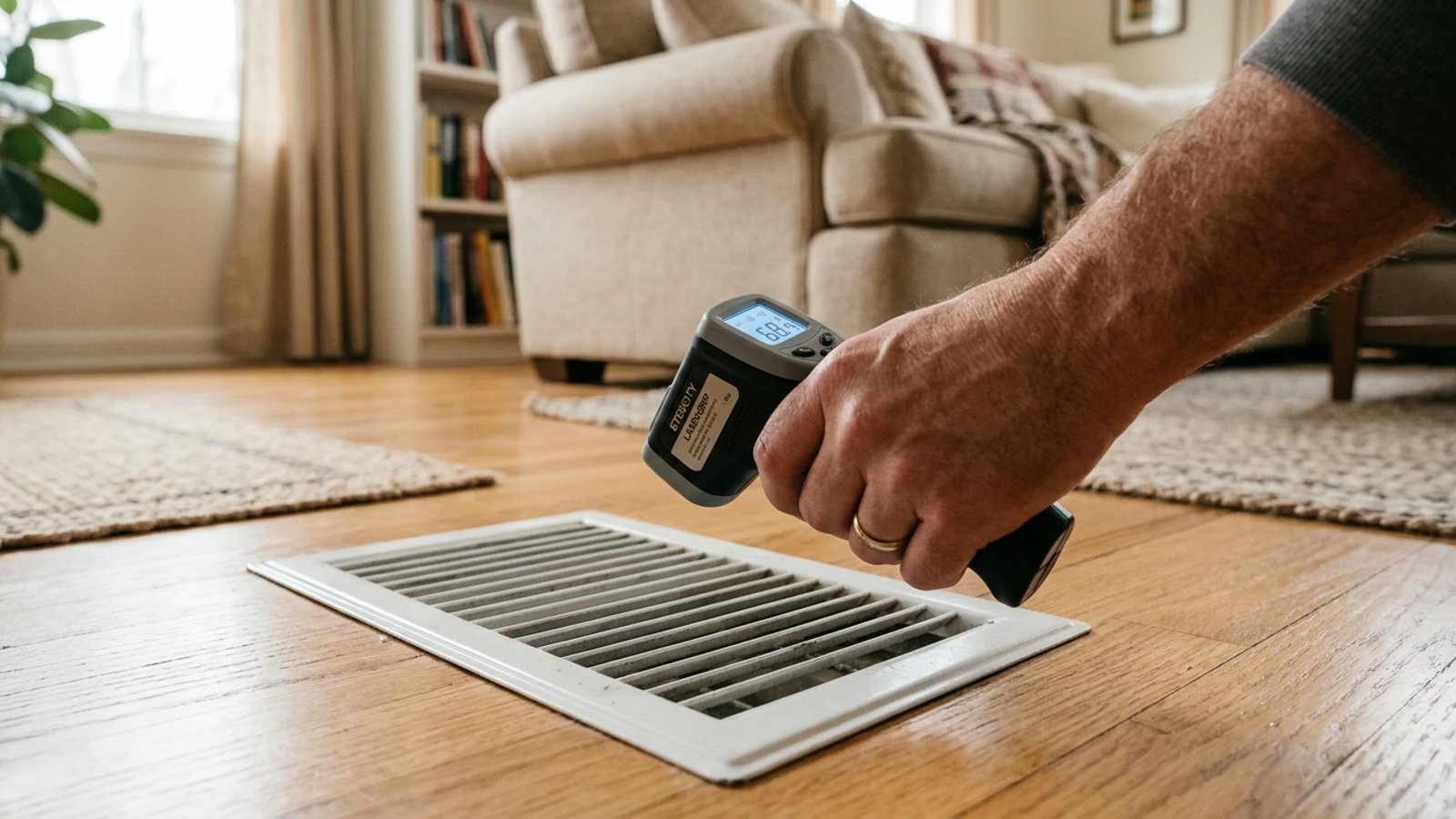
Heat pumps do not burn fuel to create heat; they transfer ambient heat from the outside air into your home. Because of this, they provide a lower, steadier heat. The air coming out of a heat pump register typically measures between 90°F and 95°F.
A few years ago, I got a frantic call from a neighbor who swore her newly installed heat pump was broken. We measured the air coming out of her living room vent with a digital meat thermometer, and it read 92°F. I had to explain the biology: average human skin temperature sits around 98°F. When 92°F air blows across your 98°F skin, the physical sensation is a cool draft. The system was actively heating her house to her desired 70°F, but the moving air simply felt cool to the touch.
The Defrost Cycle
As fall transitions into winter, you will encounter another normal heat pump quirk: the defrost cycle. When outdoor temperatures hover between 30°F and 40°F, the moisture in the air can freeze onto the outdoor condenser coils. If the ice builds up too thick, the heat pump can no longer extract heat from the outside air.
To fix this, the system has a built-in defense mechanism. It temporarily shifts into reverse, essentially turning into an air conditioner. It sends the hot refrigerant outside to melt the ice off the coils. While it does this, the indoor unit might blow cool air into your home for a short period. Most systems activate backup electric heat strips during this process to take the chill off, but the air will still feel noticeably cooler.
A normal defrost cycle lasts anywhere from 5 to 15 minutes. Once the ice is gone, the system switches back to heating mode automatically.
Quick Troubleshooting Fixes You Can Do Right Now
If you have waited 20 minutes and the air is still cold, or if it is 60°F outside and your system has no reason to be defrosting, it is time to check a few basic settings. Often, the culprit is something you can fix in less than five minutes.
Check the Thermostat Fan Setting
This is the most common reason homeowners complain about cold drafts in the winter. Look at your thermostat display. You will see a setting for the fan, usually with two options: "ON" and "AUTO".
If the fan is set to "ON," the blower motor runs 24/7, even when the heat pump is not actively heating the air. Between heating cycles, the system will simply suck in 68°F room-temperature air and blow it right back out of the vents. Switch the fan setting to "AUTO." This ensures the blower only runs when the system is actively warming the air.
Inspect and Replace the Air Filter
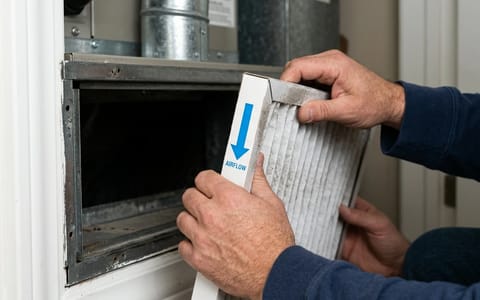
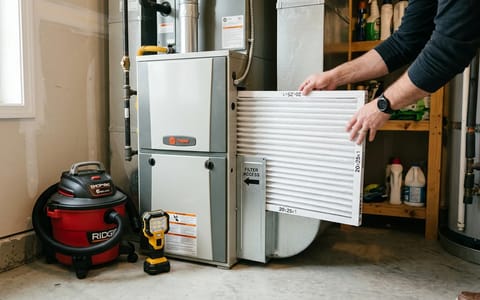
Your heat pump needs a massive volume of air moving across its indoor coils to function properly. If your air filter is packed with dust, pet hair, and summer pollen, it chokes the system. Restricted airflow means the air does not spend enough time absorbing heat from the coils, leading to lukewarm or cool output.
Check your filter every 30 days during heavy use seasons. If you hold the filter up to a light bulb and cannot see light shining through the material, it is time to throw it in the trash.
How to Check Your Outdoor Unit for Airflow Issues
Because your heat pump extracts heat from the outside air, the outdoor compressor needs room to breathe. Fall is notorious for causing airflow blockages. As trees drop their leaves, they can easily get sucked against the metal fins of your outdoor unit.
If the outdoor unit cannot pull enough air across its coils, the refrigerant inside will not get warm enough to heat your home.
- Turn off the power. Shut off the system at the thermostat, then pull the electrical disconnect switch located in the gray box on the wall near the outdoor unit.
- Clear away large debris. Use your hands to pull away wet leaves, pine needles, or trash that has stuck to the side panels.
- Trim back vegetation. Ensure there is a minimum of 24 inches of clear space in all directions around the unit. Trim back any bushes or tall grass.
- Check for heavy snow or ice. If a winter storm has buried the unit, carefully brush the snow away. Never use a sharp object like an ice pick to chip ice off the fins, as you can easily puncture a refrigerant line.
- Restore power. Plug the disconnect back in and turn the thermostat back to heat.
The Reversing Valve: When Good Heat Pumps Go Bad
If you have checked the thermostat, replaced the filter, and cleared the outdoor unit, but your heat pump is still blowing actively cold air, you might have a mechanical failure. The most frequent culprit is the reversing valve.
The reversing valve is a brass component inside the outdoor unit that dictates the flow of refrigerant. It is the literal piece of hardware that allows your heat pump to act as an air conditioner in July and a heater in November. It uses an electrical solenoid, typically a 24V AC component, to slide a mechanism back and forth.
If the reversing valve gets physically stuck or its electrical solenoid burns out, your heat pump will remain trapped in air conditioning mode, no matter what your thermostat says.
You can usually identify a stuck reversing valve by listening to the outdoor unit. When you switch the thermostat from cool to heat, you should hear a distinct, loud "whoosh" sound from outside as the valve shifts pressure. If you hear the compressor running but never hear that pressure shift, the valve is likely stuck.
Other Mechanical Issues That Require a Professional
Beyond the reversing valve, a few other internal issues will cause a heat pump to blow cold air. These all require professional diagnostic tools to fix.
- Low Refrigerant Charge: Heat pumps use a specific volume of chemical refrigerant to absorb and release heat. If a joint leaks and the system loses refrigerant, it loses its ability to transfer heat. You might notice ice building up on the indoor coils or the outdoor unit running constantly without warming the house.
- Failing Compressor valves: The compressor is the heart of the system, pumping the refrigerant in a loop. If the internal valves wear out, the compressor will still make noise, but it will not effectively pressurize the gas.
- Broken Auxiliary Heat Strips: During very cold days, heat pumps rely on electric resistance heat strips inside the air handler to supplement the heat. If the sequencer relay or the heating element itself burns out, the system will struggle to keep up with the cold weather, resulting in lukewarm air at the vents.
Dealing with a heat pump that refuses to heat can be stressful, especially when the temperature drops. Start with the basics: make sure your thermostat fan is on "AUTO," wait 15 minutes to see if it is just a defrost cycle, and swap out that dirty air filter. If you have run through these checks and you are still shivering, it is time to call your local HVAC technician to check the refrigerant levels and the reversing valve.
- Always check your thermostat fan setting first; it should be on 'AUTO', not 'ON'.
- Wait 15 to 20 minutes before panicking to see if the system is simply running a normal defrost cycle.
- Keep the outdoor unit clear of fall leaves, snow, and ice to ensure proper airflow and heat transfer.
- Change your air filter every 30 to 90 days; a clogged filter chokes the system and prevents warm air from reaching your rooms.
- Call a professional if the air stays cold for hours, which points to a stuck reversing valve or a refrigerant leak.