How to Hook Up a Generator to Your House (The Safe Way)
Learn the only legal, safe ways to connect a portable generator to your home's electrical panel and avoid the deadly mistakes of backfeeding.
Full guide Electrical Learn how your home electrical system works and what parts are safe for you to handle.When a winter storm knocks out the grid, a portable generator can save your frozen food, keep your pipes from bursting, and maintain your sanity. But figuring out how to hook up a generator to your house safely is critical before the snow starts falling. Doing it wrong isn't just a code violation—it can cause catastrophic damage to your home and put lives at risk.
Many homeowners wait until they are sitting in the dark to figure out their power situation. In a panic, they often resort to dangerous DIY workarounds instead of relying on proper, permitted electrical hardware. This article guides you through the only legal, safe ways to power your home circuits during an outage, and the specific hardware you need to get the job done right.
The Fatal Danger of Backfeeding
Some homeowners try to cut corners by building what electricians grimly call a "suicide cord"—a heavy-duty 10-gauge extension cord with two male plug ends. They plug one end into the running generator and the other into a 240-volt dryer or range outlet. The goal is to push power backward into the main electrical panel to energize the rest of the house. This practice is known as backfeeding.
Backfeeding is strictly illegal across the U.S. for a very good reason. The electricity you push into your panel doesn't stop at your house; it travels back out through your utility meter and into the street lines. When that power hits a standard utility transformer, it gets stepped up from 120 volts to over 7,000 volts. This can instantly electrocute utility workers who are trying to repair the downed grid.
Moreover, backfeeding bypasses your electrical panel's built-in safety breakers. If the generator surges or a wire overheats, the breakers will not trip to cut the power, which can easily cause a house fire. Finally, if the utility power suddenly comes back on while your generator is backfeeding, the two opposing electrical phases will collide, instantly destroying your generator and potentially frying every appliance plugged into your walls.
Connecting a Portable Generator: Transfer Switch vs. Interlock Kit
To connect a portable generator legally, you need a physical, mechanical barrier that prevents utility power and generator power from being turned on at the exact same time. You have two main hardware options to achieve this.
A manual transfer switch is a small, separate sub-panel installed on the wall next to your main breaker box. It contains a select number of dedicated circuits (usually 6 to 10) for your most essential items, like the refrigerator, furnace fan, well pump, and a few lighting circuits. When the power goes out, you plug in the generator and manually flip the switches on this sub-panel from "Line" to "Gen." Expect to pay a professional between $800 and $1,500 for a quality 30-amp transfer switch and installation.
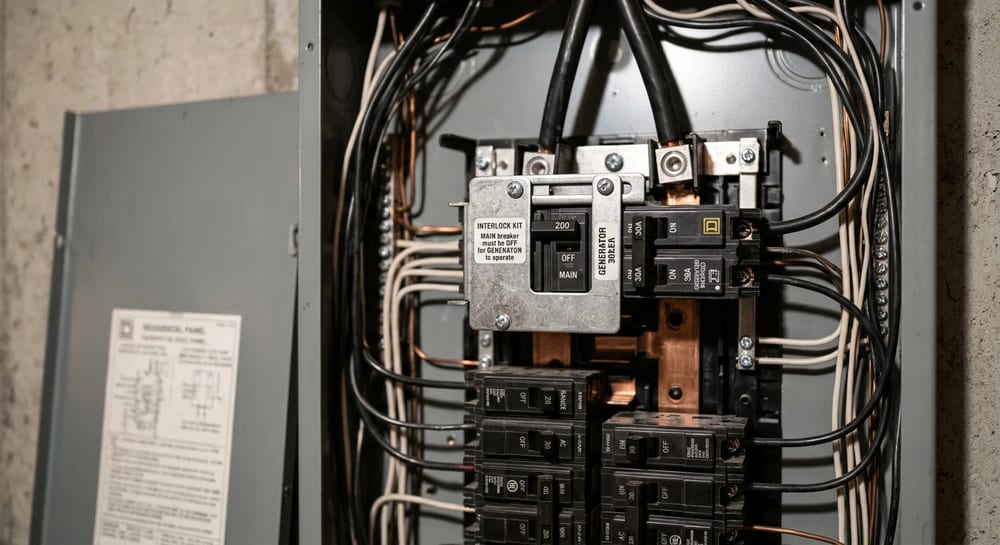
A generator interlock kit is a much simpler device. It is a sliding metal plate bolted directly to the front cover of your existing main electrical panel. The plate is precision-cut so that it physically forces you to turn off the main utility breaker before you can flip on the generator breaker. The major benefit of an interlock kit is flexibility: once the generator is running, you can manually select any circuit in the house to turn on, provided you don't exceed the generator's running wattage limit. Interlock kits are usually cheaper, costing around $400 to $800 installed, including the heavy-duty outdoor inlet box.
How Do I Hook Up a Generator to My House Safely?
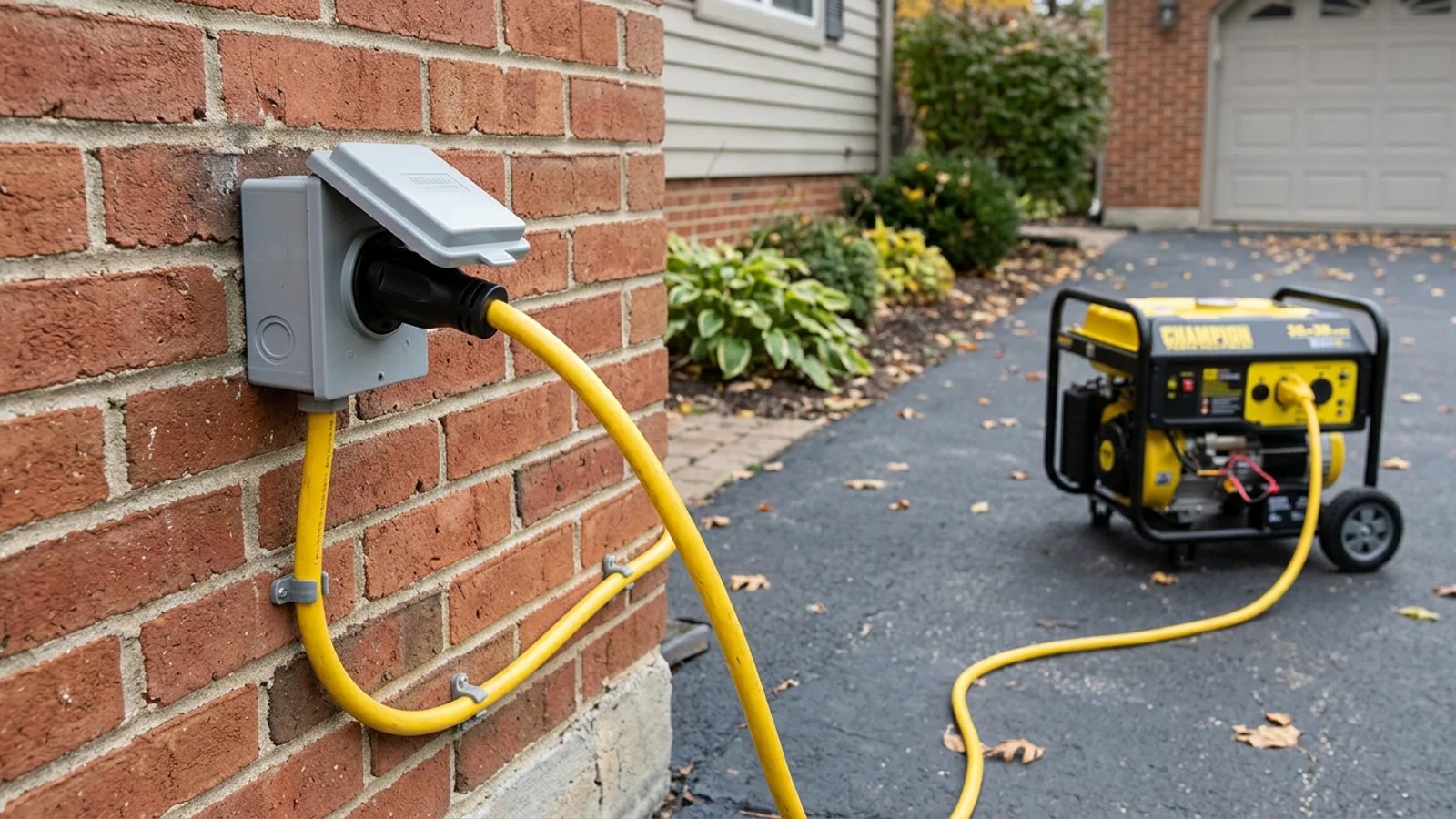
Once your electrician has installed the proper inlet box (usually a 30-amp L14-30 or a 50-amp plug on the exterior of your house) and the corresponding panel hardware, the actual connection process is straightforward. When we tested our newly installed interlock setup last winter, it took less than five minutes to get the furnace and refrigerator back online.
Here is the exact sequence you should follow to safely connect and start your system during an outage:
- Turn off the main breaker. Open your electrical panel and switch off the large main breaker at the top. This disconnects your home from the utility grid entirely.
- Turn off all branch circuits. Flip every individual breaker in your panel to the "off" position. This prevents a massive electrical surge from bogging down the generator when it connects.
- Connect the heavy-duty cord. Plug your generator cord into the outdoor inlet box, twisting it to lock it in place. Then, plug the other end into the turned-off generator.
- Start the generator. Fire up the portable unit outside. Let it run for about five minutes to warm up and stabilize the engine before applying any load.
- Flip the generator breaker. Go back to your electrical panel. Slide the interlock plate up (or switch your transfer panel) and turn on the dedicated generator breaker.
- Turn on circuits one by one. Start with the largest load, like the refrigerator or well pump. Wait a few seconds for the generator engine to stabilize, then flip on the next essential circuit.
When utility power is restored, reverse the process. Turn off the branch circuits, turn off the generator breaker, slide the interlock plate down, and turn the main utility breaker back on. Finally, go outside, shut down the generator, and unplug the cord.
Portable Generator Safety and the 20-Foot Rule
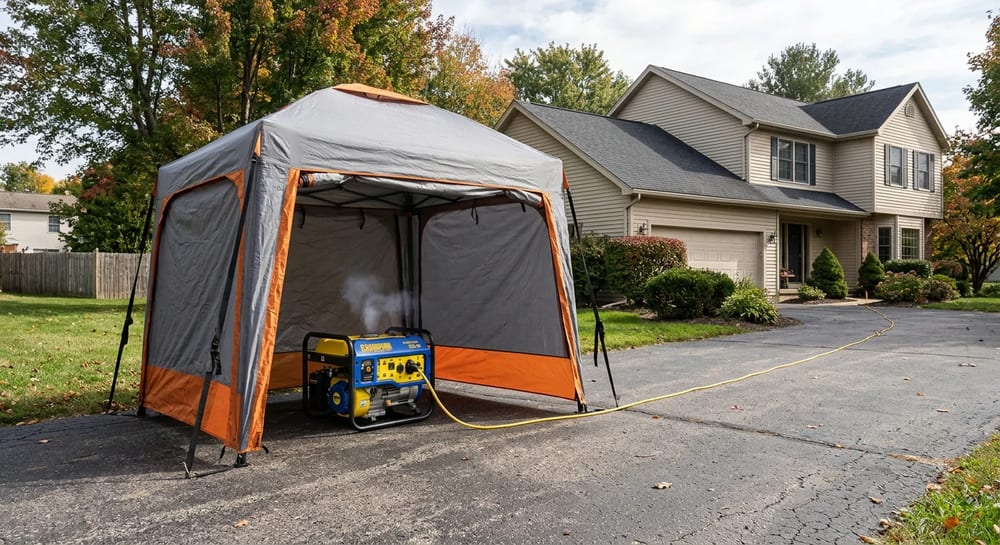
A safe electrical connection is only half the battle. Portable generators run on gasoline, propane, or natural gas, and their exhaust produces massive amounts of carbon monoxide (CO)—an odorless, colorless, and lethal gas. According to CDC guidelines, you must run a portable generator strictly outdoors, at least 20 feet away from your home.
Never run a generator in a garage, basement, shed, or enclosed porch, even with the doors and windows wide open. The exhaust pipe must point away from all doors, windows, and soffit vents to prevent fumes from being sucked into the attic or living spaces. If it is raining or snowing heavily, you cannot bring the generator inside to protect it. Instead, use a specialized, manufacturer-approved generator tent. These tents cover the sensitive electrical outlets while leaving the engine and exhaust completely open to the air.
A portable generator running in an open garage can fill a house with lethal levels of carbon monoxide in a matter of minutes.
You also need to practice safe refueling. Never pour gasoline into a generator while it is running or while the muffler is hot. A spilled splash of gas on a 600-degree muffler will ignite instantly. Shut the unit down and let it cool for at least 15 minutes before topping off the tank.
Why Carbon Monoxide Alarms Are Non-Negotiable
Even if you follow the 20-foot rule perfectly, shifting winter winds can sometimes push exhaust fumes toward your home. Because you cannot see or smell carbon monoxide, your only line of defense is a working set of indoor alarms.
You must have carbon monoxide alarms installed on every level of your house, especially in the hallways directly outside of sleeping areas. Because the utility grid is down during a generator run, hardwired CO alarms are useless unless they have a fresh battery backup. Test these alarms monthly and replace the batteries every six months, ideally when you change your clocks for daylight saving time.
Preparing your electrical panel before an emergency strikes takes the panic out of a blackout. Call a licensed electrician this season to get an interlock or transfer switch installed. The next time the neighborhood goes dark, you can safely wheel out the generator, plug in the cord, and keep your household warm and running without putting anyone at risk.
- Never use a 'suicide cord' to plug a generator into a dryer or range outlet.
- Choose an interlock kit for flexibility across all circuits, or a transfer switch for a dedicated, foolproof sub-panel.
- Always turn off your main utility breaker before starting your generator.
- Place the generator a minimum of 20 feet away from your home with the exhaust pointing away from doors, windows, and vents.
- Install battery-backed carbon monoxide alarms on every floor of your house.