How to Navigate the Roof Damage Insurance Claim Process
A severe storm can leave your roof battered and leaking. Learn how to navigate the insurance claim process, document damage safely, and avoid predatory roofing scams.
Full guide Home Insurance Learn exactly what your home insurance covers, what it ignores, and how to decide if a claim is worth filing.Finding torn shingles in your front yard or fresh water spots on your ceiling after a major storm is a stressful experience. You know you need repairs fast, but the prospect of dealing with adjusters, deductibles, and contractors can feel overwhelming. Navigating the roof damage insurance claim process requires a cool head and a clear understanding of your policy so you can get the payout necessary to protect your home.
Immediate Steps to Mitigate Further Damage
Your homeowners insurance policy includes a clause requiring you to mitigate further damage after a storm, often within a 48-hour window. If a tree branch punctures your roof and you leave the hole open for three weeks, the insurance company can rightfully deny coverage for the ruined hardwood floors inside. Your first priority is stopping the water.
If it is safe to do so, cover exposed roof decking or active leaks with a heavy-duty 10x12 foot waterproof tarp. Do not simply lay the tarp flat and place bricks on the corners; wind will easily lift it. Secure the edges of the tarp by wrapping them around 1x3 inch wooden furring strips, then drive 2-inch galvanized roofing nails through the wood directly into the roof decking.
How Do I Document Roof Damage Safely?
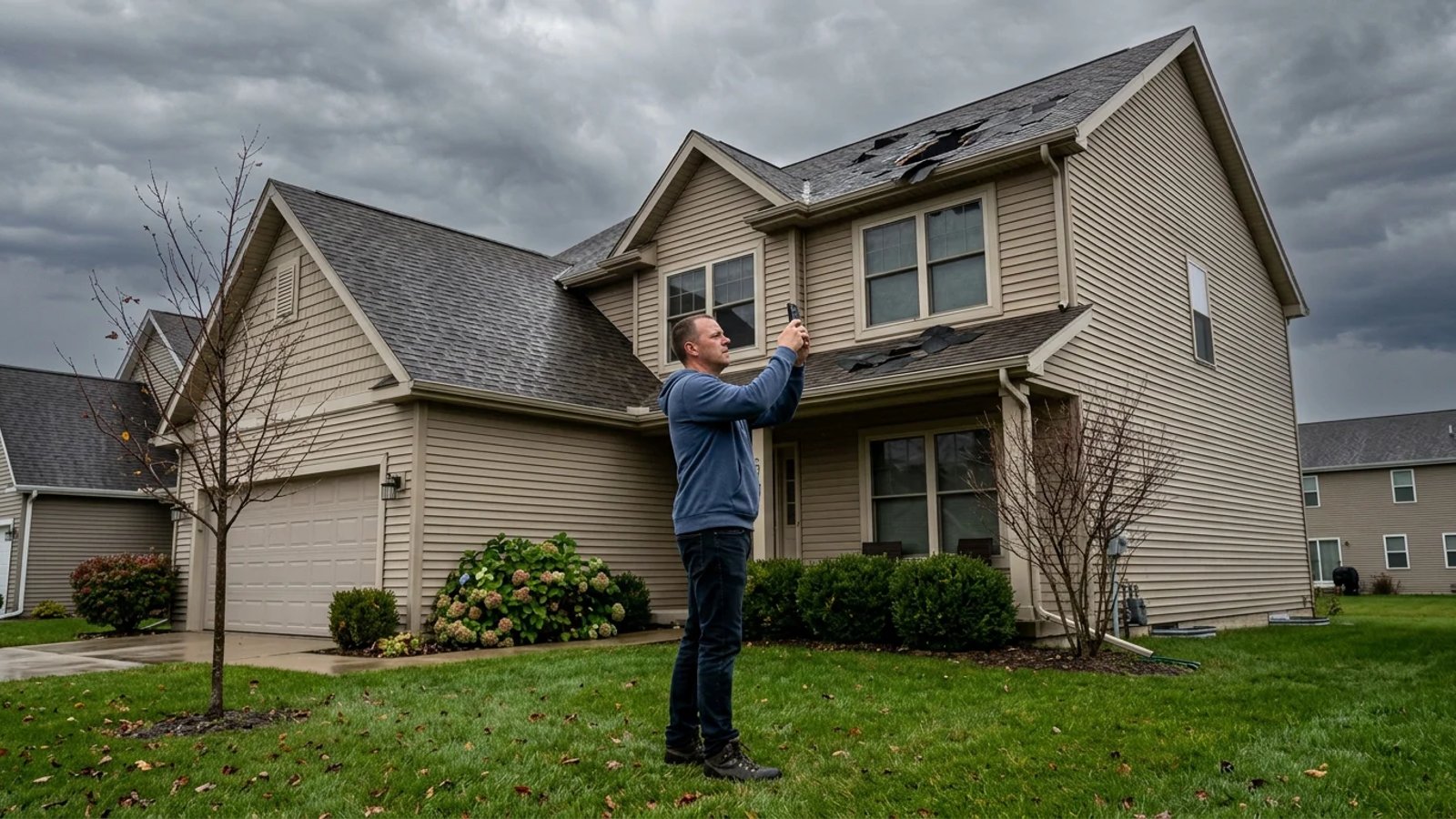
Before you start dragging broken branches to the curb or throwing away torn shingles, you need evidence. Adjusters rely heavily on the initial state of the property to determine the severity of the weather event.
- Photograph the yard debris. Take wide-angle shots of your property showing fallen limbs, scattered roofing materials, and standing water before you clean anything up.
- Inspect your attic for leaks. Take a bright 1000-lumen LED flashlight into the attic and look for dark water trails along the wooden rafters or damp spots in the blown-in insulation.
- Check for collateral damage. Walk the perimeter of your house looking for dents in aluminum gutters, torn window screens, or bruised fins on your exterior AC condenser unit.
- Store physical evidence. If you find large pieces of torn asphalt shingles or pieces of aluminum siding, place them in the garage so the adjuster can inspect the material thickness and condition.
After a severe hail storm rolled through my neighborhood a few years back, I noticed the most obvious damage wasn't on the roof itself. It was the golf-ball-sized dents in my aluminum gutters and the shattered plastic casing on my attic vent. Documenting those ground-level signs made my adjuster's job much easier when they arrived a week later.
Key Factors Insurance Adjusters Look For in a Roof Damage Insurance Claim
When an adjuster evaluates your roof, they're not just looking for obvious holes. They're trained to differentiate between storm-related damage and general wear and tear, or even issues from poor installation. Understanding what they focus on can help you prepare your documentation more effectively.
For hail damage, adjusters look for "bruising" or fractures in the shingle's fiberglass mat, not just granule loss. Hail hits typically cause circular depressions, often accompanied by a soft spot when pressed. They'll assess the size, density, and frequency of these impacts to determine if they meet the criteria for replacement. This often involves the "test squares" method mentioned later, where a minimum number of hits per square is required.
Wind damage, on the other hand, often manifests as lifted, creased, or missing shingles, particularly along roof edges and ridges. Adjusters will look for consistent patterns of uplift and tearing, which indicate high winds rather than isolated blow-offs from improper nailing. They also check for damage to flashing, vents, and other roof penetrations that might have been compromised by strong gusts.
The age of your roof is another significant factor. Older roofs are more susceptible to damage from less severe storms, and their condition plays a role in determining Actual Cash Value versus Replacement Cost Value payouts. Adjusters will also inspect collateral damage to other property elements, like gutters, siding, and fences, as these can corroborate the severity of the storm and support your roof damage claim. Documenting these secondary damages yourself can strengthen your overall claim.
Reviewing Your Policy: ACV vs. RCV
Before making any phone calls, locate your insurance declarations page. The most critical detail to find is whether your roof is covered under Actual Cash Value (ACV) or Replacement Cost Value (RCV). This distinction determines how much money you will actually receive.
Replacement Cost Value pays for the total cost to replace your damaged roof with brand new materials of comparable quality, minus your deductible. Actual Cash Value, on the other hand, factors in depreciation. If you have a 15-year-old architectural shingle roof that is expected to last 30 years, an ACV policy will deduct 50 percent of the roof's value before paying out. If a new roof costs $12,000, an ACV policy might only pay $6,000, leaving you responsible for the rest.
You also need to check your deductible type. Many modern policies have shifted from flat-rate deductibles (like $1,000) to percentage-based deductibles for wind and hail damage. A 2 percent wind/hail deductible on a home insured for $300,000 means you must pay $6,000 out of pocket before the insurance kicks in. The Insurance Information Institute provides excellent resources on how these specific deductibles are triggered depending on your state's weather risks.
The Great Debate: Roofer or Adjuster First?
Homeowners often wonder who to call first: the insurance company's claims department or a local roofing contractor. Calling a trusted, local roofing professional first is usually the smartest move. An honest roofer will perform a free inspection and tell you whether the damage is severe enough to justify a claim.
If a storm only blew off three shingles, the repair might cost $350. If your deductible is $1,000, filing a claim is pointless. You will get no money, but you will still have a claim recorded on your insurance history, which can impact future rates. A professional inspection gives you the exact repair estimate you need to make an informed decision.
What to Expect During the Adjuster's Inspection
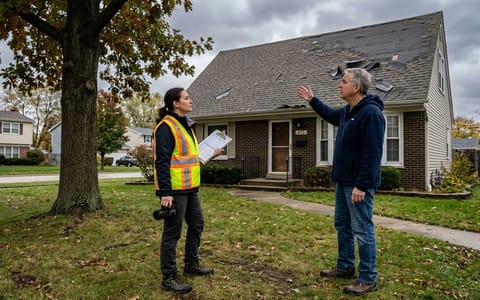
Once you file the claim, the insurance company will send an adjuster to inspect your property. It is highly recommended to have your chosen roofing contractor present during this inspection. The roofer can point out subtle damage the adjuster might miss and ensure they agree on the scope of work.
During a hail inspection, the adjuster will use chalk to draw 10x10 foot "test squares" on different directional slopes of your roof. They will count the number of distinct hail hits within that square that have bruised the fiberglass matting beneath the asphalt granules. Most insurance carriers require a minimum of 8 to 10 verified hits per square to approve a full roof replacement rather than a simple repair.
Never sign a contract with a roofer before your insurance company has approved the claim and provided a scope of loss.
If the adjuster's initial payout seems too low, do not panic. Your contractor can file a "supplement" with the insurance company. This is a standard process where the roofer provides detailed photos, local material invoices, and line-item labor costs to justify a higher payout for code-required items like drip edges or ice-and-water shields.
Red Flags: Avoiding Predatory Storm Chasers
Major weather events attract out-of-town roofing crews known as "storm chasers." These companies follow severe weather patterns, knock on doors, and aggressively push homeowners to sign binding contracts on the spot.
Watch out for contractors driving trucks with out-of-state license plates or those who refuse to provide a local physical address. A massive red flag is any contractor who offers to "waive" or "eat" your insurance deductible. In almost every state, this is considered insurance fraud, and participating in it makes you legally liable. Reputable roofers will provide a detailed, written estimate, show proof of local liability insurance, and never pressure you to sign a document before the insurance adjuster has completed their report.
Getting your roof repaired after a storm takes patience, but following these steps ensures you stay in control of the process. Document everything, understand your deductible, and rely on established local professionals to restore your home to its pre-storm condition.
- Never climb a wet or severely damaged roof; document collateral damage like dented gutters or broken yard items to prove storm severity.
- Understand your deductible—often 1% to 2% of your home's total insured value for wind and hail claims.
- Avoid 'storm chaser' roofers who knock on your door immediately after a weather event and pressure you to sign a contingency contract.