Furnace Not Turning On? Safe Checks Before Calling a Pro
Is your heater completely dead? Before paying for an emergency HVAC service call, walk through these simple, safe troubleshooting steps to get your heat back on.
Full guide HVAC & Climate Control How your home heats, cools, and moves air, and the decisions that matter.The first cold snap of early fall is here. You bump the thermostat up to 68 degrees, wait for that familiar rumble, and get total silence. Finding your furnace not turning on is one of the most stressful moments of homeownership, especially as the house actively loses heat and you start calculating the cost of an emergency weekend repair bill.
Before you panic and pay a $150 to $200 dispatch fee for an HVAC technician, take a breath. In my experience, heating failures often look catastrophic but are frequently caused by simple, easily correctable issues. Modern furnaces are packed with safety sensors designed to shut the entire system down if they detect a minor problem, preventing a major hazard.
We are going to walk through the exact steps an HVAC technician takes during the first ten minutes of a service call. You can safely perform these checks yourself with no special tools.
Safety First: When to Back Away
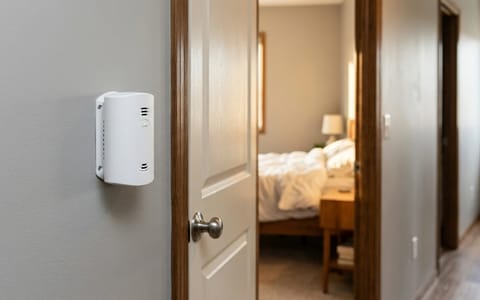
Before you touch a single switch, we need to establish a hard boundary regarding gas appliances. Natural gas and propane are incredibly safe when handled correctly, but highly volatile when things go wrong. Always ensure you have a working carbon monoxide detector installed within 10 feet of your furnace.
Assuming the air is clear and there are no strange odors, you can proceed with troubleshooting. Remember that your job is to check the external controls and airflow. You should never open the sealed combustion chamber, attempt to clean the burners, or adjust the gas valve.
Why is My Furnace Not Turning On? (Start at the Thermostat)
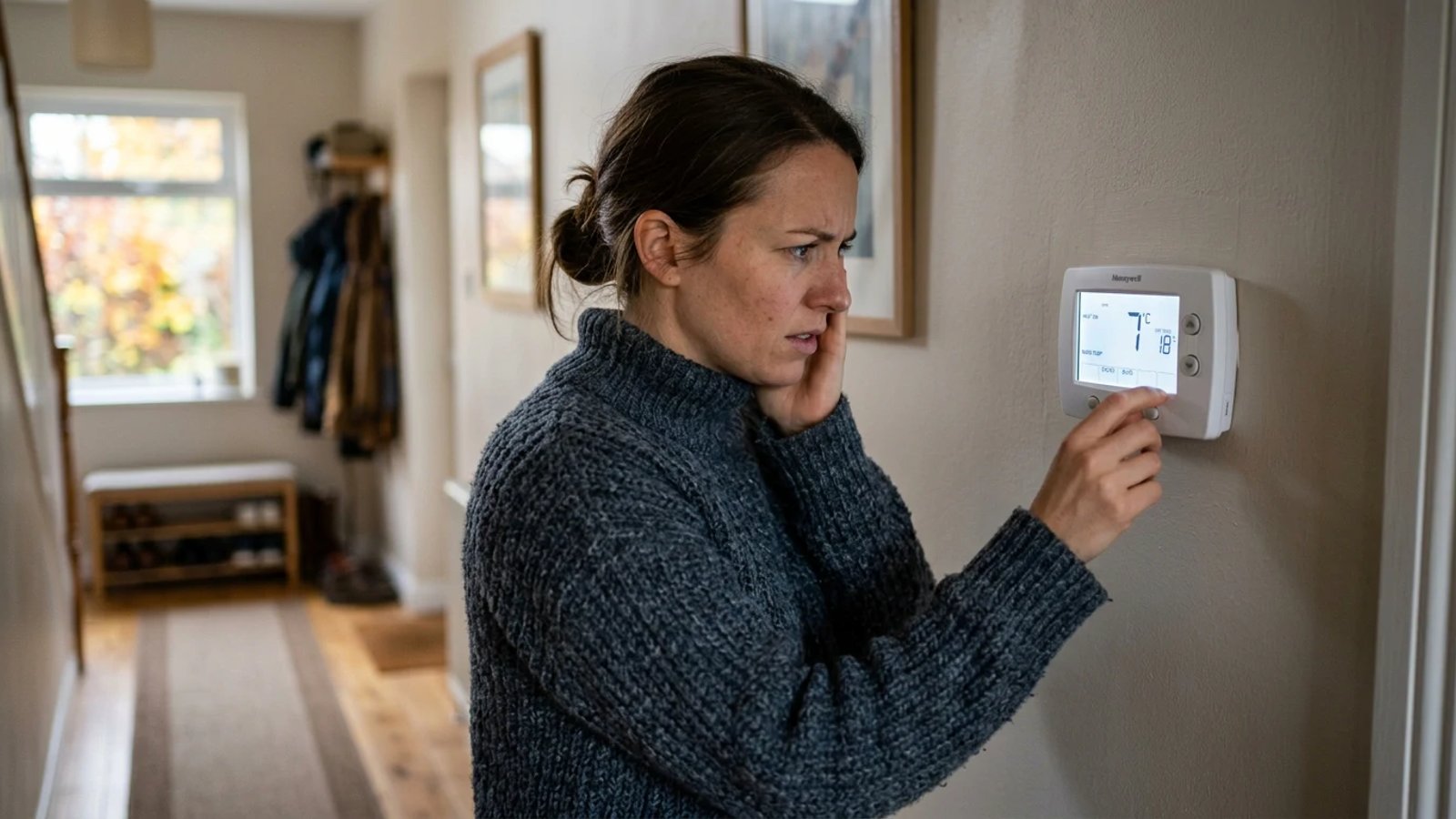
It sounds almost too simple, but a massive percentage of "broken" furnaces are actually just communication errors from the thermostat. Last October, I drove an hour across town to help a relative who was convinced her blower motor was dead. We swapped the two AA batteries in her wall thermostat, and the system roared to life instantly.
Here is how to rule out the thermostat:
- Verify the system is set to "Heat". It is easy to accidentally leave the switch on "Cool" or "Off" during the transition from summer to fall.
- Crank the temperature up. Set the target temperature at least 5 degrees higher than the current room temperature to force the system to call for heat.
- Check the batteries. If the screen is blank or flashing a low battery warning, pull the faceplate off and replace the batteries. Most use standard AAs or AAAs.
- Check the date and time. If you have a programmable thermostat and the internal clock reset during a power outage, it might think it is 2:00 AM and is running your overnight temperature setback.
If you hear a faint click at the thermostat when you raise the temperature, that is a good sign. It means the thermostat is trying to send the 24-volt signal to the furnace control board.
The Hidden Furnace Power Switch
If the thermostat is working but the furnace is completely unresponsive, the next culprit is the power supply. Furnaces require 120-volt electrical power to run the control board, the draft inducer, and the blower motor.
Look at the walls or ceiling joists immediately surrounding your furnace. You will almost always find a standard metal toggle switch that looks exactly like a regular light switch. Code requires this dedicated shutoff switch so technicians can quickly cut power during servicing.
Because it looks like a light switch, it frequently gets bumped off by accident. Someone reaches for the basement light in the dark, flips the wrong switch, and unwittingly disables the heating system. Make sure this switch is flipped up to the "On" position.
Next, check your main electrical panel. Locate the breaker labeled "Furnace" or "HVAC". If a breaker trips, it doesn't always flip completely to the "Off" side; it often rests slightly loose in the middle. Push the breaker firmly to the "Off" position, wait a few seconds, and snap it hard back to the "On" position.
How a Clogged Filter Shuts Down the System
If your furnace turns on, runs for a few minutes, blows lukewarm air, and then shuts off before the house gets warm, you are likely dealing with a short-cycling issue caused by a dirty air filter.
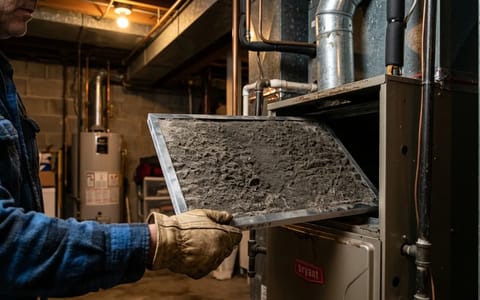
Your furnace pulls cold air from the house, heats it by passing it over a metal heat exchanger, and blows it back out. If the air filter is caked in dust, pet hair, and debris, that airflow is severely restricted. Without enough cold air moving over it, the heat exchanger rapidly overheats.
To prevent the equipment from melting or starting a fire, a sensor called the high-limit switch detects this extreme temperature and immediately cuts power to the burners. The fan might keep running to cool the unit down, but you won't get any heat.
Pull your filter out and hold it up to a light bulb. If you cannot see light shining through the material, it is fully clogged and must be replaced. The Energy Star maintenance guidelines recommend checking your filter every single month during peak heating season.
The Access Panel Safety Switch
A few winters ago, I woke up to a freezing house and spent an hour panicking. I had changed the air filter the night before, and it turned out I hadn't pushed the bottom furnace door on completely. Pushing it in half an inch fixed the whole system.
Every modern furnace has a door safety switch. It looks like a small, spring-loaded button located along the frame where the blower door sits. When the door is securely fastened, it pushes the button in, completing the electrical circuit. If the door is loose, crooked, or missing, the button pops out and cuts all power to the furnace.
Take both doors off the furnace. Line up the tabs carefully, and push them firmly back into place. You should hear a distinct click, and if the thermostat is calling for heat, the system should begin its startup sequence within a minute or two.
Are the Exhaust or Intake Pipes Blocked?
If you have a high-efficiency furnace (usually rated 90% AFUE or higher), it will not vent through a metal chimney. Instead, it uses white PVC pipes that exit through the side or back of your house.
One pipe brings fresh air in from the outside for combustion, and the other blows the toxic exhaust gases out. Inside the furnace, a small vacuum sensor called a pressure switch constantly monitors the airflow through these pipes. If the pressure drops, the switch tells the control board that the exhaust is blocked, and the furnace will refuse to ignite.
During the fall, it is incredibly common for dry leaves to get sucked into the intake pipe. Mice and birds are also notorious for building nests inside the warm exhaust pipes. Walk outside and inspect the PVC pipes where they exit your house. Clear away any leaves, cobwebs, or snowdrifts that might be blocking the openings.
A furnace that tries to start but clicks off after thirty seconds is almost always protecting you from a blocked exhaust or an overheating chamber.
When to Stop Troubleshooting and Call a Pro
If you have checked the thermostat, verified the power, installed a clean filter, secured the doors, and cleared the exhaust pipes, you have officially exhausted the safe DIY troubleshooting steps. If the furnace still refuses to turn on, you need to call a licensed HVAC technician.
When you do call a technician, tell them exactly what you have already checked. Letting them know that the breaker is fine, the filter is new, and the thermostat is calling for heat saves them time and helps them arrive with the right replacement parts on their truck. Staying warm during the colder months is all about catching small issues early, so keep those filters clean and keep an eye on your system as the temperature drops.
- Many 'dead' furnaces are simply reacting to a tripped safety sensor, not a broken motor.
- A standard light switch near your furnace controls its power—make sure it wasn't accidentally bumped off.
- High-efficiency furnaces need clear exterior exhaust pipes to run; clear away any fall leaves or debris.
- Never attempt to repair gas valves, heat exchangers, or internal wiring yourself.