How to Add Humidity to House (And Stop Winter Dryness)
When the furnace kicks on, indoor humidity plummets, causing dry skin, static shocks, and shrinking floors. Learn how to balance your home's moisture levels this winter.
Full guide HVAC & Climate Control How your home heats, cools, and moves air, and the decisions that matter.Mid-fall arrives, the furnace fires up, and within a week, the house feels like a desert. You touch a doorknob and get a sharp static shock. Your throat is scratchy in the morning, and the hardwood floors might even start showing tiny gaps. When the cold weather sets in, figuring out how to add humidity to house environments becomes a top priority for comfort and home preservation.
Dry indoor air is more than just a minor annoyance. Prolonged low humidity pulls moisture out of everything in your home. Wood framing shrinks, drywall seams can crack, and pianos go out of tune. Fortunately, balancing your home's moisture levels is straightforward once you understand how heating systems interact with winter air.
Why Is My House So Dry in the Winter?
To fix the dryness, it helps to understand why it happens. The culprit is the relationship between temperature and air's capacity to hold water, known as relative humidity. Cold air simply cannot hold much moisture. When it is 10°F outside, even if it is snowing and the outdoor humidity is 80%, the actual amount of water vapor in the air is tiny.
When that cold, dry air enters your home through natural drafts and your furnace heats it up to 70°F, the air expands. Its capacity to hold water increases dramatically, but no new water has been added. As a result, the relative humidity plummets, often dropping below 20%. The air becomes thirsty, acting like a giant sponge that pulls moisture from your skin, your plants, and your woodwork.
A few winters ago, I noticed my oak hardwood floors starting to gap near the baseboards in January. The wood was literally shrinking because the indoor humidity had dropped to 18%. Once I got the humidity back up to 35%, the wood swelled back to its normal size and the gaps closed up entirely within two weeks.
How Whole-House Humidifiers Work
If you have forced-air heating, the most efficient way to solve winter dryness is with a whole-house humidifier attached directly to your ductwork. These units fall into three main categories: bypass, power, and steam. Bypass humidifiers are the most common and easiest to maintain.
A bypass humidifier connects the warm air supply duct to the cold air return duct. Inside the unit is a water panel, often called an evaporator pad, made of an aluminum mesh coated in a clay-like substance. These pads are typically 10 to 12 inches tall. When the furnace runs and the humidistat calls for moisture, a small valve opens, trickling water over this pad.
The pressure difference between the supply and return ducts forces warm air through the wet pad. The air absorbs the water vapor and distributes it evenly throughout every room in the house via your vents. It is a simple, highly effective mechanical process that requires very little electricity.
What Is the Ideal Furnace Humidifier Setting?
Finding the right setting on your humidistat is a balancing act. Set it too low, and you suffer from static shocks and dry skin. Set it too high, and you risk severe moisture damage to your home.
According to the EPA guidelines on indoor air quality, keeping indoor humidity between 30 and 50 percent is ideal for health and comfort. However, in colder climates during the peak of winter, 50% is almost always too high and will cause problems.
Because cold glass chills the air immediately next to it, high indoor humidity will turn into liquid water on your windowpanes. To prevent this, you must lower your humidistat as the outdoor temperature drops. Use this general sliding scale for winter humidity settings:
- Outside temperature 20°F to 40°F: Set humidity to 35% to 40%.
- Outside temperature 10°F to 20°F: Set humidity to 30%.
- Outside temperature 0°F to 10°F: Set humidity to 25%.
- Outside temperature below 0°F: Set humidity to 15% to 20%.
Your windows are the canary in the coal mine for winter humidity. If they are sweating, your house is too wet.
Many modern thermostats, like Nest or Ecobee, can control your humidifier automatically. If you have an outdoor temperature sensor wired to your HVAC board, these smart thermostats will handle the sliding scale for you, lowering the humidity output during cold snaps without you having to touch a dial.
How to Add Humidity to House Without a Furnace System
Not every home has forced-air heating. If you rely on radiators, baseboard heaters, or mini-splits, you cannot install a traditional bypass humidifier. Fortunately, there are plenty of effective, everyday methods to add moisture to your air.
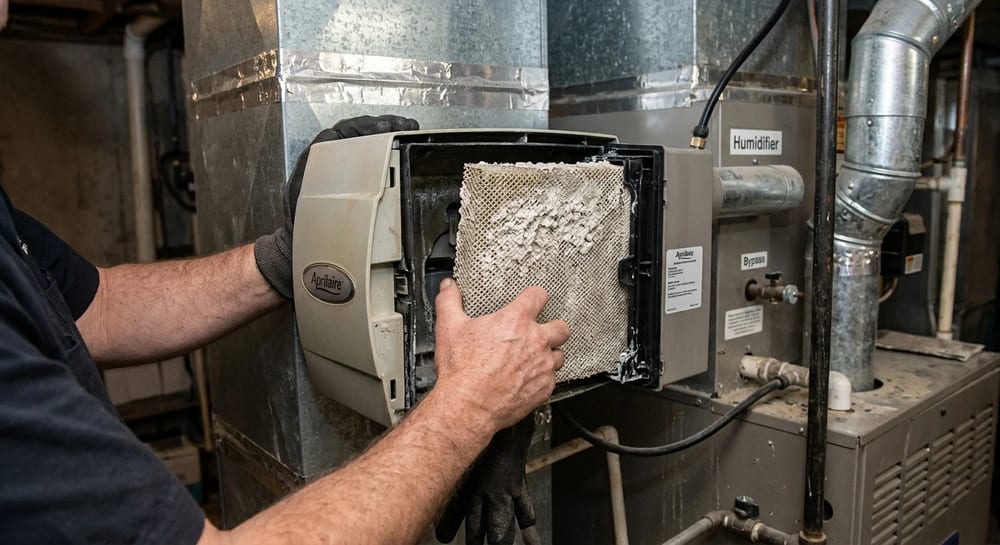
If you need to know how to add humidity to house environments manually, follow these practical steps:
- Run a portable humidifier. Place a cool-mist or ultrasonic humidifier in the rooms you use most, like the bedroom and living room. Expect to pay $40 to $100 for a reliable unit.
- Leave the bathroom door open. When taking a hot shower, let the steam escape into the hallway rather than trapping it and running the exhaust fan.
- Air-dry your laundry indoors. Set up a folding drying rack in your bedroom or living room. As the wet clothes dry, they release gallons of water vapor into the air.
- Leave bathwater in the tub. After taking a bath, do not drain the water immediately. Let it sit until it cools to room temperature, allowing the heat and moisture to evaporate into the house.
- Cook on the stovetop. Simmering soups, boiling pasta, or even just keeping a pot of water on a low simmer adds significant moisture to the kitchen and adjoining rooms.
- Add houseplants. Plants naturally release moisture through a process called transpiration. Grouping several well-watered plants together creates a localized humid microclimate.
How to Measure Your Indoor Humidity
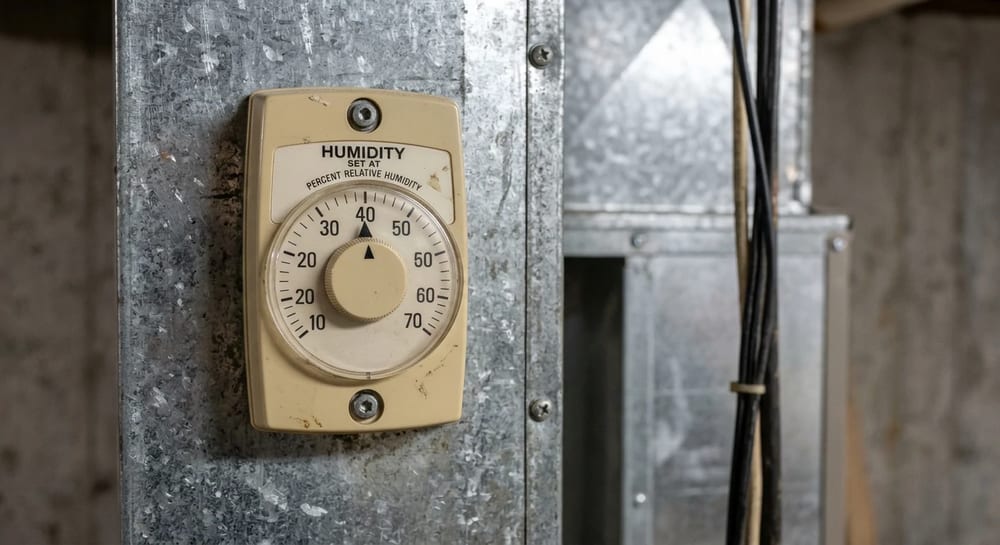
Whether you use a whole-house system or portable units, you need to know if your efforts are working. Do not rely solely on the dial on your furnace ductwork. That dial is a humidistat, which tells the system what to target, but it doesn't tell you the actual humidity in your living space.
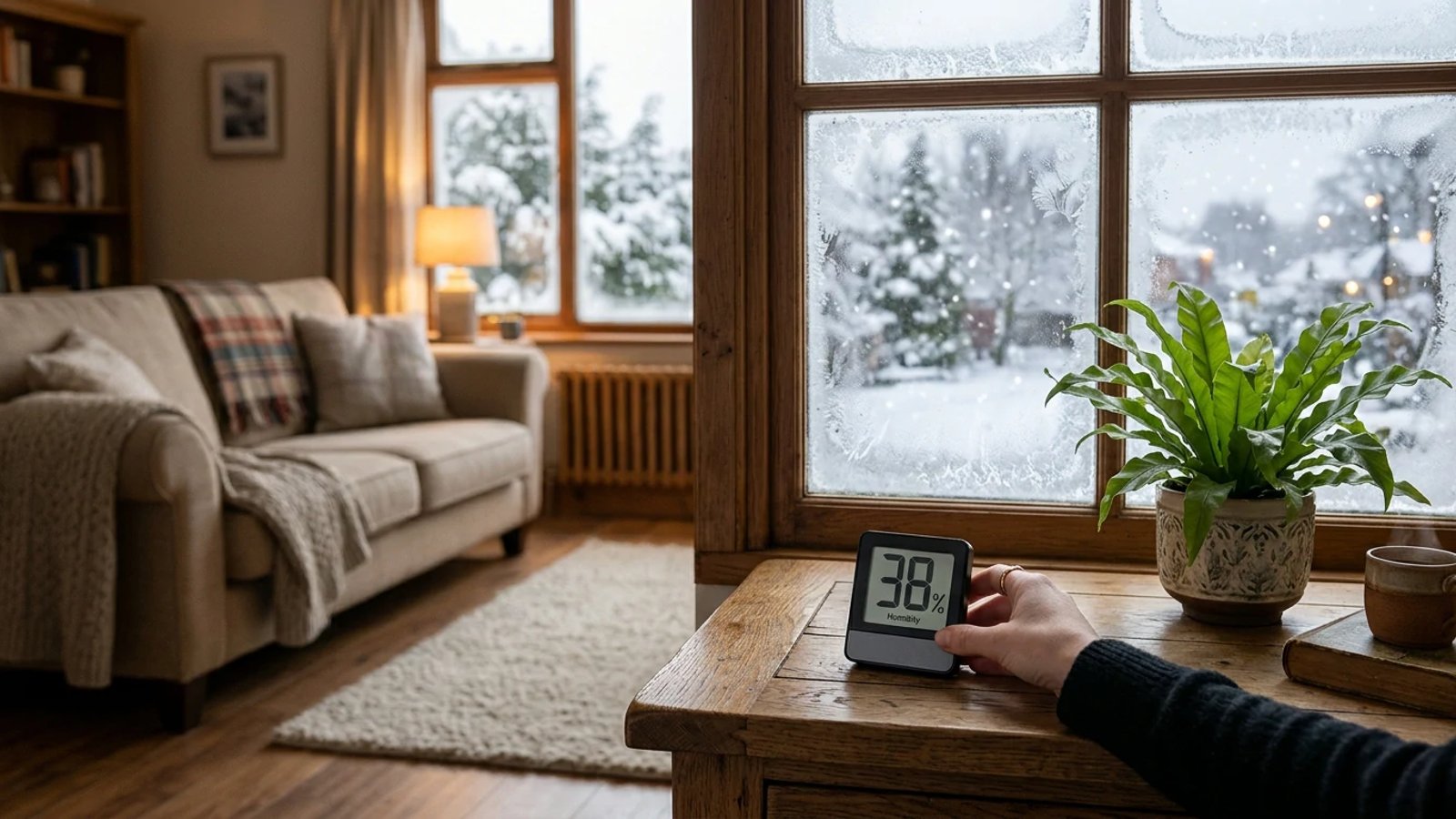
Pick up a basic digital hygrometer. You can find them at any hardware store or online for $10 to $15. Place it on a shelf in a central room, away from direct sunlight and away from heating vents. This little device gives you the ground truth of your home's air quality. If the hygrometer reads 25% but your furnace dial is set to 40%, you know your humidifier is either struggling to keep up or needs maintenance.
Maintaining Your Whole-House Humidifier
A whole-house humidifier is not a set-it-and-forget-it appliance. Because it deals with constant water flow, it is highly susceptible to hard water scale and mineral buildup. If you ignore it, it will stop working right when you need it most.
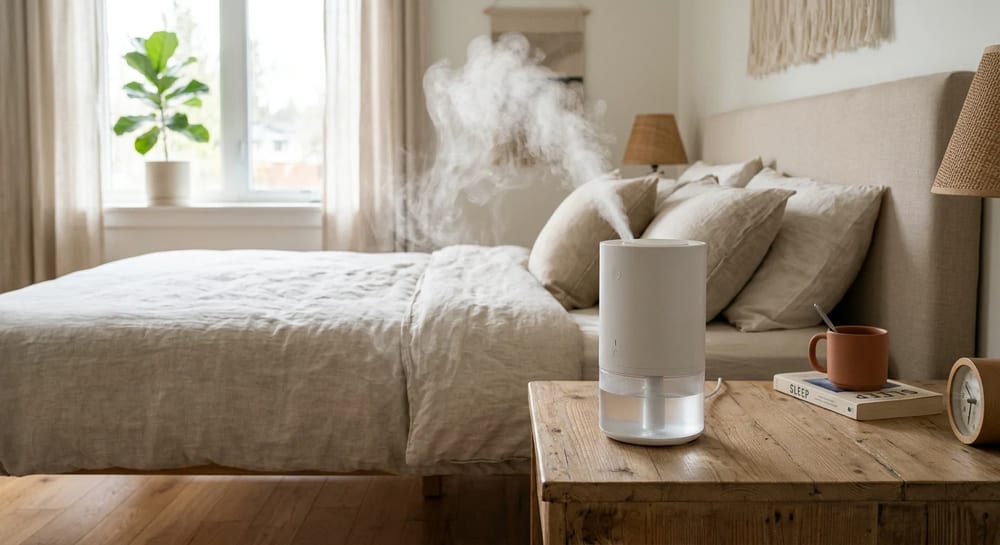
The most critical maintenance task is replacing the water panel (evaporator pad) every single heating season. Over time, the mesh becomes completely crusted with white calcium and magnesium deposits. Once calcified, the pad cannot absorb water, and air cannot easily pass through it.
Here is how to swap out the water panel:
- Turn off the furnace. Shut off the power at the breaker or the service switch next to the unit to ensure the blower doesn't kick on.
- Remove the humidifier cover. Most bypass units have a plastic cover that pops off with two tabs or a single thumbscrew.
- Slide out the water panel enclosure. Pull the plastic frame holding the old pad out of the housing. Be careful, as it might be brittle.
- Disconnect the water distribution tube. Pop the plastic tube off the top of the frame.
- Swap the pad. Throw the old, crusty pad in the trash. Slide the new pad into the frame, ensuring the colored paint mark (usually black or red) is facing up.
- Reassemble and test. Snap the distribution tube back on, slide the frame into the unit, and replace the cover. Turn the furnace on and crank the humidistat up to verify water flows down the drain tube.
Last November, I tested my own system by turning the humidistat up until it clicked. The furnace was running, but no water flowed down the drain line. The saddle valve tapping into the copper water pipe was completely calcified shut. It required a quick $12 replacement valve from Home Depot to get the water flowing again.
Getting your home's humidity right takes a little bit of tinkering during the first few cold snaps of the year. By keeping your equipment clean, monitoring your window glass for condensation, and adjusting your settings as the temperature drops outside, you can eliminate static shocks and keep your house comfortable all winter long.
- Lower your humidistat when outdoor temperatures plunge; 35% is great at 20°F, but too high for 0°F.
- Check your windows daily during cold snaps—if condensation forms on the bottom of the glass, your humidity is too high.
- Replace your whole-house humidifier water panel annually; calcified pads block airflow and harbor mold.
- Buy a standalone digital hygrometer for $10 to verify your actual indoor humidity, rather than trusting the furnace dial alone.