Who to Call for a Chimney Leak: A Roofer or a Mason?
Water damage near your fireplace means your chimney is leaking, but should you hire a roofer or a mason? Learn how to spot the difference from the ground and avoid wasted dispatch fees.
Full guide Roofing Learn how long shingles last, how to spot leaks early, and how to decide between a quick repair and a full roof replacement.You are sitting in your living room after a heavy rainstorm when you look up and spot it: a spreading, tea-colored water stain on the ceiling right next to the fireplace. Or perhaps you hear the steady, rhythmic drip of water hitting the metal firebox behind your gas logs. Water damage near a fireplace usually means one thing—your chimney is letting the outside in, and figuring out who to call for chimney leak becomes your next challenge.
Fixing a leaking chimney presents a highly specific and frustrating problem for homeowners. The chimney is an architectural intersection where two completely different trades collide. The roofers own the shingles and the flashing, while the masons own the bricks and the mortar. If you guess the wrong trade, you will likely pay a $100 to $250 dispatch fee, wait two weeks for an appointment, and then listen to a contractor tell you, "Sorry, that's a masonry issue, I can't help you."
A few years ago, I inspected a 1990s brick ranch where the homeowner had already paid two different roofers to slather black tar around the base of the stack. The leak persisted. When I climbed up and checked the very top of the chimney, the concrete crown was split right down the middle. Water was pouring straight down the inside of the brickwork, bypassing the roof entirely. A mason fixed it in a few hours, but the homeowner had wasted hundreds of dollars and months of time chasing the wrong repair.
This guide will help you diagnose the likely culprit from the ground so you can hire the right expert the first time.
Why Are Chimney Leaks So Hard to Diagnose?
Water is lazy, but it is also highly opportunistic. When rain hits your roof, gravity pulls it downward. If it finds a gap, it enters the attic space. However, water rarely drips straight down from the entry point. Instead, it travels along the underside of roof decking, runs down the slope of the rafters, and pools at the lowest point before finally soaking through your drywall.
Because water travels sideways, a stain near the fireplace does not guarantee the leak is happening at the base of the chimney. It could be entering through a cracked brick near the top of the stack, or it could be entering through a missing shingle three feet higher up the roof line and running down to the chimney framing.
To complicate matters, brick is essentially a hard sponge. Masonry materials are porous. If the protective outer layer of the brick is damaged, or if the mortar joints have degraded, the chimney itself absorbs water during a long rainstorm. Eventually, the bricks become fully saturated, and the water weeps through to the wood framing inside your house. This type of leak often confuses homeowners because it might not start dripping until 24 hours after the rain has begun.
Who to call for chimney leak? Start with a Ground-Level Inspection
You do not need to climb onto a steep, slippery roof to figure out who to call for a chimney leak. In fact, unless you have proper fall-arrest gear and experience walking on pitched roofs, you should stay on the ground. You can gather 90 percent of the information you need using a good pair of binoculars or a digital camera with a strong optical zoom.
Stand in your yard where you have a clear view of the chimney from at least two different sides. Wait for a bright, sunny day so shadows do not hide the details. You are looking for specific visual clues that will immediately point you toward either a roofer or a mason.
Visual Signs You Need a Roofing Contractor
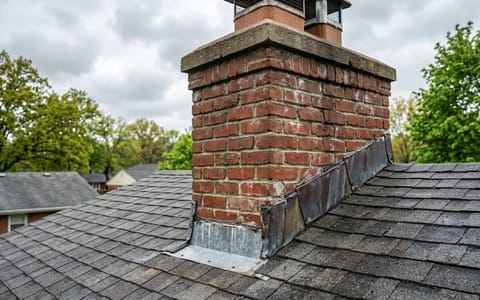
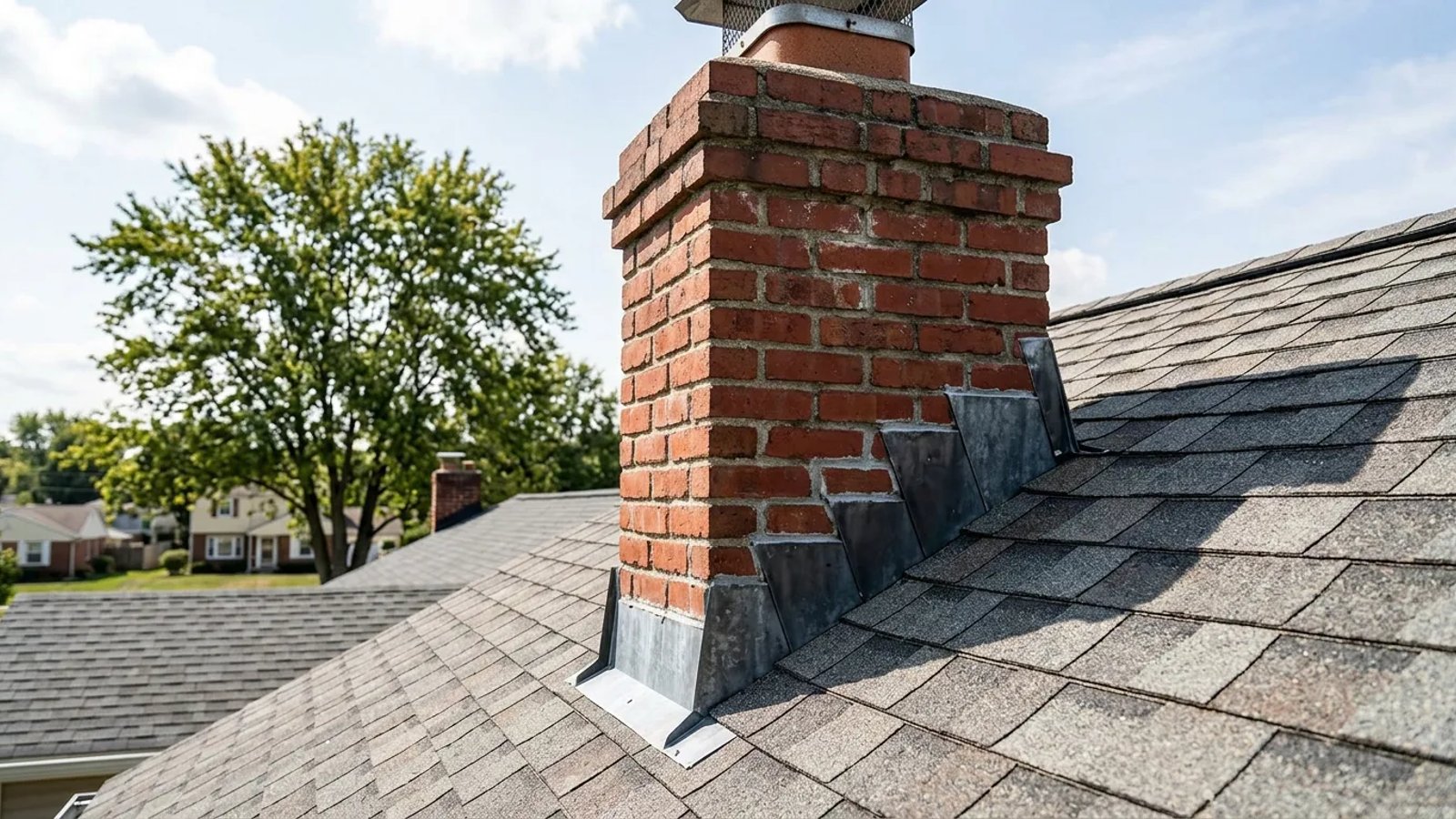
If the leak is occurring at the intersection where the chimney meets the roof deck, you need a roofer. This intersection is the most vulnerable point on your entire roof. To keep water out, roofers use a system of overlapping sheet metal called flashing.
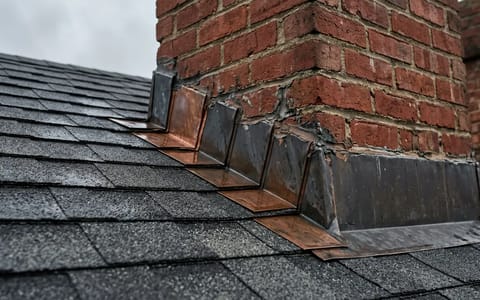
A proper flashing job actually consists of two separate layers. First, L-shaped pieces of metal called "step flashing" are woven underneath the shingles and bent up against the side of the brick. Second, "counter-flashing" is embedded directly into the mortar joints of the brick and folded down over the step flashing. This overlapping design allows the wood roof to expand and contract independently of the rigid brick chimney without breaking the waterproof seal.
Through your binoculars, inspect the metal base. You need a roofer if you see:
- Rusted or missing metal: Galvanized steel flashing eventually rusts, creating pinhole leaks. High winds can also pry older, loose flashing away from the brick.
- Gaps around the base: If you can see a distinct shadow line or gap between the metal flashing and the brick, water is pouring behind the metal.
- A mountain of roofing tar: If previous owners tried to fix a leak by slathering thick black mastic or roofing cement around the base, it is a guarantee that the underlying metal has failed. Tar dries out and cracks, trapping water against the brick. A roofer will need to scrape this off and install proper metal.
- Missing shingles: If the asphalt shingles immediately surrounding the chimney are torn, curling, or missing, a roofer needs to replace them and tie them into the flashing.
If your chimney is wider than 30 inches, check the high side of the roof behind the chimney. Do you see a small, peaked roof structure diverting water around the brick? That is called a cricket. If you do not have a cricket, water and snow are pooling flat against the back of your chimney. A roofing contractor can frame and shingle a cricket to permanently solve this drainage issue.
Visual Signs You Need a Masonry Expert
If the flashing looks crisp, tightly sealed, and free of rust, the problem is likely the masonry itself. Bricks and mortar take a brutal beating from the elements. Over decades of rain, freezing temperatures, and baking sun, the structural integrity of the chimney degrades. When masonry fails, you need a specialist who understands mortar mixtures and brick density.
Through your binoculars, scan the chimney from the roofline all the way to the top. You need a mason if you see:
- Cracks in the chimney crown: The crown is the flat or slightly sloped concrete pad at the very top of the chimney. Its job is to act like an umbrella, shedding water away from the vertical brick walls. If the concrete is cracked, water runs straight down the inside of the masonry structure.
- Spalling bricks: Spalling occurs when water gets inside a brick and freezes. The expanding ice literally blows the front face of the brick off. If you see bricks that look like they have been chipped or are missing their hard outer crust, the masonry is absorbing massive amounts of water.
- Deteriorating mortar joints: Look at the horizontal and vertical gray lines between the bricks. If the mortar is crumbling, receding deep into the wall, or missing entirely, water is driving straight into the gaps during rainstorms. A mason will perform a process called "tuckpointing," which involves grinding out the old mortar and packing in fresh material.
- No rain cap: Look at the metal or clay flues sticking out of the top of the chimney. Are they completely open to the sky? If you do not have a metal rain cap covering the flue opening, rain is falling straight down the inside of your chimney lining.
How to Apply a Temporary Fix While You Wait
Finding a good contractor takes time. If you have active water dripping onto your ceiling and a heavy rainstorm in the forecast, you might need to implement a temporary stopgap. I only recommend doing this if your roof has a low, walkable pitch (like a 4/12 slope) and you are comfortable working on a ladder. If your roof is steep, two stories high, or covered in slippery moss, do not risk your life. Put a bucket under the drip inside and wait for a pro.
If you choose to apply a temporary seal, avoid black roofing tar. It makes a massive mess and complicates the permanent repair. Instead, use a high-quality polyurethane roof sealant applied with a standard caulking gun. Polyurethane remains flexible and adheres aggressively to both metal and masonry.
- Clean the area thoroughly. Use a stiff wire brush to scrub away loose moss, flaking rust, and dirt from the flashing and the brick. Sealant will not stick to dirt.
- Wipe the surface dry. Polyurethane sealants need a dry surface to cure properly. Use an old rag to wipe down the metal and the brick.
- Apply a thick bead of sealant. Run a heavy bead of polyurethane sealant along the exact seam where the metal counter-flashing meets the brick.
- Tool the joint. Put on a disposable nitrile glove, dip your finger in soapy water, and press the sealant firmly into the gap, smoothing it out so it bridges the metal and the brick completely.
- Check the exposed nail heads. Look for any exposed roofing nails in the flashing or surrounding shingles. Dab a small amount of sealant over each nail head to prevent water from seeping down the shanks.
Dealing with a chimney leak is stressful, but a methodical visual inspection is your best defense against wasted money. By taking ten minutes with a pair of binoculars, you can confidently determine whether your home requires the sheet metal expertise of a roofer or the structural knowledge of a mason. Once you make the right call, you can finally enjoy a fire without worrying about the weather outside.
- Hiring the wrong professional often results in paying a $100 to $250 diagnostic fee just to be told to call someone else.
- Roofing contractors handle the intersection where the chimney meets the roof deck, primarily installing and sealing sheet metal.
- Masonry experts handle the structural integrity of the chimney itself, including tuckpointing mortar and pouring new concrete crowns.
- Water travels along roof rafters, meaning a stain on your living room ceiling might originate several feet away from the actual chimney.