Gas Fireplace Won't Light? Safe Steps to Troubleshoot
Flipped the switch and nothing happened? Learn how to safely troubleshoot a gas fireplace that won't ignite, clear simple faults, and know exactly when to call a pro.
Full guide HVAC & Climate Control How your home heats, cools, and moves air, and the decisions that matter.The temperature is dropping, the house feels chilly, and you are ready for a cozy evening. You flip the wall switch or press the button on your remote, expecting the instant warmth of a fire. Instead, nothing happens. When a gas fireplace won't light, it is incredibly frustrating, especially when you rely on it to take the chill out of your living room.
Before you panic and schedule an expensive service call, take a breath. Many ignition failures are caused by minor issues that you can safely diagnose and fix yourself in under 30 minutes. Gas fireplaces are relatively simple appliances, relying on a basic combination of gas flow, a spark, and a safety sensor. When one of those three things is interrupted, the system shuts down to keep you safe.
In this guide, we will walk through the exact steps to figure out what went wrong. We will start with critical safety checks, move through the most common and easily fixed culprits, and show you how to handle a stubborn pilot light. Just as importantly, we will draw a hard line on which repairs require a licensed professional.
STOP: Do You Smell Gas?
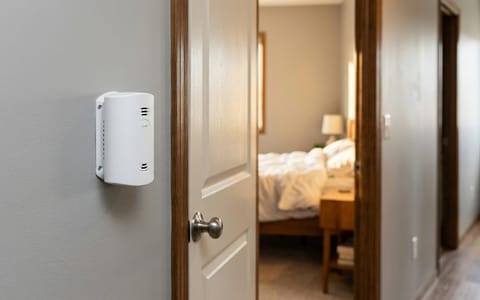
Safety must always be your first priority when dealing with any gas appliance. Natural gas and propane are naturally odorless, but utility companies add a chemical called mercaptan to give it that distinct, foul smell. This is an intentional warning system.
If you catch that scent when you approach your unlit fireplace, you might have a leak in the supply line or a valve that has failed in the open position. According to guidelines from the National Fire Protection Association, your immediate response should be to evacuate the house. Leave the doors open behind you to help ventilate the area, get to a safe distance outside (at least 300 feet), and call 911 or your local gas utility's emergency line.
Only proceed with the troubleshooting steps below if the air around your fireplace is completely clear and odor-free.
Why Won't My Gas Fireplace Light?
If there is no gas smell, we can safely start hunting for the problem. When homeowners search for why a gas fireplace won't light, they often expect a catastrophic failure. In reality, the culprit is usually incredibly simple. Before you open up the glass or touch any internal components, check these three common failure points.
1. The Hidden Batteries Are Dead
If you use a remote control to turn on your fireplace, you probably know to change the batteries in the remote itself. However, many people do not realize there is a corresponding receiver box hidden underneath the fireplace. This receiver catches the signal from your remote and physically opens the gas valve.
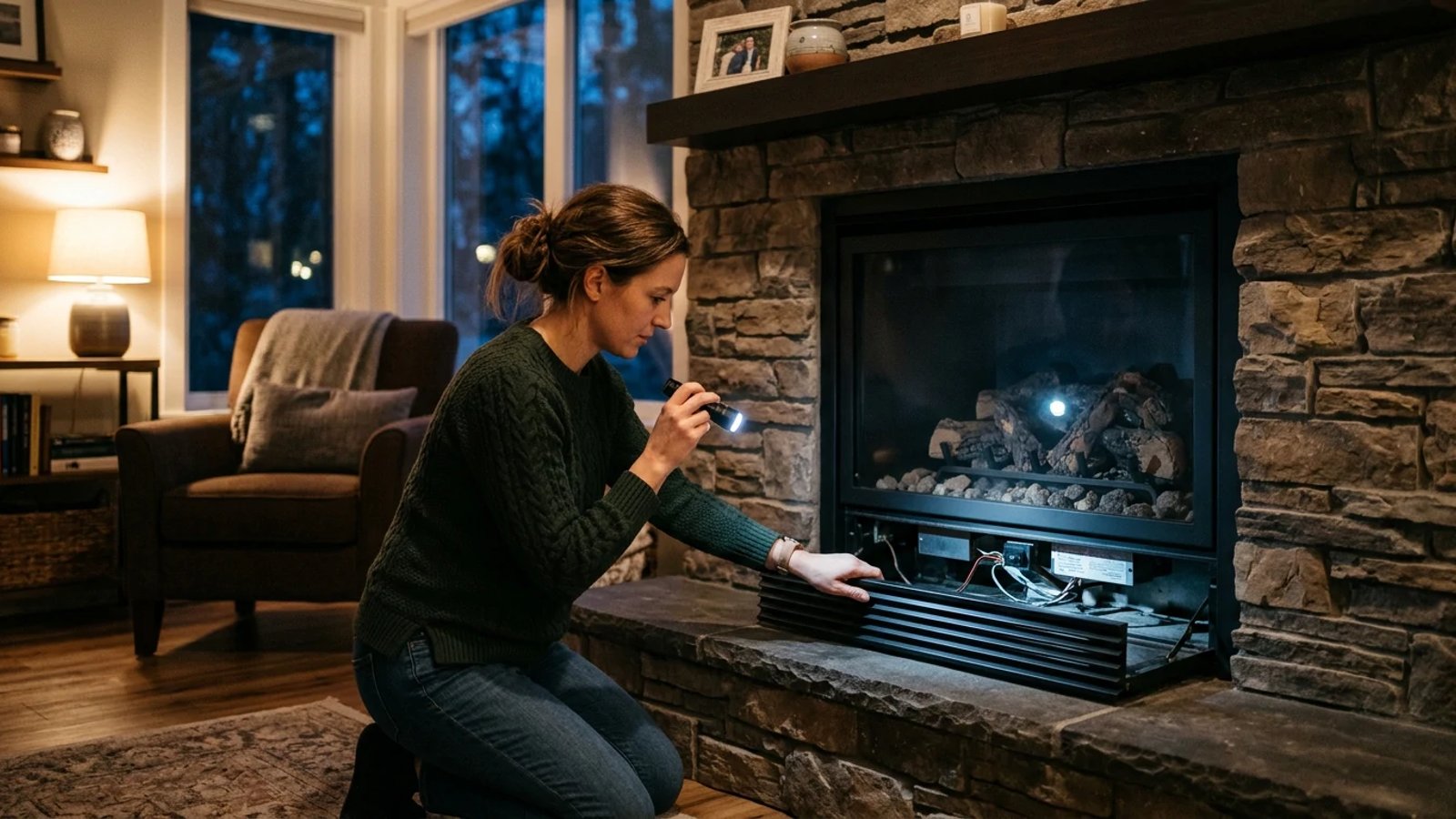
Open the bottom louver or access panel of your fireplace. Look for a small black plastic box with a wire running to the main gas valve. It usually has a slider switch marked ON/REMOTE/OFF. Slide the cover off this box; you will typically find four AA batteries inside. If these batteries die, the fireplace will not respond to the remote, the wall switch, or anything else. Swap them out for fresh, high-quality alkaline batteries.
2. The Wall Switch Has Failed
If your fireplace operates via a standard wall switch, the issue might be the switch itself or the wiring behind it. Gas fireplace wall switches do not carry standard 120-volt house current. Instead, they carry a tiny amount of electricity (millivolts) generated by the fireplace's pilot light.
Because the voltage is so low, even a small amount of corrosion, dust, or a loose wire behind the switch plate can break the circuit. If you are comfortable doing so, you can unscrew the switch plate and ensure the two wires are firmly attached to the screw terminals. If the switch feels spongy or lacks a definitive "click," the switch itself may need to be replaced—a part that costs about $5 at a hardware store.
3. The Gas Supply Is Shut Off
It sounds obvious, but check your gas valves. If you recently had plumbing work done, had a new appliance installed, or if you just moved into the house, the main gas line to the fireplace might be turned off.
Look for a gas shutoff valve. This is sometimes located in the floor near the hearth (operated by a specialized metal key) or in the basement directly below the fireplace. You will also find a secondary shutoff valve underneath the fireplace unit itself, right where the gas line connects to the control module. The valve is open when the handle is parallel to the gas pipe, and closed when it is perpendicular (forming a T-shape) to the pipe.
Troubleshooting Your Gas Fireplace Ignition System
To troubleshoot further, you need to know how your specific fireplace sparks a flame. There are two main types of gas fireplaces found in residential homes today:
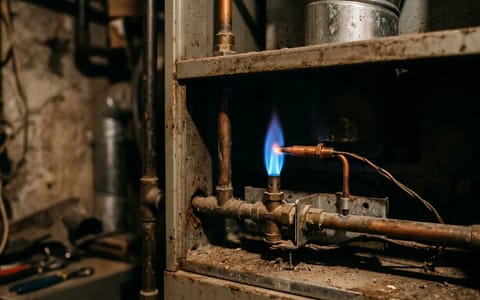
Standing Pilot Systems: These are the traditional workhorses. A tiny blue pilot flame burns continuously, 24 hours a day, 7 days a week. This flame generates a small electrical current that allows the main gas valve to open when you flip the switch. If a standing pilot fireplace won't light, the pilot flame has almost certainly blown out.
Intermittent Pilot Ignition (IPI): Newer, high-efficiency models use an electronic ignition system. There is no continuous pilot flame. When you turn the fireplace on, a control module sends a spark to ignite a temporary pilot, which then immediately ignites the main burner. If an IPI system fails, you will usually hear a rapid clicking sound, but see no fire.
How to Relight a Standing Pilot
If you have a standing pilot system and look inside the firebox only to see complete darkness, your pilot flame is out. This can happen due to a strong downdraft from the chimney, a brief interruption in your gas supply, or simply months of disuse over the summer.
Here is how to safely relight it:
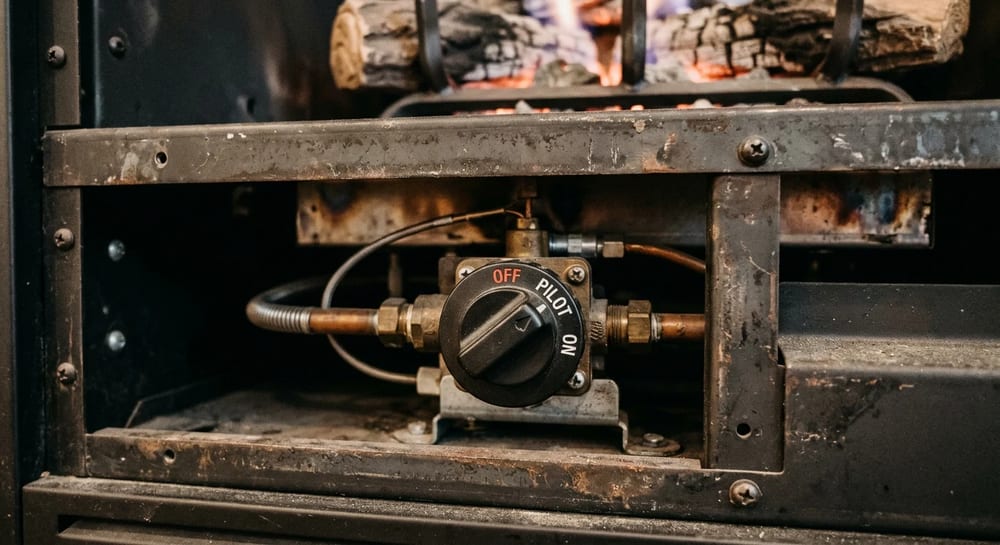
- Locate the control knob. Open the bottom access panel and find the main control knob. It will have three settings: ON, OFF, and PILOT.
- Turn the knob to PILOT. You may have to push the knob in slightly to turn it from the OFF position.
- Press and hold the knob. Push the control knob in completely and hold it there. This manually forces a small amount of gas into the pilot tube.
- Press the igniter button. While holding the control knob in, press the piezo igniter button (usually a red or black button nearby) once every second. You should hear a loud click and see a spark near the pilot hood inside the firebox.
- Watch for the flame. Once the pilot lights, keep holding the control knob pushed in for at least 30 to 45 seconds. This gives the flame time to heat up the safety sensor.
- Release the knob. Let go of the control knob. The pilot flame should remain lit.
- Turn the knob to ON. Carefully rotate the control knob to the ON position. You can now use your wall switch or remote to turn on the main burner.
The Pilot Lights But Won't Stay Lit
What happens if you follow the steps above, the pilot flame dances beautifully while you hold the knob in, but the second you let go, it dies? This is the most common complaint we hear, and it almost always points to a dirty or failing safety sensor.
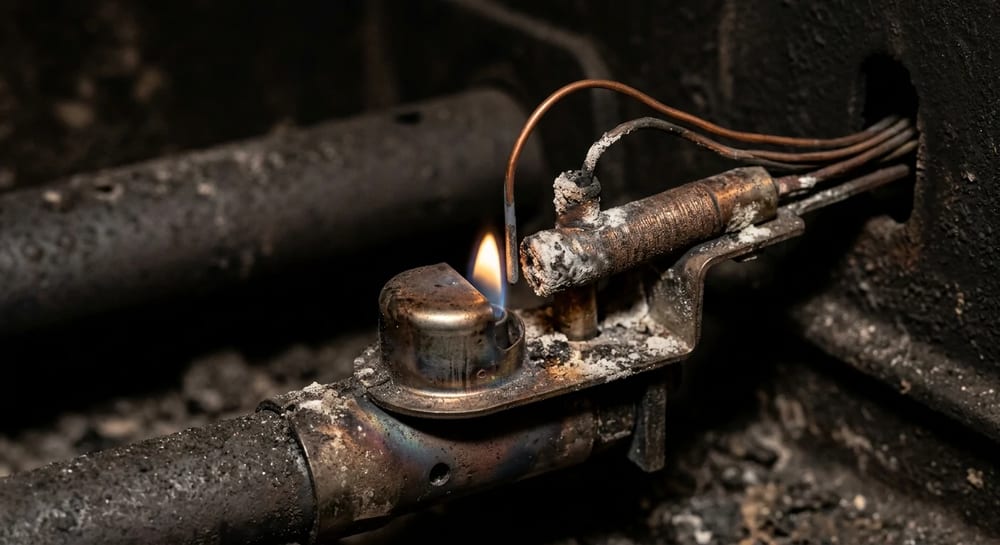
Gas fireplaces use a safety device called a thermocouple (a single copper wire) or a thermopile (a thicker, cylindrical probe). These sensors sit directly in the pilot flame. As the metal heats up, it generates a tiny electrical voltage. This voltage travels down to an electromagnet in the gas valve, holding it open. If the pilot blows out, the sensor cools down, the electricity stops, and the gas valve snaps shut automatically. It is a brilliant, fail-safe design.
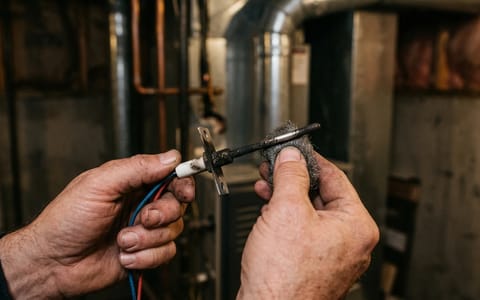
However, over time, a white or grey layer of carbon soot builds up on the sensor. This soot acts as an insulator, preventing the heat of the flame from reaching the metal. Last winter, I helped a neighbor whose living room fireplace kept clicking off immediately after lighting. We measured the thermopile output with a multimeter, and it was barely registering. But before we spent money on a replacement part, I gently cleaned the soot off the sensor. It fired right up and ran flawlessly for the rest of the season.
How to Clean a Thermopile or Thermocouple
Cleaning the sensor takes only a few minutes and requires minimal tools. Ensure the fireplace is completely cool and the gas valve is turned to the OFF position before you begin.
- Remove the glass front. Most fireplace glass panels are held in place by spring-loaded latches under the bottom louver and sometimes at the top. Unlatch them and carefully lift the glass away. Set it on a soft blanket.
- Locate the sensor. Look at the pilot assembly. You will see the metal hood where the flame comes out, and right next to it, one or two metal probes pointing upward.
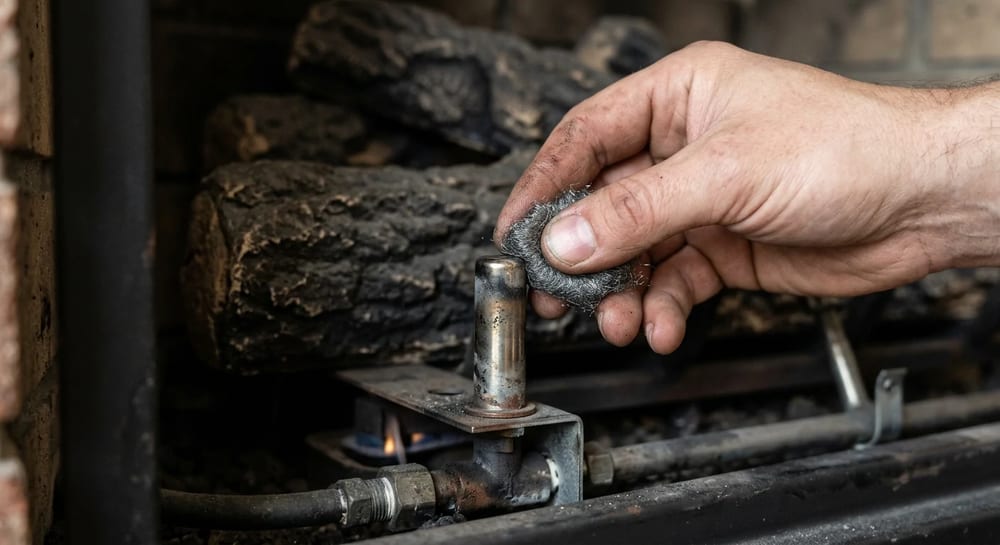
- Gently sand the sensor. Take a piece of fine steel wool or fine-grit sandpaper (like 220-grit). Very gently rub the metal probe to remove the white buildup.
- Wipe it clean. Use a clean, dry microfiber cloth to wipe away the dust you just sanded off. Do not use any chemical cleaners or water.
- Reassemble and test. Put the glass back on, secure the latches, and try the relighting sequence again.
When to Call a Professional
While replacing batteries, flipping breakers, and cleaning soot are well within the wheelhouse of a DIY homeowner, there is a strict boundary you should not cross. Gas is volatile, and carbon monoxide is deadly. If your troubleshooting leads you past the external sensors and into the fuel delivery system, it is time to stop.
You should also call a professional if you notice large amounts of black soot building up on the ceramic logs or the glass. A healthy gas fireplace should burn clean. Heavy black soot indicates an improper fuel-to-air mixture, which could mean a blocked venting system or a failing gas pressure regulator. A professional service call typically runs between $150 and $300, which is a small price to pay for the assurance that your home is safe from carbon monoxide and fire hazards.
Keeping the Fire Burning
Dealing with a gas fireplace that refuses to light is a hassle, but running through these basic diagnostic steps will solve the vast majority of problems without costing you a dime. Check your batteries, ensure your gas is flowing, and keep those safety sensors clean.
To avoid finding yourself shivering in the living room next year, make it a habit to clean the glass and dust the control compartment every fall before the heavy cold arrives. A little preventative care goes a long way in keeping your home warm, safe, and comfortable all winter long.
- Safety always comes first; natural gas and propane leaks are serious hazards that require immediate evacuation.
- Many modern gas fireplaces rely on battery-powered receiver boxes hidden under the unit, which often cause 'dead' fireplaces when the batteries drain.
- You can save a $150–$300 service call by learning how to properly relight your standing pilot or clean soot off the flame sensor.
- If your fireplace clicks but won't ignite, the issue is often a lack of gas flow or a blocked pilot tube, not an electrical failure.
- Annual maintenance and cleaning before the cold weather sets in will prevent 90% of mid-winter fireplace failures.