Basement Floor Drain Smell? The Easy 60-Second Fix
A persistent musty basement odor often isn't mold—it's sewer gas escaping from a dry floor drain. Learn how to fix it in 60 seconds with a simple bucket of water.
Full guide Plumbing Learn how your home plumbing works and how to stop leaks before they ruin your house.You have checked the foundation for cracks. You are running a heavy-duty 50-pint dehumidifier around the clock. The humidity monitor reads a bone-dry 35 percent. Yet, every time you walk downstairs, that unmistakable, damp, musty odor hits you right in the face. Many homeowners immediately assume they have hidden mold growing behind the drywall or a slow leak under the slab.
But if you are battling a persistent basement floor drain smell, the real problem might just be a lack of water. It sounds counterintuitive when you are trying to dry out a basement, but a dry plumbing fixture is one of the most common causes of poor indoor air quality in a home. The fix requires zero tools, costs absolutely nothing, and takes less than 60 seconds to complete.
Common Causes of Floor Drain Odor
If you are noticing a distinct sewer odor from your floor drain, you are not alone. This is one of the most frequent complaints homeowners have, especially during dry seasons. To fix the issue permanently, you need to know exactly what is causing it. The most common causes of floor drain odor include:
- A dry P-trap: The water seal has evaporated, letting sewer gas flow freely into the basement.
- Biofilm and bacteria buildup: Soap scum, dirt, and organic matter collect on the drain grate and inside the pipe, rotting over time and causing a stinky basement floor drain.
- Missing cleanout plugs: A missing plug in the drain bowl allows gas to bypass the water trap entirely.
- Clogged vent stacks: Blocked roof vents create a vacuum that sucks the water right out of your drain traps.
Why Does My Basement Smell Musty?
To understand why your basement smells like a damp cave, you have to look under the concrete slab. Every drain in your house, from your bathroom sink to your basement floor, is equipped with a curved section of pipe called a P-trap. As of 2026, standard residential building codes across the US and Canada strictly require these traps to hold about 10 to 16 ounces of water at all times.
That trapped water serves a critical purpose: it acts an airtight seal. The municipal sewer system or your private septic tank is full of decomposing waste, which naturally produces sewer gas. This gas is a mixture of methane, ammonia, and hydrogen sulfide. Without a physical barrier, these gases would drift straight up the pipes and into your living space.
Because basement floor drains are primarily installed for emergencies, like a leaking water heater or a washing machine overflow, they rarely see active water flow. Over time, the standing water inside the P-trap slowly evaporates. This evaporation accelerates during the dry late-summer months, or if the drain is located right next to a hot furnace.
Once that water level drops below the curve of the pipe, the seal is broken. Musty, damp, earthy air from the underground sewer lines wafts directly into your basement. Because this air is coming from a dark, damp underground pipe, it perfectly mimics the smell of a moisture or mildew problem.
Why Does My Basement Floor Drain Smell Like Sewage After a Weather Warm Up?
Many homeowners notice a sudden sewer odor from their floor drain right as spring arrives or during an unseasonable winter thaw. If you are wondering why your basement floor drain smells like sewage after a weather warm up, it comes down to a rapid shift in temperature and atmospheric pressure.
During cold winter months, the air in your basement is typically cooler, which slows down the evaporation of water in your P-trap. When the weather warms up, the ambient temperature in your basement rises. A temperature increase of just 10 degrees can dramatically accelerate evaporation, drying out a trap that survived all winter in a matter of days. Furthermore, spring thaws often lead to increased water volume and biological activity in municipal sewer lines, pushing more concentrated sewer gas up toward your home. If the water seal evaporates just as this pressure builds, a stinky basement floor drain is the immediate result.
How to Find Your Floor Drain
Before you can fix the problem, you have to find the drain. In an unfinished basement, this is usually straightforward. Look for a circular cast iron or plastic grate, about 3 to 4 inches in diameter, set flush with the concrete floor. The floor will naturally slope down toward it.
However, in finished basements, or homes that have passed through several owners, the drain might be playing hide-and-seek. I tested this exact scenario in my own 1920s home. We had a terrible musty smell near the laundry area, but no visible drain. After moving a stack of heavy plastic storage bins and pulling back a cheap utility rug, I found the original floor drain completely bone dry and venting gas into the room.
Common hiding spots for basement floor drains include:
- Directly beneath or next to the hot water heater.
- Near the HVAC air handler or furnace.
- Underneath the utility sink or washing machine.
- Hidden under storage boxes, old carpets, or rubber gym mats.
If you have a finished basement and cannot find a drain anywhere in the utility room, check inside the mechanical closet. Some older homes may even have more than one floor drain, so make sure you locate all of them.
The 60-Second Fix for a Basement Floor Drain Smell
Once you have located the offending drain, restoring the vapor barrier is incredibly simple. You do not need harsh chemicals, bleach, or expensive plumbing tools.
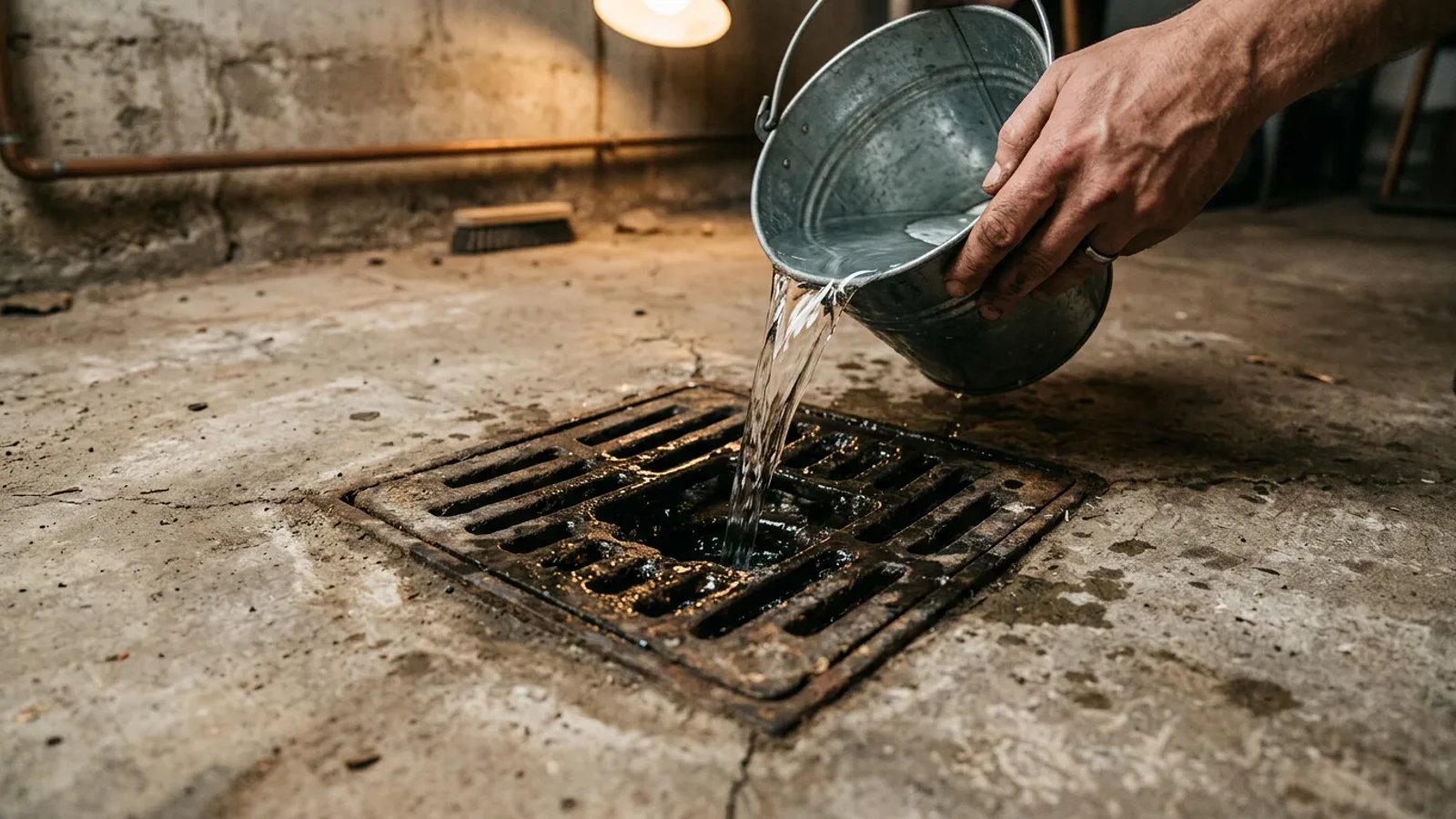
- Fill a bucket with water. Draw about one gallon of standard tap water from your utility sink or bathtub.
- Pour the water down the drain. Pour it slowly directly through the metal or plastic grate.
- Verify the seal. Shine a flashlight down through the grate. You should see water sitting at the bottom of the pipe, confirming the P-trap is full.
- Ventilate the space. Open a basement window or turn on a fan for 15 minutes to clear out the residual sewer gas.
That is literally all it takes. The water instantly plugs the pipe, stopping the gas from entering your home. You should notice a dramatic improvement in the air quality within a few hours as the existing odor dissipates.
A dry P-trap is the most common cause of basement odors, yet it is the easiest and cheapest plumbing problem you will ever fix.
How to Eliminate Basement Odor and Sewer Smells Permanently
Sometimes, simply refilling the trap is not enough to eliminate basement odor and sewer smells entirely, especially if the drain has been neglected for years. If your basement drain smells bad or a smelly floor drain is still plaguing your home after refilling the water, you likely have a layer of bacteria and biofilm clinging to the pipe walls just above the water line.
Here is a concrete, three-step process to deep-clean a smelly basement drain and eliminate lingering odors:
- Remove and clean the grate: Use a screwdriver to pop off the plastic or metal drain cover. Scrub it in your utility sink with hot, soapy water to remove accumulated grime and hair.
- Apply a natural cleaner: Pour 1 cup of baking soda directly into the drain opening, followed immediately by 1 cup of white vinegar. Let the mixture fizz and break down the organic biofilm for 15 minutes.
- Flush with boiling water: Carefully pour a kettle of boiling water down the drain. This washes away the loosened bacteria and resets your fresh water seal.
Avoid pouring bleach down a floor drain to fix odors, as it can react dangerously with existing sewer gases like ammonia to create toxic fumes.
Choosing a Basement Floor Drain Odor Eliminator
If you are still wondering how to clean a basement floor drain that smells after trying the natural baking soda method, you likely need a dedicated basement floor drain odor eliminator. Instead of harsh chemicals, opt for a commercial bio-enzymatic drain cleaner.
Enzymatic cleaners contain live bacteria cultures that literally eat the organic waste, soap scum, and biofilm causing the basement drain smells. As of 2026, a high-quality enzymatic cleaner costs between $12 and $18 at most hardware stores or online retailers. To use it effectively, pour 8 ounces of the liquid down the edges of the drain grate right before you go to bed. Let it sit undisturbed for 8 to 12 hours so the enzymes can digest the odor-causing bacteria. In the morning, flush the line with a gallon of warm water to wash away the debris and reset your clean water seal.
The Mineral Oil Trick for Long-Lasting Protection
Pouring water down the drain solves the immediate problem, but water will eventually evaporate again. If you live in a dry climate, or if your drain is located in a warm mechanical room, you might find yourself repeating this chore every three to four weeks.
To stop the evaporation cycle, you need to cap the water. The best way to do this is with standard, unscented mineral oil.
Mineral oil is lightweight, inert, and does not break down over time. Because oil is less dense than water, it floats on the surface. By adding just a small amount to the P-trap, you create a microscopic liquid lid that prevents the water beneath it from turning into vapor.
After you have filled the P-trap with a gallon of water, simply measure out 2 tablespoons of 100% pure mineral oil (available for about $3 to $5 in 2026 at any pharmacy) and pour it directly into the drain. The oil will pool on top of the water inside the trap. In my experience, a trap treated with mineral oil can remain sealed for six to eight months without needing a refill.
What If the Smell Doesn't Go Away?
If you have poured water and mineral oil down the drain, ventilated the room, and waited 24 hours, but the basement floor drain smell persists, you likely have a secondary issue. The next suspect is the cleanout plug.
Many older cast iron floor drains feature a built-in bypass tube meant for snaking the main sewer line. If you shine a flashlight into the bowl of the drain (above the water line of the trap), you might see a small hole on the side wall. This hole is supposed to be sealed tightly with a threaded brass or plastic plug.
Over decades of use, these plugs can rust away, loosen, or be removed by a plumber and never replaced. If that plug is missing, sewer gas will bypass the water trap entirely and flow straight out of the hole into your basement. In 2026, you can buy a replacement expansion plug at any hardware store for under $5. Just press it into the hole and tighten the wingnut with a pair of pliers to seal the gap.
When to Call a Professional Plumber
While a dry trap is a simple DIY fix, not all plumbing odors can be solved with a bucket of water. You should reach out to a licensed professional if you encounter any of the following scenarios.
Typical 2026 rates for a professional snaking or hydro-jetting range from $150 to $400, depending on your region and the severity of the clog. Additionally, if you hear a gurgling sound coming from the floor drain when other fixtures are draining, you may have a blocked vent stack. The plumbing vent pipes that exit through your roof regulate air pressure in the system. If they get clogged by leaves or bird nests, the vacuum created by draining water can actually suck the water right out of your basement P-trap, leaving it dry no matter how often you refill it.
Routine home maintenance doesn't have to be complicated. By understanding how your home's basic plumbing systems operate, you can save yourself unnecessary panic and expensive service calls. Keep an eye on those hidden basement drains, keep a bottle of mineral oil handy, and enjoy breathing clean, fresh air in your home.
- Check your floor drains before spending money on expensive dehumidifiers or mold testing.
- Floor drains in utility rooms or near HVAC units dry out quickly during the late-summer months.
- A simple gallon of tap water fixes the issue in under 60 seconds.
- Mineral oil creates a floating vapor barrier that stops evaporation for months at a time.
- If the smell persists after adding water, check for a missing cleanout plug inside the drain bowl.