Flooded Crawl Space? How to Remove Water and Stop It Fast
Discovering standing water under your house is stressful. Learn how to safely drain a flooded crawl space, find the source of the leak, and keep it dry for good.
Full guide Foundation & Structure Learn how to spot dangerous foundation cracks and protect your home from costly structural damage.Finding a flooded crawl space can send your heart right into your stomach. You open the access door to grab a stored item or check a pipe, only to shine your flashlight across a dark, muddy lake sitting directly beneath your living room. Panic usually sets in immediately, followed by visions of rotting floor joists, toxic mold, and massive repair bills.
Take a deep breath. While standing water under your house is a serious issue that demands immediate action, it is also a very common problem with clear, systematic fixes. A flooded crawl space does not mean your house is doomed. It simply means water has found the path of least resistance, and you need to redirect it.
Standing water creates high humidity, which leads to cupping hardwood floors above, foul odors, and an ideal environment for pests. To protect your home's structure and your indoor air quality, we need to get the water out fast, figure out how it got there, and put up barriers to ensure it never returns.
What to Do Immediately When You Find a Flooded Crawl Space?
Before you rush in with buckets and towels, you have to secure the area. Crawl spaces are tight, dark, and filled with electrical wires, gas lines, and plumbing. Mixing standing water with live electricity is incredibly dangerous.
Once you are certain the area is safe to enter, your immediate goal is extraction and drying. You will need a submersible utility pump, a standard garden hose, heavy-duty extension cords, and a dehumidifier.
- Cut the power. Turn off the electricity to the crawl space circuits at your main breaker panel.
- Gear up. Wear tall rubber boots, thick work gloves, and an N95 respirator mask to protect yourself from mold spores and bacteria in the stagnant water.
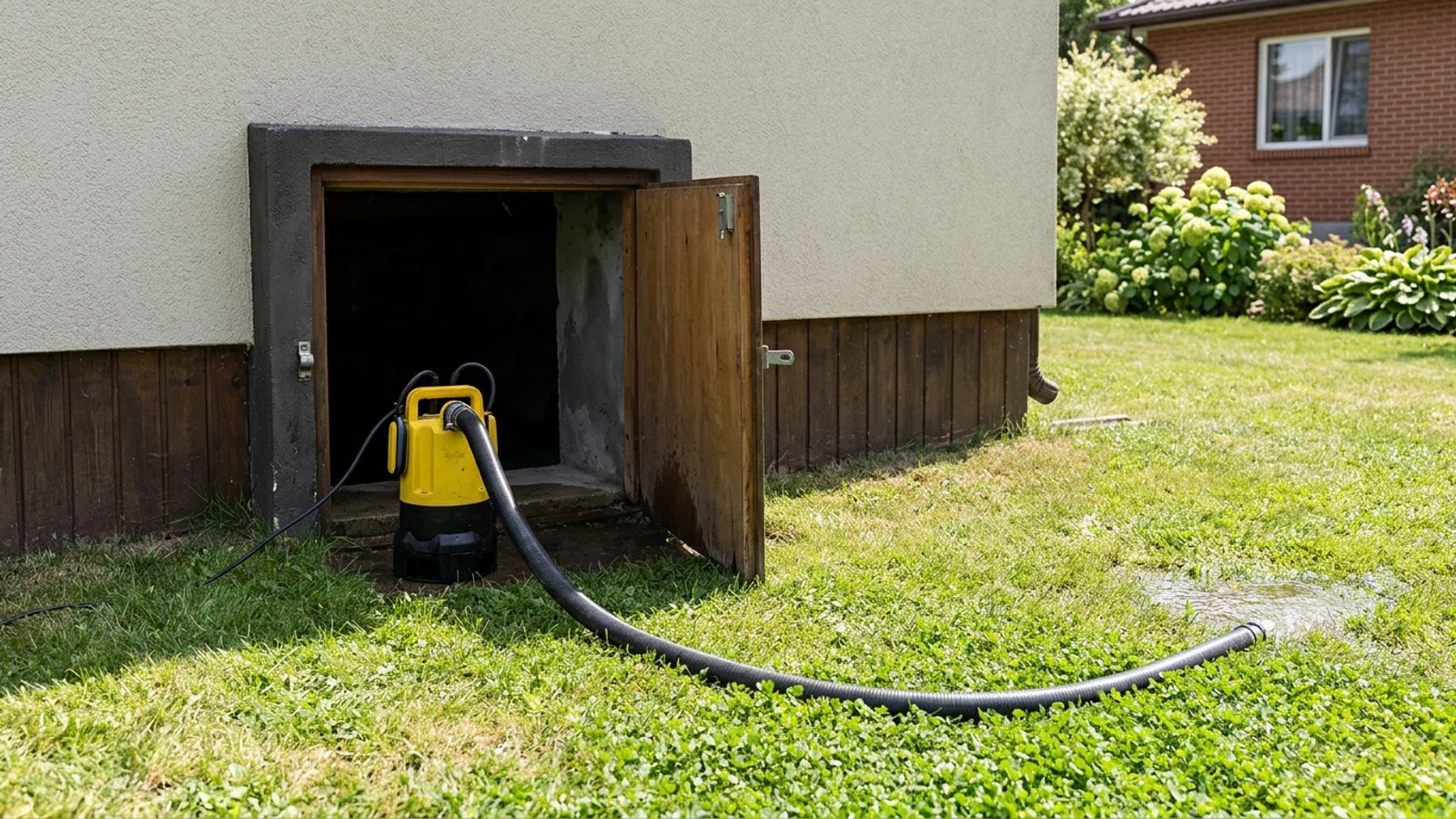
- Deploy a submersible pump. Attach a 5/8-inch garden hose to a 1/3 HP submersible utility pump (which costs about $150 at most hardware stores) and lower it into the deepest section of the water.
- Route the discharge hose. Run the other end of the hose far away from your house, ensuring it empties at least 10 feet downhill from the foundation so the water does not just seep back in.
- Plug in and pump. Connect the pump to a GFCI-protected outlet on a safe, dry circuit and let it run until the water is reduced to a thin puddle.
- Dry the space. Once the standing water is gone, set up a high-capacity dehumidifier and box fans. Run them continuously for 48 to 72 hours to pull moisture out of the dirt and the wooden floor joists.
Finding the Source: How Is the Water Getting In?
Pumping out the water treats the symptom, but you still have to cure the disease. If you do not find the source, your crawl space will simply fill up again during the next rainstorm. Last spring, I helped a neighbor pump out nearly 500 gallons of water after a heavy storm. They were convinced the foundation had cracked and prepared for a massive repair bill. It turned out to be a single disconnected downspout dumping roof runoff directly against the house.
Most crawl space moisture problems originate outside the house. Here are the primary culprits you need to check.
Poor Exterior Grading
The ground around your house should act like a ramp, directing water away from the foundation. Over time, soil settles, garden beds get built up with mulch, and that ramp can flatten out or even tilt back toward the house. If the soil slopes toward your foundation, rain will pool against the concrete and seep right through the block walls or vents.
Grab a string level and a tape measure. The soil should drop at least 6 inches over the first 10 feet away from your foundation. If it does not, you need to bring in topsoil and re-grade the area. Tamp the dirt down firmly so it sheds water rather than absorbing it.
Clogged Gutters and Short Downspouts
Your roof collects thousands of gallons of water during a heavy rainstorm. If your gutters are clogged with leaves, that water spills over the edges and pounds directly into the soil next to your foundation. Even if the gutters are clean, downspouts that end right at the base of the wall are just injecting water into your crawl space.
Ensure your gutters are clear, and add downspout extensions. A cheap corrugated plastic extension that carries water 5 to 6 feet away from the house is often the single most effective fix for a wet crawl space.
Plumbing Leaks
If it hasn't rained in weeks but you still have a flooded crawl space, you likely have a plumbing issue. A dripping supply line, a leaking drain pipe, or a failed water heater can dump an enormous amount of water under your house silently.
To test this, turn off all the faucets and appliances in your home. Go out to your street and look at your main water meter. If the small flow indicator dial (often a little red triangle or star) is spinning, water is moving through the pipes, which means you have a leak. You will need to inspect the pipes under the house with a bright flashlight or call a plumber.
Crawl Space 101: Why Do Homes Have Them Anyway?
If crawl spaces are prone to flooding, pests, and moisture, you might wonder why builders create them in the first place. Why not just build a basement or pour a solid concrete slab?
A crawl space is essentially a hollow foundation. It lifts the living area of the house 1 to 3 feet off the ground. This gap serves several very practical purposes. First, it is much cheaper to build than a full basement, especially in areas with high water tables or dense, rocky soil where digging deep is difficult. Second, it provides incredibly easy access to the home's mechanical systems. If you need to run a new electrical wire, fix a plumbing leak, or repair HVAC ductwork, a crawl space makes that work straightforward.
However, because they are built over raw dirt, they naturally absorb moisture from the earth. Without proper management, that moisture evaporates upward into the house.
Should You Cover Crawl Space Vents?
For decades, building codes required crawl spaces to have open vents cut into the foundation walls. The logic was simple: vents allow fresh air to circulate under the house, carrying away moisture and preventing rot. If you own an older home, you almost certainly have these vents.
However, modern building science has completely flipped this logic, especially in humid climates. When you open a vent on a hot, humid July afternoon, that heavy, wet air gets sucked into the cool, dark crawl space. When warm, humid air hits cool surfaces—like your air conditioning ducts or cold water pipes—it creates condensation. The vents intended to dry the space actually introduce massive amounts of water into it; a single open vent can allow hundreds of gallons of moisture into your crawl space annually.
According to the Department of Energy guidelines on crawl space insulation, unvented (or encapsulated) crawl spaces perform significantly better in keeping moisture out, improving indoor air quality, and lowering energy bills. Sealing the vents and treating the crawl space like a part of the home's interior is now the gold standard for moisture control.
Long-Term Fixes to Keep the Crawl Space Dry
If you have addressed the outside grading and gutters but still face groundwater seeping up from below, you need to implement long-term moisture control strategies inside the crawl space itself.
Install a Heavy-Duty Vapor Barrier
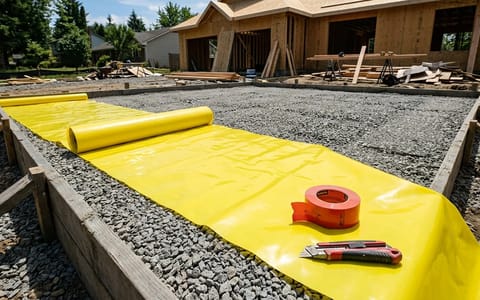
A vapor barrier is a thick sheet of plastic laid across the dirt floor of the crawl space. It prevents ground moisture from evaporating into the air. A basic 6-mil polyethylene sheet is the absolute minimum requirement, but in my experience, upgrading to a 12-mil or 20-mil reinforced plastic is much better for a truly dry space.
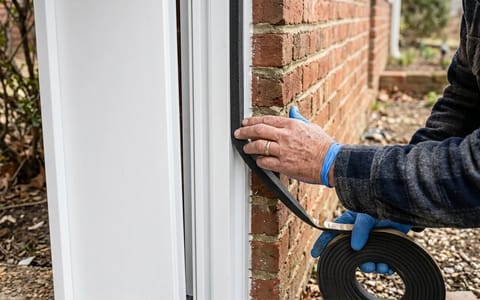
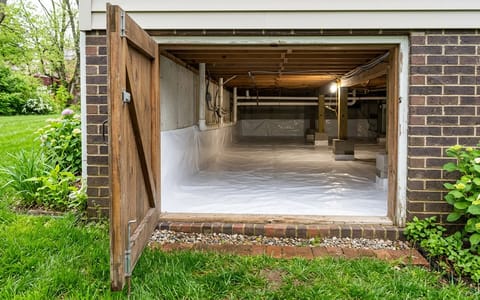
The plastic must cover 100% of the exposed dirt. The seams should overlap by at least 12 inches and be sealed tightly with specialized waterproof tape. The edges should run up the foundation walls and be mechanically fastened and sealed. This process, combined with sealing the vents, is known as crawl space encapsulation.
Add an Interior Perimeter Drain and Sump Pump
If your property sits at the bottom of a hill or has a naturally high water table, a vapor barrier alone won't stop the flooding. You need a way to actively remove water as it enters. This requires an interior French drain system.
This involves digging a trench around the inside perimeter of the foundation, laying down washed gravel, and installing a perforated PVC drain pipe. This pipe catches incoming water and directs it to a sump pump basin dug into the lowest point of the crawl space. When the water in the basin reaches a certain level, the sump pump automatically kicks on and pushes the water outside, far away from the house.
Keep a Dehumidifier Running
Even with a vapor barrier and a sump pump, the air under your house can get damp. Installing a commercial-grade crawl space dehumidifier ensures the relative humidity stays below 55%. This is the magic number: below 55% humidity, mold cannot grow, and wood will not rot.
A dry crawl space means a healthier, more comfortable home above it. Keep your gutters clean, check your downspouts every fall, and poke your head into the crawl space twice a year with a good flashlight to catch small leaks before they turn into indoor lakes.
- Safety comes first: Never enter a flooded space if the power is still on or if you smell gas.
- Removing the water is only step one; you must run fans and dehumidifiers for 48 to 72 hours to prevent severe mold growth.
- Most crawl space flooding is caused by surface water outside the home. Extending downspouts 6 feet away from the foundation is a cheap, highly effective fix.